Languages
Wednesday, November 11, 2026



News and Views from the Global South
IPS UN Bureau
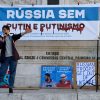
Russia: Moments of Dissent after Two Years of War
Russia’s full-scale invasion of Ukraine marked its second anniversary on 24 February. And while civil society is offering an immense voluntary effort in Ukraine, in Russia activists have faced intense constraints. The suspicious death of opposition leader Alexei Navalny is part of a great wave of repression. He’s the latest in a long list of people who’ve come to a sudden end after falling out with Vladmir Putin.
Call for Scaled Up Funding for Much-Needed, Successful Joint Program in Nigeria
Nigeria is home to 15 percent of the world’s out-of-school children. More than 7.6 million girls are not in school, and only nine percent of the poorest girls in the country are in secondary school. The Boko Haram insurgency and other armed groups fuel the out-of-school crisis in northeast Nigeria, disrupting the education of nearly two million school-age children.
No God but Greed: Slavery and Indifference
At Statens Museum for Kunst in Copenhagen there is a great painting made in 1797 by the Danish Golden Age painter Jens Juel. It depicts one of Denmark’s richest merchants at the time – Niels Ryberg, his newlywed son Johan Christian, and the son’s bride, Engelke. Johan Christian makes a gesture as though to show off the family estate. There is a strong feeling of harmony between the people and the countryside in which they are placed. The picture reflects the new interest in nature that emerged all over Europe towards the end of the 18th century. It also demonstrates how Denmark’s new, rich bourgeois wished to carry themselves in the style of the aristocracy, a social class which dominance they were infringing. Ryberg and his son appear just as distinguished as the aristocrats that used to be portrayed by Jens Juel.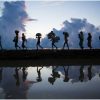
Funding, Policy Changes Could Result in Countries Reaping Benefit of Migration
Amid an escalation of global conflict and climate change-induced displacements, the International Organization for Migration (IOM) is escalating its donor campaign. For the first time since the organization’s formation in 1951, the IOM says it is "proactively approaching all partners to fund this vital appeal," at a time when the number of migrants making perilous intercontinental journeys has increased.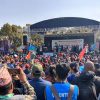
The World Social Forum: The counterweight to the World Economic Forum
This week the 2024 annual meeting of the World Social Forum (WSF) was held in Nepal. There were fifty thousand participants from over 90 countries, exchanging strategies to address the multiple global crises, from climate catastrophes to unfettered capitalism, inequality, social injustice, wars and conflict.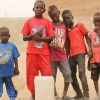
Children’s Futures at a Crossroads
At the start of 2024, we stand at a critical juncture: Geopolitical tensions are escalating, economic integration is unravelling, and multilateral cooperation is faltering. This global fragmentation threatens to undermine decades of progress made for children worldwide.
Unpacking 2023, the Warmest Year on Record
2023 was the warmest year on record. The latest Copernicus Climate Change Service highlights that February 2023 to January 2024 was the first time that we experienced 12 consecutive months of temperatures 1.5-degree hotter than the pre-industrial era.
Pakistan’s Election Outcomes Leave Many Unhappy
Pakistan’s 8 February election has resulted in an uneasy compromise that few wanted or expected. There’s little indication the outcome is going to reverse recent regression in civic freedoms.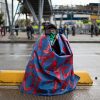
#UNmute: Over 350 Civil Society Organizations Ask for Real Inclusion in UN Summit of the Future Negotiations
A coalition of over 350 civil society organisations part of the #UNmute initiative, shared concerns over the current engagement mechanisms for civil society at the UN – particularly in light of the upcoming Summit of the Future.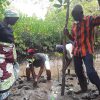
Coastal Indigenous and Minority Women Driving Kenya’s Blue Forest Conservation Efforts
Tsunza Peninsula is a natural wonder that sits just inside the many inlets of Mombasa Island on the border between Mombasa and Kwale Counties—a little-known spectacle of lagoons, islands, and thick mangroves in Kinango Sub-County, Kwale County, on Kenya’s coastal region.
Inside Kenya’s Seed Control Battle: Why Smallholder Farmers Want to Share Indigenous Seeds
A group of 15 smallholder farmers in Kenya petitioned the country’s High Court, seeking to compel the government to review sections of a law that bans the sharing and exchange of uncertified and unregistered seeds.
Small Island “Digital” States: Charting the Course for Transformation
Small Island Developing States, or SIDS, have long been pioneers in international development, often compelled by the challenges they face. Positioned on the frontlines of climate change, they lead efforts in mitigation, adaptation, and advocacy, and despite their geographical dispersion, they are innovating approaches to resilience and sustainability.
New Anti-Rape Crisis Centre Brings Hope for Sexual Abuse Survivors in Pakistan
Medical experts and women's rights activists are pinning hopes on the establishment of an anti-rape crisis centre for the provision of medical and legal aid to victims of sexual assaults in a timely manner will ensure convictions. Currently, it takes years to bring the perpetrators of rape to justice due to a lack of evidence and more often than not, the accused get acquitted.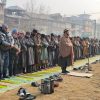
Snowless Winter and a Climate Crisis: Kashmir’s ‘Unprecedented’ Weather
Abdul Gani Malik, a 75-year-old goldsmith living in Kashmir’s capital, Srinagar, has witnessed eras of tranquility and turbulence in the Himalayan region. What he has not seen, however, is a snowless Kashmir during the winter.
INTERVIEW: AI Expert Warns of ‘Digital Colonization’ in Africa
Artificial intelligence (AI) is ripe to help resolve certain major problems in Africa, from farming to the health sector, but Senegalese expert Seydina Moussa Ndiaye is warning of a new “colonization” of the continent by this new technology if foreign companies continue to feed on African data without involving local actors.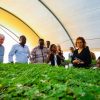
Smallholder Farmers Are Key to CGIAR Response to Hunger Crisis
Dr Ismahane Elouafi has her work cut out. As the new executive managing director of CGIAR, a global network of agricultural research centers, her mandate, simply put, is to tackle the world’s most severe hunger crisis in modern history. And it is in Africa that the former Chief Scientist of FAO with a PhD in durum wheat genetics faces her greatest challenges, both in terms of developing science-based innovations and technologies and lobbying governments to adopt responsible policies.
Making Chile’s Economy More Dynamic, Greener, and Inclusive
Chile’s economy is at a crossroads. Strong policies have successfully brought down high inflation and reduced the large current account deficit that emerged during the pandemic. Increases in social benefits have provided some relief in response to discontent over inequality.
Imperialism, Globalisation and Its Discontents*
Imperialism continues to dominate the world. Globalisation is losing to some of its anti-theses, but imperialism still rules, increasingly by law, albeit in changing even contradictory ways.
South Africa vs Israel: ICJ Declines SA’s New Application But Says Israel Duty Bound to Protect Civilians
The International Court of Justice has declined the South African government's urgent application for further measures to prevent an "unprecedented military offensive against Rafah,” but reiterated that Israel is bound to protect civilians in the country. South Africa argued in an urgent application that this military offensive “announced by the State of Israel, has already led to and will result in further large-scale killing, harm, and destruction in serious and irreparable breach both of the Genocide Convention" and of the Court's Order of January 26, 2024.
Educate an Africa Fit for the 21st Century
As we lead into the Africa Year of Education, and under the leadership of Africa, world leaders have an opportunity to solidify commitments to ‘Educate an Africa Fit for the 21st Century’. That means to empower Africa to deliver on the goals outlined in the 2030 Agenda for Sustainable Development, Paris Agreement and Convention on the Rights of the Child, and to invest in an end to inequity through the power of quality education and lifelong learning.
UN’s Financial Troubles Jeopardize Critical Human Rights Work
A cash crunch and hiring freeze at the United Nations threaten to hinder UN human rights investigations in places like Sudan, Ukraine, and Syria.« Previous Page — Next Page »





The Week with IPS

NEXT STOP - SDGs
Tracking global progress towards a sustainable world
Tracking global progress towards a sustainable world
