Languages
Wednesday, November 11, 2026



News and Views from the Global South
IPS UN Bureau

South Africa vs Israel: ICJ Declines SA’s New Application But Says Israel Duty Bound to Protect Civilians
The International Court of Justice has declined the South African government's urgent application for further measures to prevent an "unprecedented military offensive against Rafah,” but reiterated that Israel is bound to protect civilians in the country. South Africa argued in an urgent application that this military offensive “announced by the State of Israel, has already led to and will result in further large-scale killing, harm, and destruction in serious and irreparable breach both of the Genocide Convention" and of the Court's Order of January 26, 2024.
Educate an Africa Fit for the 21st Century
As we lead into the Africa Year of Education, and under the leadership of Africa, world leaders have an opportunity to solidify commitments to ‘Educate an Africa Fit for the 21st Century’. That means to empower Africa to deliver on the goals outlined in the 2030 Agenda for Sustainable Development, Paris Agreement and Convention on the Rights of the Child, and to invest in an end to inequity through the power of quality education and lifelong learning.
UN’s Financial Troubles Jeopardize Critical Human Rights Work
A cash crunch and hiring freeze at the United Nations threaten to hinder UN human rights investigations in places like Sudan, Ukraine, and Syria.
UN’s Cash Crisis May Force Hiring Freeze, Limit Official Travel & Curtail Expenses System-Wide
The United Nations is heading towards a severe cash crisis forcing the world body “to implement aggressive cash conservation measures to avert a default in meeting the legal obligations of the Organization”. Secretary-General Antonio Guterres has drawn attention to “the unfortunate deteriorating financial situation of our regular budget operations”.
UN Tax Convention is Historic Opportunity at Risk of Failing
In late November, the UN General Assembly passed a landmark resolution signaling a start on working on a UN framework convention on taxation.
Tracking Global Development in Child Benefits Through New Monitoring and Information Platform
Inclusive social protections for children would be a positive signifier of social development in a time where 1.4 billion children globally are denied them. A step towards realizing this has been taken through a new monitoring tool on current social protection and child poverty statistics.
Last Chance Saloon? Myanmar Junta Imposes Military Conscription
The news travelled like wildfire. In the teashops, bars, and market stalls that make Thailand’s border town of Mae Sot feel far more Burmese than Thai, the feared rumours circulating at the weekend were suddenly confirmed. Military conscription would be imposed on young men and women for two to five years, regime-controlled broadcasters in Myanmar announced on the Saturday night airwaves. Details were sparse.
The West’s Frankenstein Moment
Israel continues to defy its strongest backer the US and its western allies in its quest to control the land from the “River to the Sea”, and in the process ethnic cleansing of the Palestinian population. Israel’s Prime Minister Benjamin Netanyahu is determined to push ahead with a ground offensive against Gaza’s southernmost town of Rafah despite mounting warnings from aid agencies and the international community that an assault on Rafah would be a catastrophe. He also snubbed the US on the latest hostage release and ceasefire deal brokered by Qatar and Egypt. The interim order of the International Court of Justice (ICJ) to take all effective measures to stop “plausible” genocide in Gaza seems irrelevant to Israel. Josep Borrell, the EU’s foreign policy chief admits that Netanyahu “doesn’t listen to anyone”.
Women, Girls Equal Partners in HIV Responses, Says Activist
UNAIDS Executive Director, Winnie Byanyima, recently made an impassioned call for governments to support women and girls from marginalized communities at the frontlines of the defence of human rights, to help ensure, among others, that global health is protected.
Start-ups Powering up Africa’s Solar Energy Ecosystem
Often referred to as the “Sun continent,” Africa receives more hours of bright sunlight than any other continent. But even with 60 per cent of the world’s solar resources, Africa has only one per cent of solar generation capacity, according to the International Energy Agency (IEA).
North Ignores ‘Perfect Storm’ in Global South
A gathering ‘perfect storm’ – due to various developments, several quite deliberate – now threatens much devastation in the global South, likely to most hurt the poorest and most vulnerable.
Nepal Farmers Face Another Year of ‘Agricultural Drought’, Threatening Food Security
Najboon Khatun looks up at the sky every day, searching for the possibility of rain. Clouds come and go without a drop of water. “Winter crops like wheat and vegetables need water, but like last year, there has been no rainfall yet,” says 65-year-old Khatun, expressing her anguish. In her village in Dhanusha, one of the agricultural hubs in the southern plains of Nepal, farmers mostly depend on rain as a source of irrigation. However, they are facing yet another year of drought, affecting winter crops, including wheat, mustard, lentils, and vegetables.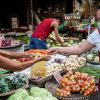
History’s Inflation Lessons
In the early 1970s, conflict in the Middle East set off a spike in oil prices that left central banks around the world scrambling to control inflation. After a year or so, oil prices stabilized and inflation started to retreat. Many countries believed they had restored price stability and loosened policy to revive their recession-hit economies only to see inflation return. Could history repeat?
State of the World’s Migratory Species Report ‘Alarming’ Threats, Global Action Urged
A groundbreaking State of the World’s Migratory Species report is calling for accelerated global conservation measures to counter the threat of extinction faced by 1 in 5 of all migratory species.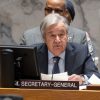
UN Secretary-General Wants Peace through Institutional Reforms
The United Nations and its Member States are up against what the Secretary-General António Guterres calls existential challenges for the world, and they must be organized in taking a united approach to addressing these issues through ambitious plans and widespread reform. In his statement to the General Assembly on February 7, 2024, Guterres laid out his priorities for the coming year, consisting of various ongoing issues that call for urgent action. He has called for member states to fulfill their obligations to the UN Charter, under which every person’s right to life and dignity should be guaranteed. But at present, governments are undermining the tenets of multilateralism with no accountability, he said.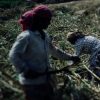
Polycrises are Pushing More Women into Poverty: How can we Help Halt that Trend?
Let’s call her Anita. Four years ago, her life took an unexpected turn when the COVID-19 pandemic disrupted everything she knew. As businesses closed and economic uncertainty loomed, Anita, like countless others, found herself forced out of work. Providing for her three young children became a daily struggle, prompting her to seek informal work as a subsistence agricultural worker to ease the financial burden.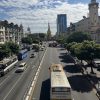
Yangon—A Junta-Ruled Bubble in a Fragmenting Myanmar
Landing in Rangoon nearly 100 years ago, a young Chilean poet described “a city of blood, dreams, and gold” with “leprous streets”. The flourishing capital of then British-ruled Burma and its major port were a must-see staging post on an Asian tour.
Africa’s Absence as Permanent Member a “Flagrant Injustice,” says UN Chief
As the UN continues its never-ending saga on the reform of the Security Council (UNSC), one of the political anomalies that keeps cropping up is the absence of Africa, among the five permanent members (P5)—a privilege bestowed only on the US, UK, France, China and the Russian Federation.
Proven Vector Control Interventions Needed to Stem Malaria Infections in Africa
Experts recommend that the current prevention of malaria in highly endemic countries in Africa should integrate "locally appropriate" control measures to cope with the highest burden of mosquito-borne disease on the continent.
Is Anti-Woke a Grass-Root Movement?
“Woke” was for a century, especially among black people in the US, an inspirational concept. However, almost overnight it turned into a pejorative. Like using the term “politically correct” as an insult, calling someone “woke” came to imply that the referred person’s views are excessively ridiculous, or even despicable. Being “anti-woke” has become an indication that you do not belong to an assumed group of “do-gooders”, who at the expense of right-minded “ordinary” citizens assert the demands of interest groups, which declare themselves to be discriminated against due to their ethnicity/race, gender, sexual preference, and/or physical or psychological disabilities.
Embodying the Spirit of the Dragon
The Year of the Dragon is upon us. UN Secretary-General António Guterres said in his message for this Lunar New Year, “The dragon symbolizes energy, wisdom, protection and good luck. We need these qualities to rise to today’s global challenges.”« Previous Page — Next Page »





The Week with IPS

NEXT STOP - SDGs
Tracking global progress towards a sustainable world
Tracking global progress towards a sustainable world
