Languages
Saturday, July 4, 2026



News and Views from the Global South
Afghanistan
AFGHANISTAN: Gov’t and Donors Fail to Protect Women’s Rights
Attention over the past week has focused on United States President Barack Obama’s decision to "surge" troop levels in Afghanistan to 30,000 and begin a drawdown in 18-months, but a new report calls attention to the failure of the Afghanistan government and international donors to protect women’s rights.US: Whistleblower Psychiatrist Warns of Soldier on Soldier Violence
Kernan Manion, a psychiatrist who was hired last January to treat Marines returning from war who suffer from post-traumatic stress disorder (PTSD) and other acute mental health problems borne from their deployments, fears more soldier-on-soldier violence without radical changes in the current soldier health care system.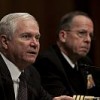
POLITICS: Pentagon’s War Pitch Belied by Taliban-Qaeda Conflict
U.S. Secretary of Defence Robert Gates and Chairman of the Joint Chiefs of Staff Adm. Mike Mullen argued in Senate Testimony Wednesday that the 30,000- troop increase is necessary to prevent the Taliban from giving new safe havens to al Qaeda terrorists.POLITICS: Neo-Cons Get Warm and Fuzzy Over “War President”
U.S. President Barack Obama's plan for a 30,000-troop surge and a troop withdrawal timeline beginning in 18 months has caught criticism from both Democrat and Republican lawmakers.U.S.: Public Most Inward-Looking in 40 Years, Poll Finds
Despite President Barack Obama's emphasis on diplomatic engagement, the U.S. public has become more inward-looking and unilateralist than at any time since the early stages of the Vietnam War, according to the latest in a series of quadrennial surveys on foreign policy attitudes released Thursday by the Pew Research Center for the People & the Press.U.S.: Obama’s Afghan Plan Has Something for Everyone… to Hate
President Barack Obama's speech Tuesday night at the U.S. Military Academy at West Point laid out his administration's plan to deploy an additional 30,000 troops to Afghanistan and start a phased withdrawal beginning in 18 months, but the plan has won the White House few supporters in either its own party or across the aisle.US-AFGHANISTAN: Obama to Surge 30,000 Troops, With Deadline
In a highly anticipated speech Tuesday evening, President Barack Obama announced the dispatch of 30,000 more U.S. troops to Afghanistan over the next seven months and said he would begin drawing down the U.S. military presence there 12 months later.U.S.: Obama Had Rejected His Own Speech’s Surge Rationale
President Barack Obama presented a case Tuesday for sending 30,000 more U.S. troops to Afghanistan that included both soaring rhetoric and a new emphasis on its necessity for U.S. national security.
Q&A: “Reconstruction Is Not Development as Usual”
National governments and the international community, the U.N. in particular, must rethink and debate the way post-conflict reconstruction is carried out, says a long-time U.N. expert and author.POLITICS: Tajik Grip on Afghan Army Signals New Ethnic War
Contrary to the official portrayal of the Afghan National Army (ANA) as ethnically balanced, the latest data from U.S. sources reveal that the Tajik minority now accounts for far more of its troops than the Pashtuns, the country's largest ethnic group.CANADA: Govt Stonewalls on Alleged Torture of Afghan Detainees
Canadians appear unlikely to get the entire story behind their military's transfer of Afghans captured in war to Afghan government authorities and possible torture.RIGHTS: U.S. Military Unveils New Prison in Afghanistan
The U.S. military has announced the opening of a new prison on Bagram Air Base. The prison, costing 60 million dollars, will hold up to 1,100 prisoners at any one time.AFGHANISTAN: Corruption Fight Begins, Again
When the Independent Election Commission announced that Hamid Karzai would be president for another five years, local and international powers began to demand that the newly re-elected president clamp down on the corruption that had spread like a virus throughout his administration and the ministries.POLITICS: Singh State Visit Cements US-India Ties
Indian Prime Minister Manmohan Singh and U.S. President Barack Obama met in Washington Tuesday as both leaders sought to reinvigorate the U.S.-India bilateral relationship.POLITICS: Afghan Army Turnover Rate Threatens U.S. War Plans
One in every four combat soldiers quit the Afghan National Army (ANA) during the year ending in September, published data by the U.S. Defence Department and the Inspector General for Reconstruction in Afghanistan reveals.POLITICS: Realities Collide at Halifax “War Conference”
While the world's top military elites gather inside a fortified hotel to discuss NATO's future, protesters question the organisation's legitimacy, secrecy, and the lack of democratic debate about the increasingly unpopular war in Afghanistan.AFGHANISTAN: Insurgents Infiltrate Security Forces
A Taliban fighter infiltrated the Afghan police force, killing seven Afghan officers and British soldiers. Similar attacks have taken the lives of U.S. troops.
Q&A: “Karzai Assigned a Rabbit to Take Care of the Carrot”
In the aftermath of national elections widely condemned as fraudulent, the United States and its allies are wondering what to do about Afghanistan.U.S.: Obama Returns to Greater Middle East Mess
As Barack Obama arrives home from his weeklong tour of East Asia, he confronts a growing list of ever more urgent problems in the Greater Middle East that he inherited from George W. Bush's "global war on terror".AFGHANISTAN: Black & Veatch’s White Elephant in Kabul
In a secluded valley a few miles from Kabul's international airport, Caterpillar turbines custom-built in Germany and giant transformers flown in from Mexico hum away at a brand-new power plant.CORRUPTION: Paying Off Afghanistan’s Warlords
Every morning, dozens of trucks laden with diesel from Turkmenistan lumber out of the northern Afghan border town of Hairaton on a two-day trek across the Hindu Kush down to Afghanistan's capital, Kabul.« Previous Page — Next Page »


The Week with IPS

NEXT STOP - SDGs
Tracking global progress towards a sustainable world
Tracking global progress towards a sustainable world
