Languages
Monday, September 21, 2026



News and Views from the Global South
China
Overspeeding China Must Slow Down
Rosy figures tempt China to postpone much-needed reform, says a renowned Chinese economist. "Much growth is non-productive, with enormous speculation widening the gap between rich and poor."CHINA: Magazine Closure Setback for Cultural Revival
When ‘Soho Xiaobao’ magazine suddenly announced in October that it was ceasing publication, it marked a huge setback for privately funded efforts to breathe fresh air into contemporary Chinese culture.POLITICS-JAPAN: Territorial Rows Undercutting Pacifist Stance
Thorny territorial disputes with neighbours China and Russia appear to nudging Japan’s pacifist public toward accepting what has so far been an unpalatable prospect: a more assertive and militarily strong country.
CHINA: For Now, Old Beijing Community Gets a Reprieve
On a chilly but bright fall day near the Drum and Bell Towers, one of the Chinese capital’s top tourist draws, business is brisk for Boss Liu. Drivers working for Liu’s rickshaw business ferry dozens of foreign and domestic tourists through the historic alleyways of a treasured neighbourhood that, as recently as October, was slated for demolition.China has New Wind in its Sails
The poppy argument between Chinese and UK politicians this week may not have escalated into a serious problem to derail British Prime Minister David Cameron's first official visit to Beijing but it was symbolic of how 150 years after the Opium wars the two powers are still talking across each other.RIGHTS-CHINA: Stagnant Wages, Inflation Point to More Labour Unrest
Labour unrest appears to be far from over in southern China, although striking workers at the Japanese-owned Ricoh Elemex factory in Bao’an district in this city were recently forced back to work by local officials accompanied by around 400 armed police officers.INDIA: India Edges Closer to Permanent UN Seat
A permanent seat in United Nations Security Council (UNSC) is no longer a pie in the sky for India with U.S. President Barack Obama formally endorsing the candidature of this Asian giant with 1.2 billion people.China Finds a New Gateway in East Europe
When China's new ambassador to Bulgaria assumed his post in mid-September he made headlines reminding the nation of a fact that may have been intentionally neglected by Bulgarian governments in the post-communist years of reform. Bulgaria was only the second country after the former Soviet Union to recognise the People's Republic in 1949, and that historical legacy was destined to endure.China Haunts Indian PM’s Tour
When Indian Prime Minister Manmohan Singh returns home from his current tour of Japan, Malaysia and Vietnam he will likely reflect on how closely the spectre of a an assertive China had dogged his travels.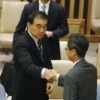
China Set to Reassert Clout in World Body
When a U.S. delegate once confronted a Chinese diplomat about Beijing's uncompromising support for Pakistan, the Chinese reportedly responded with a heavily-loaded sarcastic remark: "Pakistan is our Israel."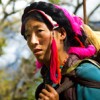
CHINA: As Tourists Come, Culture Goes
In 2005, the ‘National Geographic China’ magazine named this ethnic Tibetan village in western Sichuan province, sprawled over a valley wall amid snow-capped mountains, China’s most beautiful. Depending on how you look at it, that distinction was either a blessing or a curse.Growing China Worries Neighbours
China’s imperious behaviour in recent territorial spats with its edgy neighbours has touched a raw nerve. Anxiety about its intentions and the future outlook loom large as leaders of the 16-nation East Asia Summit gather this weekend in Hanoi to discuss regional matters.
CHINA: On the Thousand Mothers March
Rebiya Kadeer has taken up a campaign for the rights of a people usually far from world headlines: the Uyghurs, a predominantly Muslim minority in China.China Offers a ‘Marshall Plan’ to Some of Europe
China's display of largesse towards debt-ridden European nations has divided observers, inviting comparisons on one side to a Chinese Marshall plan for Europe, and to a Chinese communist takeover of the continent on the other.U.S.-CHINA: Will Renewed Military Ties Relax Regional Tensions?
While a growing dispute between the U.S. and China over the proper valuation of the renminbi is likely to dominate this weekend's annual meeting here of the International Monetary Fund (IMF), another aspect of the complex bilateral relationship between the two global giants may be on the mend.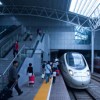
CHINA: Massive Rail Network to Cross Continents
As recently as the mid-1980s, China relied on steam-powered relics to transport citizens and goods around its vast territory. Today, the country is home to 6,900 kilometres of high-speed passenger train routes in what is the largest rail network in the world – and growing.China Summons Past to Advance Into Africa
Irked by accusations that it is the new coloniser of Africa, China is looking to use soft power and historical evidence of its ancient links to the continent to justify its economic embrace of Africa.CHINA: Great Green Wall Rises, But Questions Remain
Dubbed "The Great Green Wall," a human-made ecological barrier designed to stop rapidly encroaching deserts and combat climate change is coming up across China. By 2050, the artificial forest is to stretch 400 million hectares – covering more than 42 percent of China’s landmass.CHINA: Second Richest Plays Poor
As China basks in international praise for its spectacular economic transformation over the last 30 years, some shadow sides of this story of triumph have begun to emerge.LATIN AMERICA: Ties with China Based on Commodity Exports, Manufactured Imports
Exports from Latin America and the Caribbean will grow again this year, driven largely by demand from China. But the high proportion of commodities may increase dependency on China, and Asia as a region, warns a new report by ECLAC, the regional United Nations agency.SOUTH-EAST ASIA: China Flexes Hydropower Muscle
After all the turbines in the Xiaowan hydropower station sputtered to life this week in China’s south-west Yunnan province, the Asian giant was able to lay claim to having the world’s largest hydropower capacity.« Previous Page — Next Page »


The Week with IPS

NEXT STOP - SDGs
Tracking global progress towards a sustainable world
Tracking global progress towards a sustainable world
