Languages
Saturday, September 26, 2026



News and Views from the Global South
City Voices: The Word from the Street

PERU: Distribution of Earthquake Aid Under Scrutiny
Mayor Juan Mendoza seems perfectly at home. "Juanito, I need a coffin," "Juanito, we need tents in my barrio," "Juanito, the food’s run out in my neighbourhood," local residents clamour as they cluster around him.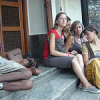
RELIGION-INDIA: Mother Teresa's Work With the Dying Lives On
Garishly made-up sex workers hang around the seedy street that leads to ‘Nirmal Hriday’, the home for the dying founded by Nobel peace laureate Mother Teresa, in a portion of an abandoned temple to the Hindu demon-slaying goddess Kali.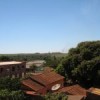
BRAZIL: Bittersweet Sugarcane
The sugarcane workers in this small Brazilian town ate at least 200 of the little roasted wild birds. But they had not hunted them. They merely collected the roasted bodies of the birds that died in the controlled fire set in the cane field.ARCHITECTURE-MEXICO: Skyscraper Has Feet of Clay
The Mexican capital’s leftwing government wishes to celebrate the 200th anniversary of the country’s independence by sponsoring the building of the tallest skyscraper in Latin America, on prime residential land beside the emblematic Chapultepec Park, to house the offices of wealthy corporations.IRAQ: Children Starved of Childhood
The violence around the continuing U.S. military operations in this city has robbed children of their childhood.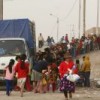
PERU: Little Help for Slum-Dwellers Left Homeless by Quake
"We have come here because God sent us," says pastor Pedro Leyva Díaz. He looks tired after distributing food, clothes and sweets in dozens of poor communities devastated by the earthquake in southern Peru.ASIA: War Footing Needed to Fix Water, Sanitation Issues
Government officials, sanitation experts, funding agencies and civil society representatives are unanimous that Asia’s water delivery and sanitation problems should be tackled with the same urgency as disaster relief.ENVIRONMENT-MEXICO: Green Plan to Cut Smog
The Mexico City government announced new environmental measures Thursday aimed at further restricting traffic, the main culprit for the city’s notorious smog. The plan is also to streamline the city’s chaotic traffic, in the face of warnings from experts of a total collapse of the system by 2010.BRAZIL: City Residents Want to Know ‘How Are We Doing?’
A civil society movement in Bogotá, Colombia has become a model for Brazilians who want to restore quality of life in the country’s two largest cities, by changing the political practices of city governments through mechanisms for communication and citizen oversight.
RIGHTS-US: Low-Income Housing on the Chopping Block
Even as people around the United States and the world recall the horrors of Hurricane Katrina two years ago, which displaced tens of thousands of the Gulf Coast's poorest residents, government-subsidised housing has come under increasing attack by policymakers in the U.S.BOLIVIA: Polarisation Reaches Boiling Point
A 24-hour business strike called by opponents of leftist President Evo Morales in six of Bolivia’s nine departments or states was the latest demonstration of the polarisation dividing the country.ENVIRONMENT-INDIA: Home Garbage Composting – Not Going to Pot
A variation of the age-old concept of composting household garbage, using cheap earthen pots, is turning into a runaway success in this fast-expanding metropolis of seven million people.LATIN AMERICA: As Citizen Oversight Spreads
Citizen oversight of public institutions and authorities is expanding in various shapes and forms in Latin America, but in order to continue spreading, the public must become more aware of their rights and their ability to take a more proactive stance in guaranteeing them, say experts.IRAQ: Fallujah Finds a False Peace
Fallujah is quiet these days. After all the fighting and destruction of 2004, U.S. and Iraqi forces call this success. Many residents are not so sure.DEVELOPMENT: Farewell to "Flush and Forget"
In urban settings, the one-time use of water to disperse human and industrial wastes is becoming an outmoded practice, made obsolete by new technologies and water shortages.FINANCE: U.S. Mortgage Woes Leave Poor Homeowners Adrift
The prospect of widespread dispossession is prompting closer scrutiny of U.S. mortgage lenders and calls for regulators to help poor borrowers, not big banks.BRAZIL: New Security Plan Combines Prevention and Punishment
After deploying the federal police in Brazil’s most violent cities, the government of Luiz Inácio Lula da Silva is now implementing integrated social policies as the preventive arm of its new public security programme.
HEALTH: Sanitation the World's Silent Humanitarian Crisis
The topic of toilets often makes people uncomfortable, says the U.N. children's agency UNICEF, and the subject of human wastes is rarely aired in public.NICARAGUA: ‘Invisible’ Victims of Pesticide Protest Government Neglect
For months, more than 3,000 Nicaraguans in a makeshift camp in the centre of Managua have been demanding a government response to their health needs and legal backing for their cause. They have been poisoned by the pesticide Nemagon, but in spite of their protests they are apparently invisible to those in power.RIGHTS-VENEZUELA: No Change in Patterns of Police Brutality and Impunity
Eloísa Caro, a 26-year-old domestic worker, was blindfolded, handcuffed, beaten about the face, verbally abused and nearly suffocated with a plastic bag last year when she was summoned by the judicial police in the Venezuelan capital to give a statement on a robbery in the house where she worked.DEVELOPMENT: Singapore and Iraq – Contrasts in Water Management
As the world faces new threats of water scarcity, triggered by phenomena like global warming and bioenergy demands, Singapore and Iraq have been singled out as two political extremes in water management.« Previous Page — Next Page »


The Week with IPS

NEXT STOP - SDGs
Tracking global progress towards a sustainable world
Tracking global progress towards a sustainable world
