Languages
Monday, October 12, 2026



News and Views from the Global South
Conflict Prevention - Africa
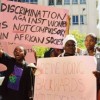
POLITICS-ZIMBABWE: Now To Share Power With Women
The ink was barely dry on the power-sharing agreement signed by Zimbabwe’s main political parties on Sep. 15 when women activists demanded a fair share of power.
RIGHTS-SOMALIA: Building Women’s Leadership
The moderator raps her pen on the table to hush the boisterous assembly of Somali women gathered in Bagamoyo, on the Indian Ocean coast of Tanzania. Their voices drop for a moment before the sound level rises again to a heated crescendo.
Q&A: "They Mobilised Violence For Their Own Reasons"
The text of the Kenyan National Dialogue and Reconciliation Accord, brokered by former UN chief Kofi Annan in March this year and released to the press in full last Sunday, identifies land as one of the central issues creating "economic, social, political and environmental problems" in the country.SIERRA LEONE: Commission Launches First Human Rights Report
A barefoot girl watches expressionless as men clad in expensive suits and women in designer clothes make their way on foot to the Community Centre in Kroo Bay, Freetown. They are here to launch the first ever State of Human Rights Report for Sierra Leone; Zainab, 12, is in the midst of another day on the narrow, muddy streets of the area, selling groundnuts to help support her family.RIGHTS-ZIMBABWE: Hard Times Continue As Talks Drag On
There was jubilation at Gokwe Centre in Zimbabwe's Midlands province when the Herald newspaper published a story headlined "Deal Sealed" on August 13 - a clear indication of the hopes Zimbabweans have pinned on the deadlocked talks over power-sharing between ZANU-PF and the two MDC formations.
AFRICA: Proving Ground For International Criminal Court?
The International Criminal Court (ICC) is using Africa as a guinea pig, and is too selective when it comes to arresting, indicting and prosecuting perpetrators of war crimes and crimes against humanity. This was one of the opinions raised during a recent seminar in Cape Town organised by the Centre for Conflict Resolution (CCR).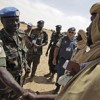
POLITICS: ‘UNAMID In Boxing Ring With Hands Bound’
Calls for an increased U.N. peacekeeping presence are growing as warring parties in Sudan’s troubled region of Darfur remain mired in a vicious cycle of violence that has taken about half a million lives in the past four years.EGYPT: Bashir Finds Strong Support
In its first ever move against a head of state, the International Criminal Court (ICC) prepared last month to indict Sudanese President Omar al-Bashir for war crimes allegedly committed in Darfur. Since then, most Arab and African leaders have condemned the move, which some local commentators see as politically motivated.POLITICS-KENYA: Writing For Peace
Since January, a group of politically-conscious poets, writers and storytellers in Kenya has been writing an alternative account of the violence that shook Kenya during the first two months of the year. Their work is now part of the evidence before the Waki Commission inquiring into post-election violence in Kenya.RIGHTS-SUDAN: ICC Indictment Sparks Hope, Fear
The indictment of Sudanese President Omar al-Bashir on 10 counts of war crimes, crimes against humanity and genocide has greatly encouraged some Darfuri human rights activists. Other observers in Sudan fear it will provoke a backlash from the government, further worsening the situation in Darfur.RIGHTS-KENYA: Commission To Challenge Silence on Sexual Crimes
No sooner did Kenya's Commission of Inquiry into Post-election Violence begin public hearings last week than it was overwhelmed by the enormity of the task at hand.
AGRICULTURE-CHAD: Farmers, Herders Collide In Southern Refugee Camps
Clarisse Larlombaye was nearly ruined when a herd of cows got into her rice field one night. The tiny 900-square-meter plot, outside the U.N.-run Gondje refugee camp in lush southern Chad is the sole source of income for Larlombaye and the two other Central African refugees she shares it with.
ENVIRONMENT-CHAD: Peacekeepers Try To Tread Lightly
Polish army Lieutenant Colonel Marc Gryga didn’t realize he was planning on building his country’s major base here in eastern Chad on top of a cemetery. "It didn’t look like any cemetery you see in the United States or Europe," he says, referring to absence of headstones.RIGHTS-ZIMBABWE: Women Bear Brunt of Violence
"We are too familiar with the violence that was meted upon numerous of us from 1890 when the colonialists came into our country right up to the most recent elections. Chief among these forms of violence is sexual violence, and it concomitant implication, HIV infection. Zimbabwean women now have the lowest life expectancy world wide because of HIV & AIDS - 34 years."Q&A: Is Democracy Dangerous in Multi-ethnic Societies?
The Centre for Research on Inequality, Human Security and Ethnicity (CRISE) would seem to have its work cut out for it in a world racked by brutal and enduring conflict. The centre's goal is to explore the links between ethnicity, inequality and conflict in order to identify policies that could lead to more inclusive multi-ethnic societies.POLITICS-ZIMBABWE: Knockout or Standing Eight for Democracy?
The decision this week by Zimbabwe's opposition Movement for Democratic Change (MDC) party to pull out of Friday's presidential run off election will not have surprised many people in Zimbabwe. A growing chorus of doubt regarding the legitimacy of the poll has been raised, which came amid mounting political violence in the country.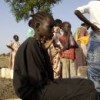
SUDAN: Cracks In North-South Peace Deal
Nyandeng Akot rushed out of the rude shelter of thatch and plastic sheeting pinned against the side of a tree with sticks. Grabbing a passing aid worker's arm, she said she has nothing except the four children that she grabbed when she began running from renewed fighting in Sudan's Abyei area a month ago.RIGHTS-SOUTHERN AFRICA: Xenophobia Impacts on Mozambique
A month ago, 47-year-old Catarina Manungo was the owner of a two-bedroom house in Boksburg, where she lived with her four children and a grand-daughter. A few short weeks later, Manungo and her two youngest children find themselves living in a tent in the Maputo neighbourhood of Matola Garre.
UGANDA: Hopes For Final Peace Falter
When he was 10 years old, Alfred Bogomin fled Paicho village in northern Uganda along with his family to escape from the Lord's Resistance Army rebels. After 20 years in a displaced persons camp, he returned to his ancestral home last month.
RIGHTS-ZIMBABWE: "Dictatorship Is Temporary"
Fourteen members of Women of Zimbabwe Arise, a Bulawayo-based human rights organisation, are being held in two prisons in the capital Harare. They were arrested while marching to demand that the Southern Africa Development Community (SADC) intervene to end post-election violence; their case is just one illustration of escalating human rights abuses in Zimbabwe.POLITICS-AFRICA: Critics Target U.S. Military Command
In just a few months, the United States Africa Command (AFRICOM) - Washington's latest military oversight structure for the continent - is expected to be fully operational.« Previous Page — Next Page »





The Week with IPS

NEXT STOP - SDGs
Tracking global progress towards a sustainable world
Tracking global progress towards a sustainable world
