Languages
Wednesday, October 14, 2026



News and Views from the Global South
Conflict Prevention - Africa
RIGHTS-AFRICA: Security Council Urged to Protect Civilians
As diplomats prepare to leave for Africa where the U.N. Security Council is due to meet next week, calls from activists are growing for strong international action to address the worsening human rights situation in many parts of the continent.PAKISTAN: Quake Orphans Still Dependent on Charity, NGOs
Thousands of children orphaned by the earthquake that hit northern Pakistan in October 2005, leaving 85,000 people dead, continue to be dependent on charity and support provide by donors and non-government organisations (NGOs).
RIGHTS-SOUTH AFRICA: They Will Have to Shoot Me First
Thousands of foreign residents of Cape Town have sought refuge at police stations, churches, community halls and in camps set up by municipal disaster management services.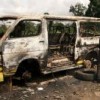
POLITICS-KENYA: Big Cabinet, Bigger Challenges
The oaths of office have been taken, and solemn pronouncements made about the ills that have dogged Kenya's past, and the way to address these in the future. Now, can the East African country's vast new coalition government move from talking the talk to walking the walk?
POLITICS-DRC: Cautious Calm Settles Over War-Scarred Ituri Region
Wading through the chest-high grass outside of this hamlet in north-eastern Democratic Republic of Congo, Mathieu Nyakufa gestures to the bones - still bleaching in the sun - of those who have been lost to the country's wars.
POLITICS-SUDAN: The Census Saga Continues
Sudan's crucial national census has been delayed by a week over concerns that displaced persons living in the north have still not been repatriated to the south, something which could seriously affect the results of the count.UGANDA: “God Should Be So Kind That I Can Have Contraceptives”
For many of Africa's women, getting access to family planning services is difficult at the best of times. When war intervenes they can find themselves without any services at all, even as they become more vulnerable to sexual violence - the situation in northern Uganda being a case in point.
/UPDATE/POLITICS: Zimbabwe Holds Its Breath Over Election Results
With more than a day having passed since polling stations for Zimbabwe's general elections closed their doors, complete official results for the ballot have yet to be released.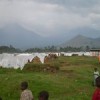
DEVELOPMENT: A Humanitarian Disaster Unfolds in Eastern DRC
In a mist-shrouded valley between the Mount Nyiragongo volcano and a pair of its dormant cousins looming in Rwanda to the east, nearly 3,000 souls wait in limbo, having fled a conflict that has succeeded in making this lush corner in eastern Democratic Republic of Congo (DRC) nothing less than hell on earth for its people.
POLITICS-KENYA: From Suspension of Talks to Fragile Success
The signing of a power-sharing agreement to end the political crisis in Kenya has elicited a variety of reactions.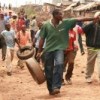
POLITICS-KENYA: "It Will Not Be Machetes and Arrows Any More, But Firearms"
Political analyst Kwamchetsi Makhokha has warned that failure of talks to address Kenya's political crisis could prove explosive. The East African country is trying to resolve a disputed presidential election that has already cost more than 1,000 lives - and displaced up to 600,000 people.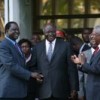
POLITICS-KENYA: What a Prime Minister Might – and Might Not – Do
A fifth week of talks to end Kenya's violent election dispute is scheduled to begin Monday, with the extent of power to be exercised by a new prime minister one of the key items on the agenda.Q&A: "I Fear That Chad Will One Day Lose Its Sovereignty"
In the wake of a failed rebel attack three weeks ago, the Chadian capital of N'Djamena is feeling the effects of a clampdown on opposition leaders, activists and reporters - this as authorities scour the city for any remaining rebels.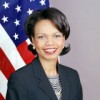
POLITICS-KENYA: Rice Lobbies for Power-Sharing Government
U.S Secretary of State Condoleezza Rice has told feuding political leaders in Kenya that power-sharing is central to pulling the country out of its post-election crisis.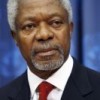
POLITICS-KENYA: One More "Frightening Step" To Go
Efforts to defuse the post-election crisis in Kenya have entered a decisive phase, with negotiators appointed by President Mwai Kibaki and opposition leader Raila Odinga close to agreeing on a power-sharing government, chief mediator Kofi Annan said Friday.
POLITICS-KENYA: "Grand Coalitions Have Served Other Nations Well" – Annan
The creation of a power-sharing government in Kenya appeared imminent, Tuesday, after a parliamentary briefing in which former United Nations secretary-general Kofi Annan spoke of a possible "grand coalition" to end the country's political crisis. He has also noted that a deal is hoped for by week end.
POLITICS-KENYA: Hopes of a Breakthrough in the Post-Election Crisis
Negotiations to bring an end to the political chaos in Kenya that was sparked by disputed presidential elections entered their third week, Monday, in the capital of Nairobi, amidst reports that an agreement may finally be in sight.KENYA: The Media Is Not Innocent
The media was partly blamed for the Rwandan genocide 14 years ago which left nearly one million people dead in 100 days. "Kill the Inkotanyi [cockroaches]!" a local radio station urged its listeners at the time.
POLITICS-AFRICA: Sudanese Women Meet at AU Summit
Pressure the Sudanese government to resolve the Darfur conflict and monitor United Nations troops for sexual offences, a delegation of Sudanese women told leaders at the African Union (AU) Summit here.SUDAN: Some Southerners Have Hope For Unity By 2011
Citizens from Sudan’s southern region, long caught in a power struggle with their country’s northern-controlled government, are looking with a mixture of hope and uncertainty to 2011 when they will vote in a referendum on whether or not the south will remain part of Sudan.POLITICS: Kenya’s Problem Goes Beyond Ethnicity and Elections
There is more to Kenya’s post-election violence than a bungled vote count and so-called tribal rivalries. As protests degenerate into organised ethnic violence in Rift Valley towns and countryside, the root-cause of the unrest lies elsewhere.« Previous Page — Next Page »





The Week with IPS

NEXT STOP - SDGs
Tracking global progress towards a sustainable world
Tracking global progress towards a sustainable world
