Languages
Wednesday, October 14, 2026



News and Views from the Global South
European Union
Vietnamese Struggle for a Place in Poland
Thuan has had little luck. In his youth he joined the "boat people" fleeing Vietnam to Indonesia. Deported back after six years, carrying the stigma of an anti-communist, he could not find a job.BALKANS: Rising Anti-EU Sentiment
Anti-European Union (EU) sentiment is growing across the Balkan countries that have proclaimed membership in the European family of nations as their highest political goal during the past decade. It is caused by prolonged economic hardships that still bite hard, failure of authorities to fight widespread corruption and political deadlock in creating stable governments.HUNGARY: Media Struggles to Find a Free Voice
EU pressure may force Hungary to step back on some provision of its controversial media law, but its main goal has been achieved before it even took effect: media are intimidated.Soviet Shadow Over Russia
With less than a year remaining for parliamentary and presidential elections in Russia, human rights activists and opposition forces have become targets of political intimidation and frequent harassment by law enforcement agencies. They see an effort to exclude them from the country’s democratic process.Brutal Crackdown in Belarus
Repressions in Europe’s last dictatorship show no signs of abating despite EU sanctions and international condemnation. International rights watchdogs warn that human rights abuses in Belarus have reached a "new low", and activists say that no one appears safe from Alexander Lukashenka’s brutal crackdowns in the wake of his controversial re-election as president.Serbs Turn Back to Arms for Money
A long-running joke in Serbia goes that the country’s most successful export products are berries, grains, maize, and world-renowned tennis players like Novak Djokovic and Jelena Jankovic.Public Unrest Boils Over in Albania
The Albanian opposition is set to hold another mass rally on Friday, even though three people were killed during an anti-government demonstration last week, allegedly by armed forces of the Ministry of Interior.EAST EUROPE: Midwives Struggle to Deliver Home Births
Women’s rights in Eastern Europe have been put into the spotlight as a Hungarian midwife faces five years in prison for assisting with home births.Media Crackdown Threatens Democracy
Following the approval of a restrictive media law that led to widespread domestic and international condemnation, Hungarian society is trying to come to terms with the broader consequences of the country’s alleged descent into authoritarianism.Slovenia Goes Slow on Privatisation, and Succeeds
Twenty years ago when the Berlin wall fell, radical privatisation was promoted as a solution to the ills of Eastern European economies. The one country that ignored the West’s recipe– Slovenia – seems to be faring far better.EASTERN EUROPE: Playing Dice With Migrants
Over the past years, acceptance rates for asylum-seekers in Central and Eastern Europe have been decreasing slowly but steadily. Even for those who do receive protected status, life is a gamble.
BALKANS: Political Pieces Assemble a Teenager
Mila looks like the thousands of teenage girls who visit the newly-opened, glamorous shopping mall in downtown Sarajevo. She’s discreetly dressed in black trousers and jacket, with carefully manicured fingernails. The 19-year- old’s name means "sweet" or "kind". The name is in harmony with her enchanting smile.EUROPE: More of the Last Dictatorship
Belarus is set to remain Europe’s last dictatorship after Alexander Lukashenka was returned to the presidency last weekend in an election result which his critics say was never in doubt.EUROPE: GM Debate Gets a Polish Twist
In the summer presidential campaign, fake posters of two leading candidates showed up on the streets of Polish cities. "United we stand, divided we fall", the slogan of now president Bronislaw Komorowski, became "United we stand, modified we fall". Equally bombastic "Poland is most important" by opposition leader Jaroslaw Kaczynski turned into "Poland without GMO is most important".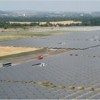
PORTUGAL: Economic Crisis Looms, But Clean Energy Shines On
While the shadow of a speculative assault looms over Portugal, similar to the economic crises that hit Greece and Ireland, this Iberian nation manages to hold up the beacon of renewable energy.EUROPE: Legally, and Dangerously High
Eastern European youths have been getting high on "plant feed" or "bath salt" for over two years, catching up fast with Western European trends in drug abuse. Governments in the region are now scrambling to control use.EU: Extraditions Process Abuses Suspects
Robert Hörchner can only sleep for two hours at night before the sweating starts. His wife Annelies wakes up frequently, too; each time she hears a noise outside she opens the curtains, expecting to see police at the front door. The couple are traumatised because Robert spent ten months locked up in a filthy Polish cell. He has been accused of holding the lease to a property where cannabis was grown but insists that he is innocent.KYRGYZSTAN: Fast Melting Glaciers Threaten Biodiversity
Kyrgyzstan's glaciers are receding at what scientists say is an alarming rate, fuelled by global warming. And while experts warn of a subsequent catastrophe for energy and water security for Kyrgyzstan and neighbour states downstream reliant on its water flows, devastation to local ecosystems and the effects on plant and wildlife could be just as severe.BALKANS: Rape Victims Fight a Mostly Losing Battle
It takes little to bring out the scars that many women who were raped in Bosnia still carry. Rumours, later shown to be unfounded, that Angelina Jolie would star in a film to be shot in Sarajevo on the war-time love between a Serb man and a Bosniak Muslim girl he raped, had women's groups lodging strong protests.EUROPE: Drones may Track Migrants
The notice appeared quietly on the website of Frontex, Europe's agency to fight undocumented migration. It called for expressions of interest in demonstrating "Small UAVs (Unmanned Aerial Vehicles) and Fixed systems for Land border surveillance" at its workshop.China Finds a New Gateway in East Europe
When China's new ambassador to Bulgaria assumed his post in mid-September he made headlines reminding the nation of a fact that may have been intentionally neglected by Bulgarian governments in the post-communist years of reform. Bulgaria was only the second country after the former Soviet Union to recognise the People's Republic in 1949, and that historical legacy was destined to endure.« Previous Page — Next Page »





The Week with IPS

NEXT STOP - SDGs
Tracking global progress towards a sustainable world
Tracking global progress towards a sustainable world
