Languages
Wednesday, October 7, 2026



News and Views from the Global South
European Union

Q&A: 'The Date for Kosovo Independence Is Set'
Every passing day brings more pressure on the two million people of Kosovo over the future of the province. Demonstrations on the streets of Pristina and Mitrovica, for and against independence respectively, are strong indication of the social unrest in anticipation of a decision.SLOVAKIA: Government-Media War Escalates
In the midst of a war between government and the media, a new and controversial press bill will force media outlets to publish anyone's reactions to articles considered offensive.RIGHTS: 'A Fifth of European Children in Poverty'
Nearly one-fifth of children in the European Union are living in poverty, a new report has concluded.ROMANIA: Fighting for the ‘Right’ to More Emissions
Following the example of seven other countries from Central and Eastern Europe that joined the European Union (EU) in 2004, Romania and Bulgaria, the newest members, have sued the European Commission (EC) for lowering their national caps for carbon dioxide emissions.BALKANS: Discrimination Rife Within Kosovo
In the northern part of the ethnically divided city Mitrovica, 38 km north of Kosovo capital Pristina, 60 people have occupied an abandoned two-floor building. Among them is Alexander Damianovic, of Serbian ethnic origin, who arrived in Mitrovica in 2001 after transiting through various places in former Yugoslavia.GEORGIA: Protests Rise Over Elections
Leading opposition candidate Levan Gachechiladze has accused the Georgian government of widespread fraud in the last presidential election after the Central Election Commission released the final results declaring Mikheil Saakashvikli winner and new president.HUNGARY: Reform Drive Hits a Wall
The introduction of some of the most wide-ranging austerity measures in the recent history of Central-Eastern Europe is forcing Hungarians to endure a period of hardships, but an opposition-initiated referendum and the resistance of the middle classes are endangering the socialist government's plans.BALKANS: Art Breaks Some Ice
An exhibition presented by Serbia in Croatian capital Zagreb is doing its bit to thaw icy relations between Serbs and Croats, who fought one another in the bloody war of disintegration of former Yugoslavia.BALKANS: Serbs Wait For Free Wealth
Going by official media, the Kosovo dispute seems to top the nation's agenda. But Serbs have their mind more on visions of free wealth that they believe will be theirs, after the Law on Free Distribution of Shares came into force last week.EUROPE: Little Slovenia Takes Charge
Slovenia saw one of the greatest honours in its short history of 16 years as an independent state Jan. 1 when it took the rotating presidency of the 27-member European Union (EU) for the next six months.CZECH REPUBLIC: Corruption Returns to Haunt Government
Former deputy prime minister Jiri Cunek intends to return to his post in spite of public rejection of the alleged corruption scandals involving him.CHALLENGES 2007-2008: Cracks Widen in East Europe
Ideological issues, corruption and populism pervade the political culture of the Czech Republic, Hungary, Slovakia and Poland at a time when both economic reform and an improvement in living standards are being promised to bridge the gap with the West.POLAND: Facing War Crimes in Afghanistan
Poland has woken up to the possibility that its troops in Afghanistan were involved in a war crime against defenceless civilians.CHALLENGES 2007-2008: Still Outsiders After a Year in EU
Bulgaria and Romania joined the European Union (EU) Jan. 1 2007 under the toughest conditions ever imposed on new member states. Although the two countries barely met the criteria for membership, their strategic location, between the Western Balkans and the Black Sea, as well as their relatively trouble-free domestic politics, made them an asset for the stability of EU's eastern front.BALKANS: EU Abandons Boundaries, Serbia Wants Them
As the European Union (EU) drops boundaries between its countries and its people, Serbia plans to introduce new ones against its disputed southern province, Kosovo.SLOVAKIA: Governance Gets Ever Messier
The disputes within Slovakia's governing coalition have almost caused the government's collapse. Additional trouble can be expected, but the powerful Prime Minister's extraordinary popularity and the weakness of the opposition are holding the coalition together.CHALLENGES 2007-2008: EU Rich in Events, Poor on Results
For the European Union, 2007 was a year rich in events, but poor on results. Next year promises to be as turbulent as this one, and probably as unremarkable in its outcome.UKRAINE: The Orange Look Gets Another Chance
With the appointment of Yuliya Timoshenko as Prime Minister of Ukraine, the pro-Western 'Orange' forces have been granted a second opportunity to prove that their political programme is stronger than narrow power ambitions.RUSSIA: The Meat of the Polish Dispute is Politics
When Russia agreed to lift its ban on import of Polish meat and dairy products, it was something of a diplomatic breakthrough.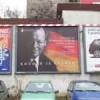
SERBIA: Too Late, Billboards Show a Way
The Serbian government has began an unusual billboard campaign to mobilise its people under the slogan 'Kosovo is Serbia' ahead of crucial developments that might lead to independence of the southern, ethnic Albanian populated province.CZECH REPUBLIC: More Loyal Than…
A report by U.S. intelligence services minimising the Iranian threat has meant another embarrassment for Czech politicians supportive of U.S. plans to set up a radar base in Central-Eastern Europe.« Previous Page — Next Page »





The Week with IPS

NEXT STOP - SDGs
Tracking global progress towards a sustainable world
Tracking global progress towards a sustainable world
