Languages
Wednesday, July 22, 2026



News and Views from the Global South
International Cooperation - More than Just Aid
ENVIRONMENT-ASIA: Mekong Commission Fends Off Credibility Charges
The head of the Mekong River Commission (MRC) has defended the regional body against charges that it faces a crisis of credibility arising from inability to guide hydropower development on the Mekong mainstream.
BURMA: Junta Holds Referendum in Cyclone Aftermath
Shortly after sunrise on Saturday, a few men and women in this town on the banks of a river broke their morning routines to cast ballots - an act unusual in the military-ruled country.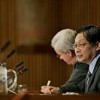
BURMA: Junta Does U-Turn on Relief Aid
The military government of Burma (Myanmar), in a dramatic turnaround, has offered to cooperate with the United Nations in its massive relief efforts in the cyclone-devastated country where the death toll could exceed 100,000.
BURMA: UN Aid Arrives, But Many Doors Still Closed
As the first U.N. relief planes landed in Yangon early on Thursday, humanitarian officials complained that the aid flowing into cyclone-devastated Burma (Myanmar) is still encountering bureaucratic obstacles that are threatening the lives of desperate survivors.INDIA/US: Nuke Deal Set to Time Out
Faced with continuing domestic opposition to the United States-India nuclear cooperation deal, the Indian government has launched 'one last push' to complete negotiations before the window of opportunity slams shut.
HEALTH: Malaria Campaigns Ramp Up Focus on Bed Nets
With a million people a year still dying from malaria, the United Nations is leading a new campaign to provide universal coverage of essential malaria control measures - particularly bed nets - in Africa by the end of 2010.Q&A: “Transgenic Seed Companies Lie and Bribe”
Biotech corporations that developed genetically modified seeds are bribing authorities and carrying out costly advertising campaigns "plagued with lies in order to create monsters that attack life," says Jesús León Santos, an indigenous man who is one of this year's winners of the Goldman Environmental Prize.
Q&A: Is a Global News Agency of the South Viable?
When the tart-tongued prime minister of a Southeast Asian nation was once asked what the leading newspapers were in his country, he remarked rather cynically: "We don't have any leading newspapers because all our newspapers are misleading."
AGRICULTURE: Brazil Shares Technology with Africa
The people of Brazil have reason to believe that they are making a real contribution to reducing hunger and environmental threats in the world by developing agricultural technology that has begun to be shared with poorer countries.
Q&A: 'India Is Not Competing With Any Country in Africa'
As a senior politician associated with the movement against apartheid, it was natural for India’s minister of state for external affairs Anand Sharma to play a key role in the Apr. 7-9 India-Africa Forum Summit.CARIBBEAN: Regional Security Takes Centre-Stage
For two days, they met behind closed doors, and when they emerged on Saturday night, Caribbean leaders were unanimous that it was time to invest in new strategies to stem the rising tide of violent crime in the region.POLITICS: U.N. Peace Missions Falter in Africa
The United Nations remains virtually crippled as two proposed peacekeeping missions - one in Darfur and the other in Somalia - are making little or no progress.INDIA: Taking on China in Africa
The world’s two most populous countries, China and India, are now seriously competing with each other to engage resource-rich Africa, thereby imparting a new dimension to South-South relations.INDIA/US: New Deal in Nuclear Poker
As the political window of opportunity to conclude the United States-India civilian nuclear cooperation deal during George W. Bush’s presidency further narrows, the "now-it’s-off, now-it’s-on" game of political poker over the agreement has taken another turn in New Delhi.CARIBBEAN: Crime Wave Spills Across Borders
Two mass slayings by armed gangs in Guyana earlier this year that took 23 lives, and an overall surge in violent crime in many parts of the Caribbean, have spurred regional leaders to call a special meeting to discuss the issue next month.JAPAN/US: Pacific and Not-So-Pacific Oceans
The seas both divide and unite Japan and the United States. Caught between countering threat and promoting maritime cooperation, the two countries have worked together to build regional approaches to terrorism and piracy.
Q&A: Strategic Plan Emphasises South-South Cooperation
"UNDP’s South-South work is focused on marshalling the expertise and resources at our disposal to support developing countries pursue their development goals," says Kemal Dervis, Administrator of the United Nations Development Programme (UNDP).
RIGHTS: U.N. Inaction Threatens "Mass Killings" in Africa, Asia
The international failure to respond aggressively to the killings in Sudan, and more recently in Kenya, is threatening the spread of genocide and ethnic cleansing in other parts of Africa, a London-based human rights organisation warns.RIGHTS: U.N. Takes Lead on Ending Gender Violence
The United Nations has launched a multi-year global campaign to intensify its efforts to help eliminate violence against women, which has long remained hidden in a "culture of silence".RIGHTS-GUATEMALA: Defenceless Defenders
The security situation for human rights defenders in Guatemala has gotten worse in the last five years, with around 50 activists killed in that period and near total impunity for the murderers, said Hina Jilani, special representative of the United Nations secretary-general.DISARMAMENT-NICARAGUA: Landmine-Free by 2009?
Military sources in Nicaragua and Organisation of American States (OAS) officials warned that dozens of minefields remain live and dangerous in this country - a legacy of the 1981-1990 civil war.« Previous Page — Next Page »


The Week with IPS

NEXT STOP - SDGs
Tracking global progress towards a sustainable world
Tracking global progress towards a sustainable world
