Languages
Wednesday, July 22, 2026



News and Views from the Global South
International Cooperation - More than Just Aid
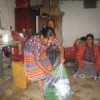
GUATEMALA: Indigenous Women Weave Incomes, Self-Confidence
"Before forming part of the association, we were shut up in our houses. Now we have overcome our fear and shame of going out and seeing new places, and we are bringing money in for our families," says Nicolasa Raxtun, a 30-year-old Maya Cakchiquel Indian woman.
POLITICS-TANZANIA: No Spending on Those Who Steal, Says Bush
U.S. President George W. Bush, on a five-nation tour of Africa, has showered praise on the anti-corruption efforts of Tanzania's president, Jakaya Kikwete - whose government is receiving substantial aid from Washington.POLITICS: Bush Bids Farewell to Africa
In an attempt to polish his image and advance U.S. interests in the twilight of his presidency, George W. Bush is visiting Africa.CUBA: State-of-the-Art Centre Minimises Trauma of Sexual Abuse
The young boy speaks in barely audible tones and hardly looks up from the stuffed animal that he turns over and over in his hands. The counsellor helps him, repeating his words, prompting him to continue, but without ever asking "what happened?" or "how did you feel?" Despite the boy’s visible anxiety, the story slowly emerges.POLITICS-CHINA: Spielbergian Snub – Blow To Cultivated Image
For image conscious China the public snub by Oscar-winning director Steven Spielberg, withdrawing involvement with the Beijing Olympics to protest the country’s indifference to the Darfur crisis, is seen as a setback to painstaking efforts to stage the perfect ‘coming-of-age’ party.DEVELOPMENT-TANZANIA: A Presidential Seal of Approval
U.S. President George W. Bush will spend most of his time during a five-nation tour of Africa later this month in Tanzania, to spotlight development gains in the East African nation.RIGHTS: Ignoring Girls' Welfare Carries High Price
Investing in young women and girls in developing regions must be a top priority for governments, multilateral agencies and the private sector, say the authors of a report released here this week.SUDAN: Weaknesses Exposed in Darfur Peacekeeping Force
On Jan. 7, military forces from the Sudanese government opened fire on a convoy of peacekeepers in Darfur. Although the government denies that the attack was intentional, it has thrown into question the capability of UNAMID, the joint U.N.-African Union (AU) peacekeeping mission in the region, to keep the peace.POLITICS: U.N. Force in Darfur Grounded Even Before Takeoff
A proposed 26,000-strong joint U.N.-African Union Mission in Darfur (UNAMID), described as potentially the world's largest single peacekeeping force, has been virtually grounded even before it could take off due largely to lack of troops and military equipment.INDIA/CHINA: Eyeing Burma
When the world’s two most populous countries held a summit this month in Beijing, their agenda was brimful with collaboration. India and China, once adversaries that fought a war in 1962, are now leading trading partners.DEVELOPMENT-BRAZIL: Solidarity Economy Combats Exclusion
The Harmony Agricultural Company has become Brazil’s largest worker-managed business in the solidarity economy. It provides employment for 4,300 families who work 26,000 hectares of land, and its main activity is producing sugar at 48 mills.CUBA: Economic Independence for Rural Women
María Valido has stopped thinking of herself as a simple farmer devoted to traditional household chores since becoming involved in an agricultural innovation programme that has changed the lives of hundreds of families in rural regions of Cuba since 2000.POLITICS: Alliance Hopes to Dispel “Culture of Fear”
Preparations for an upcoming international gathering to promote worldwide respect for cultural and religious diversity are now in full swing.DEVELOPMENT: Qatar Pledges to Promote South-South Cooperation
"Despite significant progress in the South, the pattern of cooperation has not been commensurate with the comprehensive nature of the commitments contained in the various declarations and other documents on South-South cooperation," Ambassador Nassir Abdulaziz Al-Nasser, Permanent Representative of the State of Qatar to the United Nations, told IPS. "The existing capabilities and capacities in the South have not been adequately acknowledged and utilised," he added.Q&A: PGTF Disburses $10M to 179 Regional Projects
"We have provided financial support to 179 South-South cooperation projects since 1987 in the fields of food and agriculture, trade, technology, energy, raw materials, technical cooperation, finance, industrialisation, and health," Eduardo Praselj, chairman of the Perez-Guerrero Trust Fund (PGTF), told IPS.INDIA/US: Nuclear Deal – Vienna Has Reservations
As the window of opportunity to complete the United States-India nuclear cooperation deal narrows, the agreement seems to be running into problems with the International Atomic Energy Agency (IAEA), the Vienna-based United Nations body dealing with nuclear matters.LATIN AMERICA: Rural Women Forge Their Own Path in Microenterprise
Rural women from five Andean countries presented their successful microenterprises as part of a regional competition for female crafts and food producers, which also served as an opportunity for sharing the life stories of these leaders in the struggle against poverty.LATIN AMERICA: Prizes for Communities Fighting Exclusion
They work in the deep heartland of Brazil, or in urban slums. They all seek social inclusion, and their starting point is the bottom of the social ladder, with people who have a wide experience of life, contrasting with their short years.DEVELOPMENT-LATIN AMERICA: Local Innovation – Fresh and Fair
This is no ordinary contest. The participants are from the most vulnerable areas of Latin America, and they are already winners because they have been selected out of 900 projects applying for the Social Innovation Fair organised by ECLAC in this southern Brazilian city.POLITICS: Lawmakers Call a Halt to Indo-US Nuclear Deal
The Manmohan Singh government’s hopes of garnering at least a semblance of support for the controversial United States-India nuclear cooperation deal from elected political representatives outside the ruling United Progressive Alliance (UPA) have crashed.AFRICA-EU: Dodging the (Human Rights) Issue
On the eve of the second Africa-European Union summit, there is broad agreement on the need to defend human rights, above all else. But academics, analysts and activists from both continents harbour serious doubts that this noble aim will find root in reality.« Previous Page — Next Page »


The Week with IPS

NEXT STOP - SDGs
Tracking global progress towards a sustainable world
Tracking global progress towards a sustainable world
