Languages
Friday, October 9, 2026



News and Views from the Global South
IPS UN Bureau Report

Parliamentarians Seek Solutions to Protect Children from Digital Abuse
Vulnerable children are being targeted online faster than parliamentarians and law enforcers can act, a conference convened by the Asian Population and Development Association (APDA) heard. Yet, with international cooperation and sharing of ideas, lawmakers believe the scourge of online abuse can be addressed.
UN’s Cost-Cutting Mergers Come Under Scrutiny While Search for Locations Worldwide Continues
Faced with a severe liquidity crisis and a hostile Trump administration, the UN continues to merge some of its multiple agencies, and move them out of New York, relocating to Europe, Africa, Asia and the Middle East. Perhaps the first two agencies to be merged will be UN Women (created in 2010) and the UN Population Fund (created in 1967), with some staffers moved to Bonn and others to Nairobi.
Science-Informed Policy Action Key to Biodiversity Conservation
Global biodiversity is disappearing at breakneck speed and, in the process, threatening the future of humanity. The loss is not a future threat but a present crisis that Dr. Luthando Dziba, the new Executive Secretary of the Intergovernmental Platform on Biodiversity and Ecosystem Services (IPBES), believes can be tackled with science-based policy action.
UNGA80: Climate and Health in the Mix of Hope and Despair
The Intergovernmental Panel on Climate Change (IPCC), the UN's body on climate science, has over the years, repeatedly and steadily reported on the science of global warming leading to the changing climate with visible impacts.
Wealthy Nations Urged to Curb Climate Finance Debt For Developing Countries
In recent years, international climate financing has declined sharply, leaving billions of people in developing nations increasingly vulnerable to natural disasters and unable to adapt effectively. With major cuts in foreign aid, these communities are expected to face the brunt of the climate crisis, while wealthier nations continue to reap economic benefits.
Two-Thirds of Climate Funding for Global South are Loans as Rich Nations Profiteer from Escalating Climate Crisis
New research by Oxfam and the CARE Climate Justice Centre finds developing countries are now paying more back to wealthy nations for climate finance loans than they receive—for every USD 5 they receive, they are paying USD 7 back, and 65 percent of funding is delivered in the form of loans.
Explainer: COP30’s ‘Granary of Solutions’ Will Be Showroom of World’s Best Climate Fixes
Once a year, the COP presidency or the role held by the Minister of Environment from the host government at a Conference of the Parties (COP) meeting, sets out on an ambitious, year-long journey in hopes of delivering the climate deal of a lifetime.
Belarus Prisoner Release a Diversion, Say Rights Activists
As Belarusian president Alexander Lukashenko continues to pardon political prisoners in an apparently increasingly successful attempt to improve diplomatic relations with the US, rights groups have warned the international community must not let itself be ‘tricked’ into thinking repressions in the country are easing.
World War II Era Weapons Still Threatening Lives and Development in the Solomon Islands
Last century the remote Solomon Islands was the stage for some of the most intense battles fought during the Pacific campaign of the Second World War. But while Allied troops departed on the heels of victory, the military forces of both sides left a massive legacy of unexploded ordnance (UXO) which is still scattered across the country and others in the region.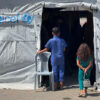
More than 42,000 Gazans Suffer Life-Changing Injuries as Health System Nears Collapse
In recent months, the humanitarian situation in Gaza has sharply deteriorated, with escalating hostilities driving mass civilian displacement and overwhelming the already fragile healthcare system, pushing it to the brink of collapse. UN officials are warning that thousands of civilians have been left with life-altering injuries without treatment.
Weaving Wisdom and Science: Pacific Voices Call for Ocean Protection
In the packed conference hall of the Heritage Hotel, the sound of Pacific voices filled the air—not just through speeches, but in song, rhythm, and poetry. The Dreamcast Theatre Performing Arts group opened the Second Pacific Island Ocean Conference with an evocative performance, reminding leaders and practitioners why they had gathered: to listen. To listen to science. To listen to communities. To listen to the ocean itself.
The Ranch Fighting to Save Nigeria’s Endangered Drill Monkeys
For the past 23 years, Gabriel Oshie has started his mornings at Drill Ranch in the Afi Mountain Wildlife Sanctuary, Boki, Cross River state, southern Nigeria.
International Community, Civil Society Urge Minority Rights and Accountability Amid Ongoing Violence Against Rohingyas in Myanmar
On September 30, the United Nations (UN) convened a high-level meeting on the situation of Rohingya Muslims and other minorities in Myanmar shortly following the end of the 80th session of the General Assembly (UNGA80). The conference was an opportunity to draw global attention once more to the Rohingya refugee situation with dialogue from UN officials, world representatives and civil society organizations.
UN Conference Recommits to Solidarity With Rohingyas, People of Myanmar
The international community convened for a high-level meeting at UN Headquarters, this time to mobilize political support for the ongoing issue of the persecution of the Rohingya Muslims and other minorities in Myanmar.
Drought-hit Tanzania’s Villages Confront Harshest Reality of Climate Change
The dust was already swirling when Asherly William Hogo lifted himself from a makeshift bed before dawn. The 62-year-old pastoralist, lean from a lifetime of walking these plains, slipped into his sandals and stepped outside. Stars glittered over Dodoma, but the air was warmer than it used to be, Hogo swears. He whistled for his cows. Years ago, this hour meant an arduous trek to distant waterholes.
Beijing+30: A Culmination of International, Intergenerational Dialogue
Thirty years since the UN Fourth World Conference on Women in Beijing, the resolve that defined and united the world toward a global agenda for gender equality make it just as relevant in 2025.
Climate Finance Will Be the First Casualty of Rising Militarism: Ali T. Sheikh Warns Ahead of COP30
As the COP30 approaches amid darkening geopolitical clouds—marked by rising rightwing extremism, corporate backtracking and rising militarism—Ali T. Sheikh, Pakistan’s leading expert on sustainable development and climate change, views the world’s largest diplomatic gathering with a mix of apprehension and caution.
UN Member States Convene To Discuss Urgent Need for Equity in NCD and Mental Health Responses
World leaders convened in New York to deliberate over the efforts needed to address non-communicable diseases. On September 25, the United Nations (UN) convened a high-level meeting on the prevention and control of noncommunicable diseases (NCDs) and the promotion of mental health and well-being during the 80th session of the General Assembly (UNGA80).
UNICEF Climate Advocate Urges World Leaders To ‘Include Children’ in Climate Discussions
The UN General Assembly High-Level Week (22-30 September) has been an opportunity for the world to convene on the most pressing issues of the day, from multilateralism, global financing, gender equality, non-communicable diseases, and AI governance.
African Voices at UNGA80: Building Sustainable and Self-Reliant Systems Through Innovation
On September 24, African-led organizations convened a high-level side event during the 80th session of the United Nations General Assembly (UNGA80) The event - African-led Innovation: Shaping Sustainable Futures With or Without Aid - was organized in partnership with eHealth Africa, Population Services International (PSI), Population Council, and Reach Digital Health. The dialogue amplified voices from African-led organizations and highlighted the importance of homegrown innovations for sustainability—regardless of the availability of foreign aid—amid shrinking donor funding and widening global inequalities.
Ending Child Marriage Needs a Culture of Accountability, Respect for the Rule of Law
Global leaders came together at the sidelines of this year’s UN General Assembly to commit to ending child marriage, calling on all world leaders to make concerted efforts to ensure accountability and enforce the laws that prohibit it.« Previous Page — Next Page »





The Week with IPS

NEXT STOP - SDGs
Tracking global progress towards a sustainable world
Tracking global progress towards a sustainable world
