Languages
Wednesday, April 29, 2026



News and Views from the Global South
IPS UN Bureau Report

Interlinked Solutions Key to Tackling Biodiversity, Water, Food, Health and Climate Change, says IPBES
Biological diversity is on the decline worldwide, and current approaches to address its loss have been piecemeal and ineffective in tackling the crisis facing nature—this is despite estimates that over half of global GDP (USD 58 trillion of economic activity in 2023) is generated in sectors that are moderately to highly dependent on nature, a new report by the Intergovernmental Platform on Biodiversity and Ecosystem Services (IPBES) finds.
UNCCD COP16 Spotlights Drought But Fails to Agree on a Legally Binding Protocol
The 16th meeting of the Conference of the Parties to the UN Convention to Combat Desertification (UNCCD COP 16) concluded early hours of Saturday with a renewed focus on building drought resilience globally. However, the COP also failed to agree on bringing a legally binding drought protocol. Like the biodiversity and climate change COPs held earlier in the year, COP16 also failed to finish in time and ended by postponing several key decisions to COP17 scheduled to be held in 2026.
Camps of Death, Terror: Syrian Survivors Face Long Road To Recovery
Detained without trial for over three years for trial for allegedly treating "terrorists" (as opponents of former Syrian President Bashar al-Assad were deemed), Alaa al-Khalil, a 33-year-old nurse from the Syrian city of Hama, recounts the agony of her time in a prison cell she shared with at least 35 women.
Small Island States Put Faith in International Court’s ‘Wayfinding’ Advisory Opinion
The “crazy, weird and at some point (what seemed like) insurmountable” plan to ask the International Court of Justice for an advisory opinion on the obligations of UN member states regarding climate change was a success, Vishal Prasad, a representative for the. Pacific Islands Students Fighting Climate Change (PISFCC) said at a post-hearing press conference today (December 13).
Intra-Regional Relations the Key To Sustainable Development in the Horn of Africa
The Horn of Africa holds the resources and potential for lasting development and resilience. The countries in the subregion and development partners need to come together to invest in regional cooperation and resource management.
Mahrang Baloch—Feted Worldwide, Persecuted at Home
"This recognition by a media outlet highlights the painful stories of abductions, torture, and the genocide of the Baloch people," said 31-year-old political activist Mahrang Baloch, speaking with IPS over the phone from Quetta, Balochistan, in reference to her inclusion on the BBC’s annual list of 100 most inspiring and influential women from around the world for 2024.
‘We Will Not Go Quietly Into the Rising Sea,’ Tuvalu Tells International Court of Justice
Rising sea level caused by greenhouse gas emission-fueled climate change is threatening existence in coastal communities and island nations. At the International Court of Justice (ICJ), on Thursday, December 12, 2024, small island states, including Tuvalu and a Pacific-based fisheries agency detailed their ongoing existential threats caused by the climate change-induced sea level rise and impacts on fishery-based livelihood.
Escalation of Violence in Sudan Raises Concern of Nationwide Collapse
On December 9, a wave of bombardments hit a market district in Sudan, killing at least 127 people. Over eight barrel bombs were launched on the North Darfur town Kabkabiya, marking the latest attacks on densely populated areas that occurred throughout the course of the Sudanese Civil War. Both the Rapid Support Forces (RSF) and the Sudanese Armed Forces (SAF) have received immense criticism from humanitarian organizations for committing abuses against civilians that constitute violations of international humanitarian law.
Nobel Peace Prize Forum Breaks Down Nuclear Risks and Solutions
The existential threat that nuclear weapons present remains as pertinent as ever, even when they have not been deployed in war for nearly 80 years. As some countries seek out nuclear weapons or to upgrade and modernize their existing warheads, global voices in nuclear politics and disarmament warn of the potential risk of a new nuclear arms race amid the weakening of nuclear treaties that prohibit the proliferation and use of nuclear arms.
When Ousted Leaders Seek Safe Havens to Escape Jail Time & Hangman’s Noose..
When some of the leaders in the Middle East and Asia are dethroned and driven into exile, the cynics jokingly ask: Is he politically dead or is he dead and buried? The distinction between the two seems significant because the fluctuating political fortunes of some leaders-- and their will to survive against heavy odds-- have always defied Western logic.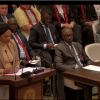
Once Scattered by Colonialism, Today United in Urgent Pursuit of Climate Justice
The Seychelles consider the ongoing public hearings at the International Court of Justice (ICJ) both timely and critical “for the people of the small island developing state in the middle of the Indian Ocean,” Flavien Joubert, Minister for Agriculture, Climate Change and Environment of the Seychelles, told the court today.
Redefine Business Success to Include Nature
Sustaining nature is not just an environmental goal—it is an essential component of sustainable business—and requires that we redefine business success to include the wise stewardship of nature.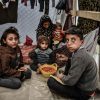
FAO Renews Its Commitment to Right to Food Guidelines
The Food and Agriculture Organization (FAO) launched its newest report on the Right to Food Guidelines on December 10, which focuses on that focused on the urgency of food security as well as the measures that will be taken by the organization to eradicate hunger and malnutrition in the coming decade.
Water Shortages Hit Zimbabwe Towns as Country Struggles To Overcome Impact of El Niño
At a borehole not far from Mpopoma High School in Bulawayo, Zimbabwe’s second largest city, 48-year-old Sakhile Mulawuzi balances a white 25-liter bucket of water on her head as she holds another 10-liter blue bucket filled with water. She trudges these back home along a narrow pathway leading to her house in Mpopoma, one of the high-density areas here.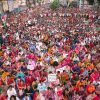
To What Extent is Bangladesh’s Hindu Population Under Attack?
Bangladesh has been in the midst of a deepening political crisis and a significant social divide since August 5 when the former Prime Minister Sheikh Hasina fled the country following a mass uprising led by students. Diplomatic relations between India and Bangladesh have since soured and given way to a considerable amount of disinformation, especially surrounding the persecution of the Hindu population.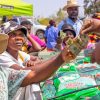
In Zimbabwe, Women Are Leading the Battle Against Climate Change
When Susan Chinyengetere started to focus on farming in her home village in south-eastern Zimbabwe, she wondered if she could earn a living and raise her children. With climate catastrophes ravaging the country, her hesitation on rain-fed agriculture worsened. But two years later, the 32-year-old mother of two from Mafaure village in Masvingo, about 295 km from the capital Harare, is now a champion in farming.
No State Is Truly Independent if It Suffers Significant Injury Without Consequence—Palau
After many decades of colonial rule, Palau was the last country to emerge from the UN Trusteeship. Palau celebrated 30 years of independence in October 2024 “and takes seriously the rights and responsibilities of independence. Independence should mean that Palau is free to build its own future and be responsible for the security, safety, and well-being of its own people,” said Gustav N. Aitaro, the Minister of State of the Republic of Palau at the International Court of Justice (ICJ).
Pacific Community Calls Out Urgency of Climate Loss and Damage Finance for Frontline Island Nations
Advancing development of the new Climate Loss and Damage Fund was a key call by Pacific Island nations at the COP29 United Nations Climate Change Conference being held in Azerbaijan in November. For Pacific Island Countries and Territories, the fund represents a critical step towards addressing what they consider a gross climate injustice: despite contributing less than 0.03 percent of global greenhouse gas (GHG) emissions, they bear the brunt of climate change's devastating impacts.
‘For the Human Race, Ignoring the Climate Emergency Is No Longer an Option’
At the International Court of Justice (ICJ), no matter if the country had high Himalayas, was a small island nation or was experiencing armed conflict, they all agreed that the due diligence principle and the obligation of states to prevent harm caused by climate change, especially for high greenhouse gas emitters, were non-negotiable.
Bold Donor Action Urgently Needed to Give Ethiopia’s Crisis-Impacted Children a Lifeline
Ethiopia’s education system is buckling under the weight of complex, competing challenges. The aftermath of a deadly war in the north, ongoing violence, climate-induced disasters, and widespread forced displacements have converged to push as many as 9 million children out of school. With close to 18 percent of schools in the country destroyed or damaged and persisting intercommunal conflicts in various regions, there are fears that many might never find their way back to school.
African Union, Nations Lay Bare Climate Vulnerabilities at UN’s Top Court
Kenya agrees with many UN member states testifying before the International Court of Justice (ICJ) that the law of international responsibility should hold countries legally responsible for major damage to the global climate system.« Previous Page — Next Page »


The Week with IPS

NEXT STOP - SDGs
Tracking global progress towards a sustainable world
Tracking global progress towards a sustainable world
