Languages
Friday, October 2, 2026



News and Views from the Global South
IPS UN Bureau
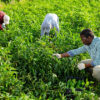
The Silent Metamorphosis
There is a question that is never asked plainly enough in reports on Haiti: why, despite decades of analysis, billions in international aid, and an abundance of national strategies, does the potential of Haitian youth remain so consistently underutilized? This report, The Silent Transformation, is an attempt at an honest answer.
The Forgotten Triumph of Rinderpest Eradication, and the Cost of Ignoring Its Lesson
Animal disease is no longer a distant concern for farmers and veterinarians alone. It is increasingly visible in household budgets: global egg prices surged more than 60% during recent bird flu outbreaks. In South Africa, foot-and-mouth disease pushed beef prices up by 34%. These are not isolated fluctuations in price. They are reminders that when prevention falls short, families, farmers and food systems all pay the price.
AI Will Destabilize Jobs, the Middle Class and the Welfare State Unless We Act in Time
Artificial intelligence (AI) promises remarkable gains in productivity, science, medicine and education. But it is also poised to wipe out millions of jobs, hollow out the middle class, and drain the tax revenues that pay for hospitals, schools and pensions. The process has already begun, and the time to act is running out.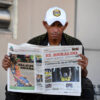
Colombia’s next President: A Reckoning for Peace, Climate and Human Rights
On 21 June Colombians made their choice. By the narrowest of margins, Abelardo de la Espriella, a far-right criminal lawyer who’s never held elected office, became president-elect. Climate activists, human rights defenders, Indigenous communities and peace advocates have the most to lose from the incoming government’s agenda.
Aid Is Falling Fast. What Can African Countries Do?
For decades, official development assistance has been a central pillar of financing in sub-Saharan Africa. That pillar is now weakening—quickly and broadly.
In a Post-Aid World, Investing in Sustainable Livestock Farming Is an Investment in Global Stability
Smallholder farmers in Africa and Asia are likely to still be reeling from the fuel and fertilizer crisis caused by conflict in the Middle East when what forecasters expect to be a “super” El Niño arrives later this year.
Should BRICS+ Lead the Global South?
Leadership of the Global South has gradually declined since the 1980s. Many hope BRICS+ will fill the vacuum, but its purpose and membership suggest such hopes may be misplaced. A repurposed Non-Aligned Movement (NAM) offers the best way forward.
UNCTAD: A Shift of Risk, Geopolitical Tension Weighs on Global Markets Heavier than Trade Policy
Amidst increased geopolitical tensions, the risk of volatile energy markets, trade corridors, and regional stability in the Middle East has garnered more attention than trade policy in terms of its power to alter the global economy, according to new findings from the United Nations Conference on Trade and Development (UNCTAD).
Beyond Commemoration: Why Conflict-Related Sexual Violence Demands Urgent Global Attention
Three years ago, during a mission to the Central African Republic from United Nations Headquarters, I met a woman whose story has remained with me ever since. She had survived rape during the conflict. Yet what stayed with her most was not only the violence she had suffered, but the stigma that followed it. When she returned home, her family refused to take her back. In a society where survivors of sexual violence are too often burdened with shame that rightfully belongs to perpetrators, she found herself isolated and struggling to rebuild her life. In that moment, it became painfully clear that for survivors, the violence does not end when the assault ends, it continues through stigma, exclusion, and the resulting silence for most.
Social Business – It’s Time
June 27-28 is the 16th Social Business Day, observed in Savar (Dhaka) Bangladesh. In June 2024 at the Western Sydney University’s graduation ceremony where I was conferred Emeritus Professor status, I urged the new business graduates to:- • purge the world of the… obnoxious Friedmanite idea that is destroying our planet and tearing our communities apart;
• look instead to the “Social Business Model” of Bangladesh’s Nobel Laureate Muhammad Yunus; and
• work on the right side of history; stand up for justice and liberation; spread the “moral violence” for peace; and put people and the planet before profit.

WORLD CUP: ‘FIFA Has Placed Itself on the Side of the Polluters, Not the Rest of the Planet’
CIVICUS speaks about the climate impacts of the 2026 World Cup with Frank Huisingh, founder of Fossil Free Football, a fan-led group that campaigns to end fossil fuel sponsorship in football and make the game more sustainable.

Of 40 Million People Living with HIV today, 32.1 Million are now on Treatment, Living Long & Healthy
I am honoured to address this High-Level Meeting. I thank very much the President of the General Assembly for her leadership, our Co-Facilitators, and all the Member States for the extraordinary effort that brought us here now.
‘The World Knows What Must Be Done’: New SDG Report Urges End to Wars and Greater Investment in People
As the world enters the final years before the 2030 deadline for achieving the Sustainable Development Goals (SDGs), a latest United Nations report has revealed that economic uncertainty, climate change, conflict and growing geopolitical tensions are causing hurdles for the countries to meet the targets.
Armed Conflict, Funding Cuts and Supply Chain Pressures Deepen Global Hunger Risks
Armed conflict, economic shocks, and climate pressures are driving worsening food insecurity across many of the world's most vulnerable regions, according to the latest Hunger Hotspots report outlook for June-November 2026, jointly released by the World Food Programme (WFP) and the Food and Agriculture Organization (FAO).
AI is Already Rewriting Reality for Billions of People– But It is Getting Women Wrong
A study of 133 AI systems found that 44 per cent demonstrated gender bias and 26 per cent demonstrated both gender and racial bias. Yet only 51 per cent of marketers currently use human oversight to test AI-generated creative before release. Ahead of the United Nations Global Dialogue on Artificial Intelligence Governance from 6 – 7 July and AI for Good Global Summit in Geneva, Switzerland from 7-10 July, UN Women sets out what is at stake – and what must change – to build a gender-equal digital future.
Our Ocean Conference: After Mombasa – Will Africa and the World Make Ocean Promises Real?
« James Alix Michel warns that without real finance and precaution, ocean pledges risk remaining only on paper. » Now that the lights have dimmed in Mombasa and the delegations have gone home, a simple but necessary question remains: did the first Our Ocean Conference on African soil truly move the world from promises to protection? The conference was indeed the first held in Africa, under the theme “Our Ocean, Our Heritage, Our Future,” with a stated focus on culture, communities, livelihoods, marine protection, climate resilience and sustainable blue economies.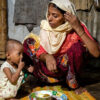
Dwindling Humanitarian Aid Devastates the Rohingyas in the World’s Largest Refugee Camp
Nearly nine years after the violent persecution of the Rohingya minority population in Myanmar and the following mass exodus of refugees, over 1.2 million Rohingya currently reside in neighbouring Bangladesh, where they face immense challenges. With the United Nations (UN) recording significant shortfalls in global humanitarian funding, alongside Bangladesh’s diminishing ability to support these populations, experts warn of a deepening humanitarian crisis.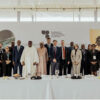
Global South Leaders Redesigning International Cooperation
The fallout from the sudden collapse of the old system of financing international cooperation has been disastrous, unleashing a wave of harm and leaving the world more vulnerable to shocks and less able to respond to them. The wreckage is plain to see. The issue is what to do next.
In 2025, Government Forces were the Greatest Perpetrators of Violence Against Children in Armed Conflicts
A record number of children were subject to grave violations by parties to armed conflicts, the highest since the UN mandate for children and armed conflict (CAAC) was established in 1996.
A UN Secretary-General who Defied the US – and Suffered a Backlash
When Egypt’s onetime Foreign Minister Boutros Boutros-Ghali was running for the post of U.N. Secretary-General in late 1991, he had to contend with the rival candidacy of Bernard Chidzero, then foreign minister of Zimbabwe.
Hong Kong: No Safety in Exile
When performance artist Sammu Chen tried to tie a red thread to a streetpost, plainclothes police stopped him before he could finish. Chen has twice been detained for his symbolic acts of commemoration of the 4 June 1989 Tiananmen Square Massacre, when Chinese authorities killed hundreds, perhaps thousands, to crush democracy protests.« Previous Page — Next Page »


The Week with IPS

NEXT STOP - SDGs
Tracking global progress towards a sustainable world
Tracking global progress towards a sustainable world
