Languages
Monday, November 9, 2026



News and Views from the Global South
IPS UN Bureau

Pakistan’s Free Healthcare Insurance Benefits Women, Poor
A free health insurance initiative started in Pakistan has benefited poor patients, especially women who have outnumbered men in using the cashless health services under the Sehat Card Plus programme. "The initiative is in line with the ICPD25 Programme of Action, under which 4.5 million people have received free services, with 62 percent of them women. In the last three years, we have been able to cut down maternal mortality rate from 186 deaths per 100,000 live births to 172," Dr Muhammad Riaz Tanoli, CEO of the Sehat Card Plus (SCP), told IPS.
A Vital Partnership for the 2030 Agenda
Flexible and predictable funding allows UN agencies to respond promptly and with agility in times of crisis. In countries such as Afghanistan, Yemen, and Ukraine, UNDP implements projects and programmes that help protect livelihoods and enhance the resilience of vulnerable communities.
Nicaragua: An Opportunity for Democratic Solidarity
On 9 February, Nicaragua’s dictator, Daniel Ortega, unexpectedly ordered the release of 222 political prisoners, including several former presidential candidates, opposition party leaders, journalists, priests, diplomats, businesspeople and former government supporters branded as enemies for expressing mild public criticism.
Role of Regional Economic Cooperation in Inclusive Digital Transformation in Asia
Digitalization is a key driver of competitiveness and development. As the world takes the path to unprecedented digital advancement, Asia continues to be a powerhouse of digital transformations in a wide range of areas from microchip manufacturing to electric vehicles, from digital currency to e-commerce.
UN Hobbled by Junta and Under Pressure Over Myanmar Aid Crisis
Nearly 18 million people – about one-third of Myanmar’s population – need humanitarian aid this year because of civil war and the post-coup economic crisis, according to the latest United Nations estimates.
UN Confronts Existential Challenge After Russia’s Invasion of Ukraine
Paralysed by its own Charter and structure, the world organisation that is charged with preventing wars confronts an existential challenge from Russia’s invasion of Ukraine.
A Last-Ditch Effort to Save a High Seas Treaty from Sinking
When the United Nations began negotiations on a legally binding treaty to protect and regulate the high seas, one diplomat pointedly remarked: “It’s a jungle out there”—characterizing a wide-open ocean degraded by illegal and over-fishing, plastics pollution, indiscriminate sea bed mining and the destruction of marine eco-systems.
Climate Crisis is a Child Crisis and Climate-Resilient Children, Teachers and Schools Must Become Top International Agenda
From southern Ethiopia to northern Kenya and Somalia, the most severe drought in the last 40 years is unfolding. It is simply too hot to go to school on an empty stomach, and close to 3 million children are out of school, with an additional 4 million at risk of dropping out entirely across the Horn of Africa.
Taking a Stance on Feminists’ Prejudice Against Religious Minority Women
Since researching the experiences of gender discrimination against women in poverty who belong to religious minorities, many fellow feminists have turned their back on me.
Act on the Taliban and Secure Our Right to Education, Afghan Women and Girls’ Plea
It has been more than 500 days since the Taliban regime in Afghanistan shut down schools and shattered the education dreams of girls and women like Somaya Faruqi, who has been forced to leave her homeland to continue her education.
ECW High-Level Financing Conference Raises More than 826 Million USD to Keep Crisis-Impacted Children in School
As an unparalleled, unprecedented global education crisis unfolds, an estimated 222 million crisis-impacted children are desperate to learn. As barriers to accessing education increase, darkness beckons, and education is their last hope.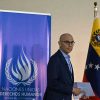
Venezuela: The End of Civil Society as We Know It?
In late January, the UN High Commissioner for Human Rights, Volker Türk, finished an official visit to Venezuela. He said he’d found a fragmented society in great need of bridging its divides and encouraged the government to take the lead in listening to civil society concerns and responding to victims of rights violations.
One Year Later: The Impact of the Russian-Ukrainian Conflict on Africa
In today’s interconnected world, shots fired in one corner of the globe create ripple effects in other, seemingly far, places. One year since the Russian invasion of Ukraine, African countries, although physically miles away, have not been spared its aftershocks.
World Leaders, Private Sector Urged to Establish an International Green Bank to Win Climate Change Battle
As the effects of climate change escalate and natural disasters such as earthquakes, floods, and droughts become more frequent and severe, threatening lives and livelihoods, humanity is losing the climate battle.
China and Russia Fail to Defund UN Human Rights Work
United Nations member states agreed to fully fund UN human rights mechanisms that China, Russia, and their allies had sought to defund in the 2023 budget. This should set a precedent for UN human rights funding in the future.
Outlook for 2023: Children in ‘Polycrisis’
The year 2022 was incredibly difficult for people around the world. We were confronted by a series of major crises, including a continuing pandemic, a major war in Europe, an energy crisis, rising inflation and food insecurity.
Sierra Leone’s Gender Law Boosts Women’s Participation in Politics, Business
Sierra Leone's new gender equality law will benefit women with political aspirations – as well as stimulate development, say analysts.
World’s Deadliest Earthquake Leaves over 33,000 Dead
Almost over 33,000 people have been killed and thousands injured by the 7.8 earthquake which struck south-eastern Turkey and Syria in the early hours on Monday, February 6th. The first images that came out were of collapsed buildings, rubble strewn across streets, people trapped under rubbles, screaming for help. What followed was the unusually strong aftershock - including one quake which was almost as large as the first.
Pakistan Floods: Need for Tackling Development from a Different Perspective
Last year’s devastating floods in Pakistan cost the country more than US$30 billion, about 6.4 trillion rupees. The entire Public Sector Development Programme (PSDP) for 2021-2022 was valued at 900 billion rupees. This means that the floods wiped out development gains worth more than six PSDPs. This disproportionately affects the vulnerable segments of society, especially women, girls, the elderly and persons with disabilities.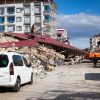
Humanitarian Aid to Earthquake Victims Hindered by Politics– & Limited Access
As the toll in last week’s earthquakes in Turkey and Syria exceeds a staggering 28,000 people dead and more than 78,000 injured--and counting-- the United Nations is in an emergency-footing struggling to provide humanitarian aid, along with several international humanitarian organizations.
Education Cannot Wait Appoints New Global Champion Somaya Faruqi on International Day of Women and Girls in Science
In celebration of the International Day of Women and Girls in Science, Education Cannot Wait (ECW) today named Somaya Faruqi as a new ECW Global Champion.« Previous Page — Next Page »





The Week with IPS

NEXT STOP - SDGs
Tracking global progress towards a sustainable world
Tracking global progress towards a sustainable world
