Languages
Saturday, November 7, 2026



News and Views from the Global South
IPS UN Bureau
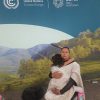
Walking with Wisdom: Whaia’s Mission to Bring Indigenous Knowledge to COP 29
Kaitiaki! Whaia says she is at COP29 to bring indigenous wisdom to influence policy and to provide guardianship (kaitiaki) of the climate negotiations.
From the Biodiversity COP16 to the Climate COP29: Building Equitable Accountability, Alignment, and Adequacy on Finance
The United States just went through its most consequential election. While the outcome raises questions about what the re-election of Trump means for U.S. engagement in global climate talks moving forward (in view of his previous stunt), the game is still on, with or without him. Despite the challenges, local communities, cities, states, private actors, and the public more broadly have embarked on an unstoppable journey—upholding the spirit of the Paris Agreement.
Africa’s Demands: Continent’s COP29 Irreducible Minimums Amid Release of First Draft Text
As expected, climate finance has taken center stage in Baku COP29 in a bid to renew the global focus on finance as a means to transform climate ambitions into tangible, sustainable action.
‘Ending impunity for violations of Palestinians’ rights would strengthen global norms that protect all humanity’
CIVICUS discusses the gender dimensions of genocide in Gaza with Kifaya Khraim, International Advocacy Coordinator at the Women’s Centre for Legal Aid and Counselling (WCLAC). Founded in 1991, WCLAC is a feminist organisation that documents Israeli violations against Palestinian women and uses this evidence for international advocacy.
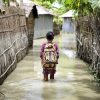
COP29 Negotiators Urged to Define Financial Path to Education for Climate-Affected Children
Directly destroying schools and learning materials, climate shocks are increasingly taking away the right to education. A staggering 400 million students globally experienced school closures from extreme weather since 2022. As COP29 negotiations deepen, defining a sustainable financial path to learning for vulnerable children, particularly those caught up in crises and conflict, is critical and urgent.
UN May Face Another Calamity– Under a Second Trump Presidency
US President Donald Trump’s return to the White House on January 20 next year may be another calamity for the United Nations—particularly if the second term turns out to be a re-run of his first presidency (2017-2021). Trump’s past track record included the US withdrawal from the UN Educational, Scientific and Cultural Organization (UNESCO); threats against member states voting for anti-Israeli resolutions and slashing funds to a 72-year-old UN agency for Palestinian refugees.
French-Speaking African Nations Bartering Natural Resources for Russian Arms
At the first ministerial conference of the Russia-Africa Partnership Forum in the southern coastal city of Sochi, seeking to deepen political and business ties with African countries, Russian President Vladimir Putin in his message and Foreign Minister Sergey Lavrov in his powerful speech underlined Russia's security support to fight terrorism and extremism across Africa.
COP29: African Countries Must Wake Up from ‘Distributed Carbon Emission Guilt’ to People-Centered Climate Action
Global warming is no longer just an issue for the environment but a crisis of life itself. Yet, African governments’ climate action strategies, specifically those submitted under the Nationally Determined Contributions (NDCs), remain disproportionately focused on emission reductions—an approach that fails to address the most pressing health needs of African communities. For many Africans, it’s hard to explain why their leaders prioritize reducing emissions, which are rather low and insignificant when the immediate threat of climate change is not their carbon footprint but their vulnerability to its effects.
‘Show Me the Money’—Grenada PM Calls for Climate Justice
"Though I come from a 'no worries' island, climate change is deeply worrisome for us," Grenada's Prime Minister Dickon Mitchell told IPS in an exclusive interview at COP29 currently underway in Baku, Azerbaijan. Asked how his country was recovering from Hurricane Beryl, Mitchell said the island in the last 24 hours “experienced flash flooding and landslides... So, apart from Hurricane Beryl, we are also dealing with other climate catastrophes.”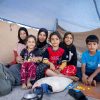
Bombardments in Lebanon Threaten Civilian Safety, Destroy UNESCO Cultural Heritage Sites
As winter approaches, the ongoing airstrikes and bombardments on Lebanon has threatened the lives and livelihoods of civilians across the country and neighboring regions, which has resulted in skyrocketing death tolls and levels of displacement. Since hostilities escalated in September, Lebanon has seen the destruction of a significant amount of critical infrastructure, including historical sites that are integral to Lebanese history.
Asia’s Economies Can Embrace Services to Boost Growth & Productivity
The Asia-Pacific region prospered by becoming the source of more than half of global factory output, but another transformation to higher-productivity services has the potential to further support growth.
Progress as Draft Decision Text for COP29 Presidency’s Top Negotiating Priority Released
Three days into the landmark COP29 conference, the co-chairs of the New Collective Quantified Goal (NCQG) have arrived at a workable basis for discussion on the summit’s top priority goal—a new climate finance goal. The COP29 Presidency says the draft will, moving forward, “guide conversations around potential landing zones and help identify concerns.”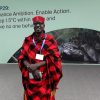
Seeking COP29 Solutions as Desert Lake Disrupts Harmonious Co-Existence With Indigenous Community
Climate change exacerbates the difficulties already faced by indigenous communities, multiplying their vulnerabilities from political and economic marginalization and loss of land and natural resources. The ongoing climatic carnage is displacing indigenous communities at seven times the rate of the global population.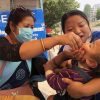
Make Health Top of Climate Negotiations Agenda—Global Climate & Health Alliance
Climate change and its impact on public health hasn't made the top of the agenda even at a forum like the UN Climate Conference, but is should, say the health community. Understanding the gap, more than 100 organizations from across the international health and climate community came together as the Global Climate and Health Alliance and have called wealthy countries to protect people's health by committing to provide climate finance in the order of a trillion dollars annually, in addition to global action with leadership from the highest emitting countries to end the fossil fuel era.
UNDP’s Sustainable Energy Director Calls For Innovative Financial Solutions for Adaptation, Mitigation
Riad Meddeb, Director of the Sustainable Energy Hub at the United Nations Development Programme (UNDP), stressed the urgency of finding innovative financial solutions during COP29.
Blinded by Circumstance: Trachoma’s Stranglehold on Kenya’s Rural Pastoralists
Draped in the vibrant red of his Maasai shuka, 52-year-old Rumosiroi Ole Mpoke sits cross-legged on a worn cowhide mat outside his hut, his face etched with a sorrow deeper than the lines of age. His once-sharp eyes, now clouded by trachoma, can barely make out the shadows of the cattle he once tended with pride.
2024 Poised to Be Warmest Year Ever—WMO Warns of Escalating Climate Crisis
Once again, scientists issued a red alert by analyzing ongoing world’s weather and its impact on the climate. The year 2024 is on track to be the warmest year on record, contributed by an extended streak of high monthly global mean temperatures.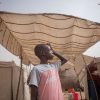
Sudan Faces Esclations in Famine, Humanitarian Law Violations
After 19 months of conflict, the ongoing Sudanese Civil War continues to deteriorate living conditions for millions of Sudanese people. Intensive conflicts between the Rapid Support Forces (RSF) and the Sudanese Armed Forces (SAF) have greatly exacerbated nationwide levels of famine. Numerous civilians have been caught in the crossfire, leading to a rising death toll. Sexual violence and rape have been used as weapons of war, with thousands of cases going unreported due to a pervasive state of fear. Sudan has seen record numbers in displacement, becoming one of the biggest displacement crises in the world.
Middle East: Ceasefires are the Only Answer
“The shockwaves from Israel’s ongoing and indiscriminate warfare on Gaza and Lebanon are reverberating across this entire region. Neither the horrific assault on Israeli civilians on 7 October 2023, nor the indiscriminate missiles launched by militant groups from Lebanon, can justify the degree of destruction on civilian lives and infrastructure in the region that I have witnessed in recent days.
Countdown Begins in Defining Twelve Days to Historic Global Climate Deal
The 29th session of the Conference of the Parties on climate change has officially kicked off in Baku, Azerbaijan, with the promise of striking yet another historic global climate deal and finance adaptation, gender responsive action and financing, and forgotten issues such as food waste are top on the agenda as every action is as crucial as every fraction in the rise or fall of a Celsius degree.
4 Reasons Why the Climate Coalition Will Win Despite Trump
The nation which more than any other caused the climate crisis will leave it to the rest of the world to sort out the mess. That is a takeaway from the US election last week.« Previous Page — Next Page »





The Week with IPS

NEXT STOP - SDGs
Tracking global progress towards a sustainable world
Tracking global progress towards a sustainable world
