Languages
Wednesday, October 21, 2026



News and Views from the Global South
Iraq
RIGHTS: Britain Admits Complicity in U.S. Rendition
In a stunning reversal, Britain’s government admitted Wednesday that it participated in the ‘extraordinary rendition’ to Afghanistan of two terror suspects captured in Iraq.
IRAQ: Doctors in Hiding Treat as They Can
Seventy percent of Iraq's doctors are reported to have fled the war-torn country in the face of death threats and kidnappings. Those who remain live in fear, often in conditions close to house arrest.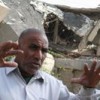
IRAQ: Still Homeless in Baghdad
"We only want a normal life," says Um Qasim, sitting in a bombed out building in Baghdad. She and others around have been saying that for years.POLITICS: Commanders in Iraq Challenge Petraeus on Pullout Risk
CENTCOM Commander General David Petraeus and Multinational Force Iraq (MNF-I) Commander General Ray Odierno have submitted assessments of Iraq combat troop withdrawal plans to President Barack Obama based on the premise that his 16-month withdrawal plan would pose significantly greater risk to "security gains" than the 23-month plan they favour.POLITICS-US: Democrats Divided Over "Reckoning" for Bush
With growing public support for a public investigation of crimes that may have been committed by the administration of former president George W. Bush in waging its "global war on terror", policy makers and legal experts are deeply divided on how to proceed - and President Barack Obama seems ambivalent about whether to proceed at all.BOOKS: Was Bush Doctrine Just a Little Bit of History Repeating?
Was the foreign policy of George W. Bush an aberration in U.S. history, a turn away from the traditional guiding principles of U.S. foreign policy towards messianic ambitions of permanent supremacy and universal democracy?
IRAQ: The River Too Tells the Story
There is less water now in the Tigris, and it is less clean. The river has fewer fish, and rising fuel and other costs mean they are more costly to catch. It's not, as Hamza Majit finds, a good time to be a fisher.MEDIA: Climate of Fear Pervades Many Newsrooms
In Latin America, the Middle East and Southeast Asia, journalists are becoming increasingly vulnerable to physical violence as a result of their work, says a U.S.-based media watchdog in a new report released Tuesday.RIGHTS: Violations Privatised Away
The intimate involvement of the private sector in the U.S.-led invasion of Iraq received international attention in September 2007, when staff with the security firm Blackwater shot dead 17 civilians in the vicinity of Baghdad's Nisoor Square.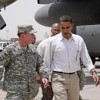
POLITICS-US: Petraeus Leaked Misleading Story on Pullout Plans
The political maneuvering between President Barack Obama and his top field commanders over withdrawal from Iraq has taken a sudden new turn with the leak by CENTCOM commander Gen. David Petraeus - and a firm denial by a White House official - of an account of the Jan. 21 White House meeting suggesting that Obama had requested three different combat troop withdrawal plans with their respective associated risks, including one of 23 months.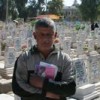
IRAQ: No Unemployment Among Gravediggers
Amidst the soaring unemployment in Iraq, the gravediggers have been busy. So busy that officials have no record of the number of graves dug; of the real death toll, that is.US-IRAQ: Generals Seek to Reverse Obama Withdrawal Decision
CENTCOM commander Gen. David Petraeus, supported by Defence Secretary Robert Gates, tried to convince President Barack Obama that he had to back down from his campaign pledge to withdraw all U.S. combat troops from Iraq within 16 months at an Oval Office meeting Jan. 21.
IRAQ: Elections Could be a Telling Signpost
After strong polling for the provincial elections Saturday, Iraqis are looking out for new signposts of political recovery from the U.S.-led invasion and occupation.
IRAQ: Threat of Violence Looms Again Over Fallujah
The threat of violence hangs over Fallujah again as leaders of the Awakening Council fight for political power through the elections Jan. 31.IRAQ: Elections Dawn on Changed Political Landscape
Despite the possibility of isolated violence and other problems, close watchers of Iraq's upcoming provincial elections say that a relatively smooth process there could be a bellwether for better days ahead, according to a new report.
IRAQ: Tentative Hope Rises Ahead of Elections
Uncertainty and tension are running high in Baghdad ahead of the provincial election due Jan. 31. But this time fears are also touched by a new hope.EUROPE: Watching That Space, and Seeing More of the Same
Polished, clever and charismatic, Barack Obama appears the very antithesis of the bungling cowboy that his predecessor in the White House, George W. Bush was widely believed to be. That in itself helps explain why his election as the first black president of the U.S. in November delighted millions in Europe.BOOKS-US: Wounded Veterans Treated as an Afterthought
"But the [George W.] Bush administration was never seriously interested in helping veterans. The sorry state of care for Iraq and Afghanistan war veterans is not an accident. It's on purpose."POLITICS-US: Vets Health System in Need of Triage
Eighteen U.S. veterans kill themselves every day. More veterans are committing suicide than are dying in combat overseas. One in every three homeless men in the United States has put on a uniform and served his country. On any given night, the U.S. government estimates 200,000 veterans sleep on the street.U.S.: Bush Foreign Policy Legacy Widely Seen as Disastrous
While in a farewell press conference Monday George W. Bush once again expressed the belief that his eight-year presidency, particularly his foreign-policy record, will be vindicated by history, the portents are not particularly good.U.S.: Networks’ Int’l News Coverage at Record Low in 2008
Despite two wars involving more than 200,000 U.S. troops and a global economic crisis, foreign-related news coverage by the three major U.S. television networks fell to a record low during 2008, according to the latest annual review of network news coverage by the authoritative Tyndall Report.« Previous Page — Next Page »





The Week with IPS

NEXT STOP - SDGs
Tracking global progress towards a sustainable world
Tracking global progress towards a sustainable world
