Languages
Sunday, September 27, 2026



News and Views from the Global South
Israel - Palestine
MIDEAST: Israel Aiming Punitive Measures at Soft Targets
As the international community becomes increasingly critical of Israel's discriminatory treatment of Israeli-Arabs and the brutal occupation in the Palestinian West Bank, the Israeli authorities are venting their anger against soft targets such as Arab-Israeli parliamentarians and Palestinian and Israeli non-violent peace activists.MIDEAST: Goldstone’s Volte-Face Gladdens Israelis, Angers Palestinians
Israelis have breathed a national sigh of relief following the publication of an absolutely unexpected article in last Friday's Washington Post. The column's title and author said it all.Israel Warns Against Recognition of Independent Palestine
The Israeli government has warned the U.N. Security Council and the EU that it will resort to unilateral countermeasures if the international community recognises Palestine as an independent state at the U.N. General Assembly session next September.LEBANON: Hezbollah Treads a Narrowing Path
In spite of its recent successes, Hezbollah seems to be experiencing increasing difficulty in harmonising the interests of its Shiite constituency and those of its Iranian patrons as it delves into the chaos of Lebanese politics.Netanyahu Caught Between Status Quo And Power Vacuum
Disregarding the old adage that politics like nature abhors a vacuum, Benjamin Netanyahu could until now sing his own praise and declare that Israel under his premiership was an anchor of political stability whereas the wider Middle East was fast sinking into a power vacuum.Israel Accused of ‘A Form of Ethnic Cleansing’
"If the regime that encourages incitement, racism and anti-democracy is not toppled soon, we will find that the future is already here," says Israeli columnist Sefi Rachlevsky in the Israeli daily 'Haaretz'.Settlers Observe ‘Day Of Rage’ Pouring Wrath On Palestinians
Israeli settlers observed their own 'Day of Rage' last Thursday, launching reprisal attacks on Palestinians for the recent murder of a settler family in an illegal Israeli settlement in the occupied West Bank, and the demolition of a settlement structure by the Israeli authorities.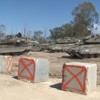
Israel Deploys a Miniature Missile Defence System
Amidst recrudescence of tension on this critical front, the Israeli army is hoping to gain the technological upper hand in missile combat with 'Palestinian militants' by equipping one of its most sophisticated tanks with a miniature missile defence system.FILM: What a Palestinian Girl Saw Through Her Window
At the 331st meeting of the Committee on the Inalienable Rights of the Palestinian People held at United Nations headquarters Thursday, delegates made speeches most likely doomed to be lost in the abyss of countless Security Council resolutions, numerous rulings by the International Criminal Court (ICC) and the basic provisions of the Geneva Conventions.‘Buy Gaza’ Movement Gains Momentum
Palestinians are calling for boycotts against Israeli products and companies. But in the Gaza Strip -- at the heart of the Israeli occupation -- it is often impossible for residents to follow their own call to action.Palestinian Protests Mark ‘March 15 Day of Rage’
Tens of thousands of Palestinians from across the political spectrum took to the streets throughout the West Bank and Gaza on Tuesday to mark 'March 15, the day of rage' to protest the political division between Hamas and Fatah.Palestinian Village Under Siege Following Settler Killings
Food supplies are running low, ambulances have been detained for hours at checkpoints, and hundreds of young men have been held, interrogated and beaten up, some requiring hospitalisation, in the Palestinian village of Awarta in the northern West Bank. The village has been under continuous curfew for four days.MIDEAST: Obama Besieged by Policy Challenges
Rarely, if ever, has a post-World War II U.S. president been beset by so many foreign policy challenges and uncertainties in one key geo-strategic region at the same time.BOOKS: Expose Questions EU’s Role as “Honest Broker” in Mideast
Sixty-five years ago, six million Jews perished in concentration camps across Nazi Germany, while the rest of Europe watched silently. Today, says political journalist David Cronin, the world is again witnessing what he calls Europe's "blood-soaked foreign policy" in the Middle East, where billions of Euros are enabling Israel's illegal and inhumane occupation of Palestine.Q&A: ‘Women Are Shackled During Childbirth’
Female Palestinian prisoners detained in Israel are often denied legal representation and medical care while being housed in squalid conditions that can include sharing cells with rodents.
WOMEN’S DAY: An Arab Israeli Woman Fighting on All Fronts
"Every woman is a woman of frustration. Me, I'm just struggle." Hanin Zoabi, 41, is a Palestinian Israeli woman, a fighting woman. An elected member of the Israeli Knesset parliament, she is the first woman on an Arab party's list, Balad.Views of U.S. Influence Steadily Climb Under Obama
For the third straight year, views of the United States continued to improve during 2010, according to the annual BBC World Service Country Rating Poll released Monday.EGYPT: Mubarak Regime ‘Provoked’ Attacks on Christians
Ousted Egyptian president Hosni Mubarak portrayed himself as a paradigm of stability in a country he once described as a "powder keg" of sectarian unrest. Yet far from promoting stability, his regime may have actually been the source of much of the religious strife it claimed to suppress.Israel Grows Ever-Harsher in Treatment of Migrants
A new report from the Global Detention Project (GDP) on Israel's immigration detention policies reveals the tough reality behind the feel-good story offered in the Academy Award-winning "Strangers No More", an inspirational documentary about students from migrant families who attend the Bialik-Rogozin school in Tel Aviv.Pro-Peace Jewish Lobby Group Urges Obama to Seize Moment
J Street, the Washington-based "Pro-Israel, Pro-Peace" advocacy group, drew a large crowd to its annual conference this year despite criticism over its controversial calls for the Barack Obama administration not to veto a U.N. Security Council resolution condemning Israeli settlement construction in the West Bank.MIDEAST: Gaza Protesters Prepare for March 15
A look at the Tunisian and Egyptian uprisings that succeeded in ousting long- entrenched dictators confirms a universal truth: it is the youth who are leading the way in forcing reform in the Middle East.« Previous Page — Next Page »


The Week with IPS

NEXT STOP - SDGs
Tracking global progress towards a sustainable world
Tracking global progress towards a sustainable world
