Languages
Wednesday, November 11, 2026



News and Views from the Global South
Millennium Development Goals (MDGs)
HEALTH: AIDS Meet – Fine Words, Few Concrete Actions
Governments, international bodies and civil society renewed their commitment to fighting HIV/AIDS at the 17th International AIDS Conference, but they will have to work hard in order for this commitment to be reflected in concrete policies, especially on prevention.
Q&A: “Latin America Needs a Regional Agenda” on AIDS Funding
If the economic status of Latin America and the Caribbean continues to improve, the region’s share of assistance from the Global Fund to Fight AIDS, Tuberculosis and Malaria is likely to drop to half the present level, under the current eligibility requirements, says Lelio Mármora, the Fund’s portfolio manager for this region.DEVELOPMENT-TOGO: High Cost of Living Exacerbated By Floods
Recent flooding in Togo caused the collapse of over 10 bridges connecting the capital of Lomé to the north of the country. The consequences have been increased transportation costs and a steady climb in the price of consumer products.TRADE-AFRICA: New Technology to Sever Timber’s Link to Conflict?
While conflict diamonds or blood diamonds, as they are known, have gained attention the world over in terms of the role illicit gems play in fuelling warfare, the role that the timber trade has played in abetting conflict has received considerably less consideration. That may be beginning to change.HEALTH: Conflicts Make Women More Vulnerable to HIV
"I’m a survivor, and if I can live through all that has happened to me, so can other women," said Floride Nyiraneza, 42, who is HIV positive and a widowed mother of four.HEALTH: Indigenous People Speak Out Clearly on AIDS
"In my community, living with HIV is synonymous with death," Fernando Solís, a 34-year-old member of the Cuna ethnic group in Panama, told IPS. Solís, who was diagnosed four years ago, is now working in prevention efforts among other young indigenous people, which he described as "the key to eradicating the epidemic in our communities."
HEALTH: Global Village or Sexual Minority Ghetto?
Dealing with transgenders (TGs) can be confusing. Even the organisers of the 17th International AIDS Conference underway in this city failed to accommodate the third gender by providing them separate toilets.TRADE: ''Doha Collapse Won't Mean Suffering for The Poor''
At the heart of the collapse of the World Trade Organisation’s Doha Round last week are the different opinions on liberalisation and its relation to development. Developed countries promote the idea that liberalisation will bring about development and thus that the failure of the Round constitutes a blow for the poor.
Q&A: "Seven Million People Still Lack AIDS Treatment"
A greater commitment to universal access to anti-HIV therapies and to the defence of health workers in impoverished countries are two achievements noted by Argentine physician Pedro Cahn as president of the scientific society that organised the XVII International AIDS Conference.
HEALTH: Time To Base Public Policy On Rights
Preaching abstinence to the young has not worked, nor has sex work been eradicated. Experts gathered here for the 17th International AIDS Conference say it is time to put public policies under the microscope and see why they have failed.HEALTH: Not Enough AIDS Funds and Not Always Well Spent
Developing countries are in need of large sums of money to fight diseases like HIV/AIDS, but international aid will not entirely cover their needs.
Q&A: “Condoms Have To Be Used To Be Useful”
Of the over 30 million people living with HIV, half are women and the rate of infections in women is rising, particularly in sub-Saharan Africa. What’s more, women’s rights groups say gender inequalities are fuelling the epidemic - there is an irrefutable feminisation of HIV.
Q&A: “Policy Incoherence” Frustrates Funding for Gender Equity
Inequality between men and women "is not always linked to poverty. We must not postpone action until we are rich and happy, because we may get rich without achieving gender equality," Roberto Bissio, coordinator of the international network Social Watch, told IPS.TRADE-CHINA: Food Security Prompted Tough Line at Geneva
China's tough stance at the 'Doha' trade talks in Geneva has less to do with political posturing than with the country's long-standing obsession with food security, experts here suggest.TRADE-AFRICA: Safeguards for Small Farmers Straw That Broke Doha
Safeguards to protect small farmers’ livelihoods in African and other developing states, as opposed to subsidies for commercial agricultural interests in rich countries, remained an insurmountable obstacle in the World Trade Organisation (WTO) talks, leading the Doha Round to collapse last week.HEALTH: Stepping Up the Response to AIDS
It is necessary to evaluate the current global architecture for responding to the AIDS epidemic, move forward with studies on HIV rates, and implement effective prevention strategies, said the experts meeting at the 17th International AIDS Conference, which opened Sunday in Mexico.TRADE-AFRICA: ‘‘Exports Are the Best Way to Develop’’
Lack of export orientation in the past has caused economic failures in African countries, which is why these countries should focus on exports to build industries.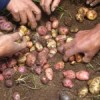
CHILE-PERU: Preserving Potatoes More Important than Age-Old Dispute
Policies to get small farmers involved in saving, preserving, producing, marketing and genetically improving potatoes should take precedence over the age-old dispute between Chile and Peru about where potatoes originated, experts from both countries say.HEALTH: March Sets Tone For AIDS Conference
The rain gods failed to dampen spirits of activists gathered at the old city centre of Zocalo to protest discrimination against those with the HIV virus. Hundreds of activists dressed in bright tribal costumes, women dressed as skeletons and one gay man wearing tights assembled ahead of the six-day XVII International AIDS conference, Aug. 3 to 8.
Q&A: “The Momentum of AIDS Prevention Is Waning”
Mexican virologist Dr. Luis Soto Ramírez, co-chair of the 17th International AIDS Conference, which opens Sunday in the Mexican capital, says that ramping up prevention efforts is the most urgent step to be taken in the fight against HIV/AIDS.PERU: Seeking Ways to Remedy Unequal Distribution of Mining Taxes
The Peruvian parliament is studying ways to improve the distribution of the "canon minero", the portion of the taxes paid by mining companies that is transferred to the regions, in order to benefit the country’s poorest provinces.« Previous Page — Next Page »





The Week with IPS

NEXT STOP - SDGs
Tracking global progress towards a sustainable world
Tracking global progress towards a sustainable world
