Languages
Friday, November 20, 2026



News and Views from the Global South
Politics

ZAMBIA: Media Face Beatings and Attacks
When journalists were beaten by political supporters for covering the president’s return trip from abroad, and cabinet ministers and police officers looked on without stopping it, it seemed to be the last straw in the victimisation of the media. But it was not.BALKANS: War Crime Victims Stretch Wait for Justice
The postponement of the trial in the genocide cases in the 1992-95 Bosnia war is further indication that victims of war crimes may never get justice.HAITI: Clinton Revives Modest Optimism for Island’s Economy
Since his appointment last spring as United Nations special envoy to Haiti, former U.S. President Bill Clinton has been called, half-seriously, "president of Haiti" and "viceroy".SRI LANKA: IMF’s 2.6-B Dollar Loan Deal in Peril if Opposition Wins
With parliamentary and presidential elections just a few months away, conditions set by the International Monetary Fund (IMF) in an ongoing 2.6-billion U.S. dollar loan facility could be swept aside if Sri Lanka’s opposition captured power.PHILIPPINES: Guarded Optimism for New Climate Change Law
While pessimism continues to dog the lead-up to next month’s climate change talks in the Danish capital of Copenhagen, a new Philippine law aimed at streamlining the country’s efforts to mitigate and adapt to the effects of global warming has received a guarded welcome by environmental groups here.EL SALVADOR: Nature Takes Advantage of Unlearned Lessons
Cruz Ayala, 55, weeps inconsolably over the bodies of his 71-year-old mother, Catalina, and his 15-year-old niece Carolina outside of a chapel in the town of Verapaz in the central Salvadoran province of San Vicente.ENERGY-SPAIN: Windfall for the Grid
Wind energy notched up a new record in Spain on Sunday, when it generated 53 percent of total electricity demand nationwide for part of the day, according to official figures announced Monday.RIGHTS-US: Obama’s Terrorism Courts Still “Fatally Flawed”
Human rights advocates and legal scholars are voicing sharp criticism of President Barack Obama's revisions to the George W. Bush administration's Military Commissions Act of 2006, characterising them as unnecessary and saying the new law will lead to further delays and create a system of "second-class justice".
BRAZIL: Leading Ladies Give Gender Slant to Campaign
With the possible participation of three high-profile women candidates in Brazil's 2010 presidential elections, the irruption of gender issues in the campaign in Latin America's largest democracy seems inevitable.CHINA: Latest Africa Foray: Altruism or Hegemony?
Brushing off accusations that its investment is denuding Africa of precious natural resources, China has pledged "going all-out" to help African countries overcome poverty and fight new threats like climate change.
Q&A: “One Can’t Work 18 Hours a Day and Still be Poor”
Given the billions of dollars and euros that the U.S. and EU spend on trade-distorting support measures and the intractable lobby groups demanding these subsidies, these rich states’ promises to reduce such amounts will come to nought. It makes no sense for poor African states to allow these goods to flood their markets.
RIGHTS-UGANDA: “You Cannot Tell Me You Will Kill Me Because I’m Gay”
The Ugandan government will put to death gay citizens repeatedly caught having sex and throw into jail those who touch each other in a "gay" way, if a new proposed Bill becomes law.MIDEAST: The ‘Unknown’ Fight the Illegal
"Make sure your father gets this," the municipal inspector tells a ten-year-old boy at the gate of the concrete house in an alleyway in the Al-Bustan quarter of Silwan, a Palestinian neighbourhood right under the shadow of the walled Old City.SRI LANKA: Gov’t, EU in Back-channel Talks Over Fate of Trade Pact
Sri Lanka has reacted strongly to a European Commission (EC) probe on its human rights record, saying it is politically motivated.POLITICS: Thai-Cambodia Diplomatic Row Bares Decades-Long Rift
Thailand’s swift and strong response to Cambodia’s decision to appoint ousted Thai prime minister Thaksin Shinawatra as an economic adviser exposed an emotional faultline rooted in decades of mutual suspicion and hatred.SRI LANKA: Colombo’s Diplomatic Sparring Games with EU, U.S.
One thing that has set apart the current administration of President Mahinda Rajapaksa from those of his predecessors is its diplomatic duels with international heavyweights.CLIMATE CHANGE-US: Too Little, Too Late for Copenhagen?
The momentum that U.S. climate change legislation has picked up in recent weeks will not be enough to get it through prior to the Copenhagen climate talks that kick off Dec. 7. It has also come at a steep price for those most committed to seeing such legislation pass.HONDURAS: Unilateral “Unity Government” Announced; Deal “Dead”
Ousted Honduran President Manuel Zelaya said Friday that the agreement reached last week to solve the four-month crisis triggered by a coup d'etat was "dead."RIGHTS-NICARAGUA: Mudslinging Match Between Gov’t, Activists
Nicaraguan President Daniel Ortega has been accused before the Inter-American Commission of Human Rights of responsibility for a series of violent incidents, which in the view of some analysts and civil society organisations have harmed democracy in the country.MIDEAST: Lessons from the Karine A -Deja Vu All Over Again
As Israeli Defence Forces munitions experts sorted through 300 tonnes of weapons found on a German-owned, Cypriot-operated cargo ship flying the Antiguan flag, Israeli politicians were sifting through the various talking points that could be offloaded from the vessel.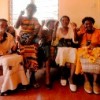
AFRICA: We Are the Government
As if they were going to the races, Emma Musako and Monica Mhango showed up in their finest outfits to attend a meeting on the health, social and environmental impacts of uranium mining. They came because they, like the other attendees, no longer want to remain uninformed citizens.« Previous Page — Next Page »


The Week with IPS

NEXT STOP - SDGs
Tracking global progress towards a sustainable world
Tracking global progress towards a sustainable world
