Languages
Sunday, November 22, 2026



News and Views from the Global South
Politics
ECONOMY: Emerging G20 Consensus on Solutions to Crisis
For now, a consensus seems to prevail in the Group of 20 (G20) major industrialised and emerging nations, whose finance ministers and central bank presidents ended their 10th annual meeting Sunday, which took on a high profile due to the global financial crisis.RIGHTS-BURMA: Military Accused of Crimes Against Humanity
An onslaught by Burmese troops in the eastern part of the military-ruled country, running for three years now, is laying the junta open to charge of ‘crimes against humanity’.ECONOMY: G20 in New North-South Battle
Brazilian President Luiz Inacio Lula da Silva called for "a pact between governments to create a new global financial architecture," while stressing the need to open up the global financial bodies controlled by the industrialised world to emerging economies.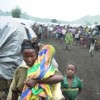
DR CONGO: The Cost of War
War is expensive. The costs include not only the millions of dollars spent on military equipment and maintaining an army, but the financial and psychological toll it takes on the everyday lives of people caught in the crossfire.POLITICS-BENIN: Women Left Out of New Govt
"Every change is a step backwards in this new era. It's disheartening," is Claire Houngan Ayémona's response to Benin's newly-appointed cabinet.POLITICS-DR CONGO: Regional Leaders Urge Effective Ceasefire
African leaders meeting in Nairobi have called for an end to the renewed fighting in the eastern part of the Democratic Republic of Congo (DRC) which has displaced 253,000 people since August, according to the United Nations.POLITICS: World Leaders Seek Culture of Peace
When more than a dozen world leaders meet in New York next week to discuss "the culture of peace", the primary focus will be the growing misperception of religion, specifically Islam, and the increase in racism, xenophobia and intolerance worldwide.ECONOMY: Another G20 Takes Centre Stage
The Group of 20 (G20) that will meet this Saturday and Sunday in Brazil could have a more defining role in shaping a new global order than any of the alliances forged in past international negotiations - like the other G20 formed by developing countries in the Doha Round of multilateral trade talks.PARAGUAY: Agreement with Rural Activists Puts End to Protest
Rural and social activists ended three days of protests Friday in the Paraguayan capital after their leaders met with President Fernando Lugo and reached a preliminary agreement for addressing their demands.
POLITICS-US: Election Day in a Colorado Steel Town
Interstate 70 in western Colorado heads east towards Denver along the upper reaches of the Colorado River.IRAQ: U.S. Pushes In Their Excellencies
More than five years after the U.S.-led invasion and occupation of Iraq, Arab capitals are beginning to send ambassadors to Baghdad. But some Egyptian commentators question the timing of the move, which they attribute to pressure from Washington.
VENEZUELA: Budgets Take On a Woman’s Face
As Venezuela increasingly incorporates a gender perspective in its public budgets, issues like the paving of roads and the construction of schools are being joined by new priorities such as teen pregnancy and domestic violence prevention programmes when it comes to spending.CUBA: Cultural Prejudice Still Lingers
Political convenience, generation gap or Stalinist influence? Nearly 50 years after the triumph of the Cuban Revolution, it is still hard to discern why this country decided that rock, fashion, long hair for men and homosexuality were counter-revolutionary.
US: Don't Be Afraid to Spend, Economists Tell Obama
President-elect Barack Obama will inherit an ailing economy and the way to help right it is to spend - and spend some more, independent economists say.ECONOMY: Turning the Pages Back to Marx and Keynes
Among the few things whose sales are picking up in these recessionary times are the works of Karl Marx and John Maynard Keynes. Both, in their own way, argue a central role for the state in managing the economy.CHINA: Tackling Tibet and Taiwan – Differently
Chinese negotiators have, this week, discussed Tibet’s quest for genuine autonomy with the Dalai Lama’s representatives and also pushed forward the agenda to establish economic rapprochement with Taipei.SOUTH PACIFIC: Obama Win Inspirational
Washington’s policy in the South Pacific is unlikely to change much with Barack Obama’s win in the U.S. presidential elections, but the historic victory should serve as an inspiration for the region, say commentators.SOUTH-EAST ASIA: Obama Victory Spells Renewed US Interest
In Indonesia, many know him as ‘’Barry’’. To others U.S. president-elect Barack Obama is the ‘’Menteng Kid’’ for the primary school he attended while living in South-east Asia’s largest country.TUNISIA: Longtime Political Prisoners Freed, Many Still Languish
On the heels of the release of 21 prominent political prisoners in Tunisia, a human rights group urged the government there to free all persons held for nonviolent activities and to stop the harassment of former political prisoners.U.S.: Coca Cultivation Up Despite Six Years of Plan Colombia
Despite the expenditure of nearly five billion dollars in U.S. military, security, and economic assistance, the cultivation of coca leaf and production of cocaine in Colombia actually increased between 2000 and 2007, according to a major review by the U.S. Congress's independent investigative agency.
POLITICS-US: Obama Rode the Crest of a New Coalition
Ahead of Tuesday's presidential election in the U.S., many critics were questioning the Democratic strategy. Spending money outside of the usual battleground states and relying heavily on new voters whose appearance at polling places is usually unreliable were bold ideas with unproven results, much like the Democratic candidate himself.« Previous Page — Next Page »


The Week with IPS

NEXT STOP - SDGs
Tracking global progress towards a sustainable world
Tracking global progress towards a sustainable world
