Languages
Tuesday, November 17, 2026



News and Views from the Global South
Poverty & MDGs
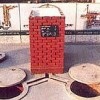
ENVIRONMENT: Sanitation Beyond Septic Tanks and Sewers
To meet one of the Millennium Development Goals (MDGs) and halve the number of people without basic sanitation by 2015, the world must make a radical shift away from septic tanks and sewers, say experts and activists.RIGHTS-COTE D'IVOIRE: Fighting FGM From Mosque and Pulpit
In certain parts of Africa, female genital mutilation (FGM) has been linked to religion, with Muslim communities mistakenly believing that the practice is a religious requirement. But in Côte d'Ivoire, religion is also being put at the service of fighting FGM.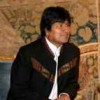
Q&A: 'We Need Partners, Not Masters'
Bolivian President Evo Morales visited Italy this week to receive a special award for his government's commitment to social and health issues. He has made these issues a "political priority."
COLOMBIA: Malaria Winning the Battle in Choco
The Atrato River is "full of malaria", according to a dozen men in rubber boots, standing in the water that has inundated the village of Tanguí, in Colombia's north-western jungle.TRADE-KENYA: Court Bid to Stop EPA ''Human Rights Violations''
An unexpected challenge has been directed at the economic partnership agreement (EPA) being negotiated between the European Union and the east and southern African group. Two lobby groups have filed a law suit in Kenya to halt the signing of the EPA.ASIA: Water Services – Fee or Free?
Access to safe water may be touted as a human right, but inadequate supplies, crumbling water systems and the galloping needs of growing populations are forcing experts, government utilities and funding agencies to ponder over devising sustainable water service networks in Asia’s teeming cities.
DEVELOPMENT: Our Youth, Their Future
With young people a growing segment of the world's poorest, their voices in setting global development policies at the highest levels have never been more important.HEALTH-AFRICA: HIV and TB – An Ever Deadlier Combination
The prevalence of tuberculosis (TB) amongst people living with HIV in sub-Saharan Africa has reached crisis levels and will escalate further if decisive steps are not taken, says a new report by the Forum for Collaborative HIV Research - 'HIV-TB Co-Infection: Meeting the Challenge'.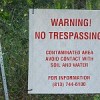
ENVIRONMENT-US: Toxins Threaten to Uproot Entire Town
The quiet village of Tallevast in Florida's Manatee County traces its roots back to the 1890s, when a community of shacks was built there for African-American labourers who worked tapping sap from the local pine forests to make turpentine and grew sugarcane, celery and strawberries in the fields.TRADE-AFRICA: The EPAs – About Development or Exploitation?
Europe’s paternal trading relationship with African states threatens to end in an almighty family fall-out if they fail to sign the economic partnership agreements (EPAs) by the end-of-year deadline.NICARAGUA: At-Risk Pregnancy Means Death or Prison
Nearly 90 women have died in Nicaragua as a direct or indirect result of the repeal, one year ago, of the legislation permitting abortion in cases of risk to the mother’s health, according to women’s and human rights groups.TRADE-AFRICA: Russia Opens Market to Poorest Countries
Africans looking to do business in Russia's burgeoning market can now export goods under new preferential trade agreements.
Q&A: "Wetlands Have Had a Pretty Raw Deal, Historically"
Environmental organisations can work with developers to manage wetlands in urban areas, says John Dini: programme manager at Working for Wetlands, a state organisation that tries to ensure the long term viability of wetlands in South Africa.ENVIRONMENT-INDIA: Toilets Integral to Tribal Development
When Gram Vikas, one of India’s largest non-government organisations (NGOs), began work to uplift rural Adivasi (tribal) communities across this eastern Indian state, it started by building toilets.ENERGY: Project May Boost Biofuels in East Africa
A new project to develop an integrated sugarcane facility in Kenya could be a boost for biofuels production in east Africa.RIGHTS-ASIA: 'Fundamentalism Plays Out on Women's Bodies'
They twisted it, turned it and tore it apart, but the term ‘religious fundamentalism’ defied definition. But they were certain that it worked against women’s rights.RIGHTS-EL SALVADOR: Twenty Years of Deja Vu
Rosa Anaya was leaving her home early on her way to school that morning of Oct. 26, 1987 in El Salvador, when she saw her father, a few steps ahead of her, crumple beside his car, hit by six bullets.TRADE: Governments (Still) Pondering How to Make Drugs Accessible
The struggle to make medicines affordable to the world’s poor, especially in Africa, is raging on at the highest levels. Last week the European Commission took a landmark decision on generic drugs and next week a high-level intergovernmental meeting will look at ways to prevent patents from blocking access to drugs.RIGHTS-INDIA: Landless Farmers Demand a Piece of the Action
As India revelled over the emergence of homegrown businessman Mukesh Ambani as the world’s richest person, following a stock market spike this week, landless labourers and socially marginalised groups marched into the capital by the thousand demanding a piece of the country’s newfound prosperity.
DEVELOPMENT-NAMIBIA: Interest in Uranium Powers Desalination Plans
Efforts to build Namibia's first large-scale desalination plant are gaining momentum. The project is a joint undertaking of the Namibian Water Corporation (NamWater), a government owned utility, and mining company UraMin Inc.POPULATION-ASIA: Gendercide at Apocalyptic Levels – Experts
Experts at the 4th Asia Pacific Conference on Reproductive and Sexual Health and Rights are painting an apocalyptical vision of the Asian region where 163 million women are ‘missing’ and the sex ratio continues to decline as a result of easy access to modern gender selection techniques.« Previous Page — Next Page »


