Languages
Friday, October 16, 2026



News and Views from the Global South
Poverty
COLOMBIA: Sugar Workers Strike for Basic Rights
"We sugar cane cutters are neither delinquents nor terrorists; we are honest workers demanding respect for our rights," say Colombia’s cane harvesters, who have been on strike since Sept. 15, demanding basic rights.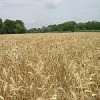
DEVELOPMENT: Is a Food Bank Answer to the Crisis?
Bangladesh, one of the world's 49 least developed countries (LDCs) described as the poorest of the poor, is calling for the creation of a global food bank.ENVIRONMENT: To Build a School, Save the Hippo
As the Wechiau community living along the banks of the Black Volta river in Ghana discovered, looking after the hippopotamus can build schools and bring electricity.EL SALVADOR: Increase in Poverty Driven by Soaring Food Prices
In the village of Talchiga in northeastern El Salvador, 20 families live in wooden shacks with earth floors, have no piped water, electricity or sewer services, and suffer from high levels of malnutrition.
OBAMA: "Subsidising Big Oil Makes No Sense"
Democratic presidential nominee Sen. Barack Obama sat down with IPS correspondent Bankole Thompson again on Thursday for a one-on-one interview in Grand Rapids, Michigan, where over 15,000 enthusiastic Obama supporters turned out to hear his message of change at downtown's Calder Plaza.
DOMINICAN REPUBLIC: Dreams of Being a Regional Breadbasket
On the second day of a conference here on agricultural development, Dr. Rene Villarreal awakened hundreds of technicians and farmers from a siesta, leaving the dais and walking from table to table, using a remote microphone.ECONOMY-LATAM: Crisis Means Slower Growth Ahead
The financial crisis shaking the United States will have repercussions in the rest of the world, which means "tough times lie ahead for Latin America," the permanent secretary for the Latin American Economic System (SELA), José Rivera, told IPS.TRADE-INDIA: 'WTO Market Access Proposal Unacceptable'
India has raised strong objections to the draft negotiating document on non-agricultural market access (NAMA) on trade in industrial products, released Monday by the World Trade Organisation (WTO).
Q&A: Can Save the MDGs Yet
White banners were draped across public buildings in much of Europe during 2005 as an unlikely coalition of celebrities, church groups and trade unionists took part in the Make Poverty History campaign. The Group of Eight (G8) top industrialised countries and the European Union responded by promising to double their aid to Africa by 2010 at a summit in Gleneagles, Scotland.EUROPE: Tax Havens Cheating the Poor
Tax havens in Europe are depriving poor countries of more money than they receive in development aid, it has been alleged.
DEVELOPMENT: Millions Stood Up, Will World Leaders Follow?
Millions of people across the world took part in meetings and rallies calling for economic and social justice for the marginalised and downtrodden in a way that perhaps the world had never witnessed before.RIGHTS: Poverty and Capital Punishment Go Hand In Hand
In rich and poor countries alike poverty and the death penalty are almost always inextricably bound together, according to a worldwide survey of experts and human rights activists carried out by journalists as part of the IPS Death Penalty Abolition Project.HEALTH: No Woman Should Die Giving Life, Says UNFPA
In this 21st century, when medical science and gender empowerment are rising progressively, "no woman should die giving life", declares Thoraya Ahmed Obaid, executive director of the U.N. Population Fund (UNFPA).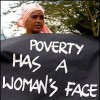
DEVELOPMENT: The Missing Piece of the Poverty Puzzle
Women are seen as the key for ending global poverty and the issue of gender equality is receiving special attention at events marking the International Day for the Eradication of Poverty on Wednesday.
Q&A: 'GCAP Is About Political Engagement'
Rights activist Irfan Mufti, currently working as campaign manager for the Global Call to Action against Poverty (GCAP), is confident that this year will see the movement influencing national budgets as well as the policies of institutions such as the International Monetary Fund (IMF) and the World Bank.CENTRAL AMERICA: Little Enthusiasm Over Anti-Poverty Campaign
The enthusiasm among social groups in Mexico and Central America for the Global Call to Action against Poverty (GCAP) is not reflected by the general public, which has displayed scant interest in this week's event.SOUTH AMERICA: Call Against Poverty Takes Aim at Inequality
More than two years after the launch of the Global Call to Action Against Poverty (GCAP), social movements in South America are putting the accent on the fight against social inequality and criticism of the neoliberal economic model, which they see as hindering development.MIDEAST: Palestinians Prepare to Stand Up for What Matters
While the international community concentrates on final status negotiations between the Palestinian government and Israel, the Palestinian people plan to stand up Oct. 17 to show the world what really matters to them.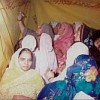
DEVELOPMENT-PAKISTAN: Monster Banner Against Poverty Coming Up
When Shareefan Bibi, who works as a labourer at a brick kiln in this town 70 km from Lahore city, heard of the monster banner against poverty being put together she wanted to sign on it.
Q&A: 'We Do Not Want to Halve Poverty: Eradicate It'
Sylvia Borren is one of the three co-chairs of GCAP, together with Kumi Naidoo (Secretary General of Civicus) and Ana Agostino (Member of GCAP's Feminist Taskforce).
ASIA-PACIFIC: MDGs Progress Unknown for Lack of Data
In a moment of rare candour, officials from a regional United Nations body and the Asia Development Bank (AsDB) admitted that studies to gauge progress of the Millennium Development Goals (MDGs) are hampered by out-of-date information.« Previous Page — Next Page »





The Week with IPS

NEXT STOP - SDGs
Tracking global progress towards a sustainable world
Tracking global progress towards a sustainable world
