Languages
Friday, October 30, 2026



News and Views from the Global South
Preventable Diseases - Africa
REFUGEES-KENYA: Contraceptives – Both Needed and Scorned
As the international community marks World Refugee Day, a Somali woman's tale of how she helped fellow refugees terminate pregnancies has highlighted the shortcomings of reproductive health care in refugee camps.HEALTH: A Wind of Hope in Kenya’s Desert
Madonna's 1980s hit song 'Like a Virgin' blasts incongruously from a giant silver speaker in the corner of a bar deep inside Isiolo - a dusty town on the edge of Kenya's northern Kaisut desert, filled with tough nomads and their herds of emaciated animals.HEALTH: Despite Modest Advances, Malaria Still a Major Killer in Africa
Despite the promising advances made in the prevention and treatment of malaria around the world, the disease continues to represent a major challenge in Africa, where the overwhelming majority of deaths now take place.HEALTH-ANGOLA: Neighbours On Full Alert for Marburg Fever
There are fewer cases of Marburg fever being reported out of Angola this week, but medical experts say it is too soon to say this indicates the hemorrhagic virus is waning.HEALTH-MAURITANIA: Low HIV Prevalence, Widespread AIDS Stigma
In the wooden shanty town of Elmina on the outskirts of Mauritania's capital, Nouakchott, AIDS educators do not let religious or cultural conservatism get in their way.POLITICS: U.N. Paints Grim Picture of Spreading Crises in Africa
A senior U.N. official warned Thursday that the ongoing conflicts in Africa would continue to have a "devastating impact" on civilians this year - "as it has been for many months, and in some cases, for many years".POLITICS: Six Million Dying of AIDS Amid Tsunami Largesse
Within three weeks after the tsunami disaster ravaged south and south-east Asia, the international donor community responded magnanimously by pledging an unprecedented 5.5 billion to 6 billion dollars for emergency relief and reconstruction.DEVELOPMENT: Way Exists to Slash Poverty, But Is There the Will?
Global poverty is threatening world security and jeopardising international efforts to end violent conflict, instability and terrorism, a team of leading development experts declared in a study released Monday.HEALTH-NIGER: Enlisting Men in the Fight Against Fistula
When poverty and traditional practices collide in Niger, the results can be ruinous – particularly for teenage girls.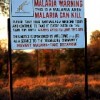
HEALTH-SOUTHERN AFRICA: With the Rains, Comes Malaria
In the blistering summer heat, slow-gathering clouds that promise rain are welcomed by farmers in Zimbabwe and other water-scarce countries in Southern Africa. Yet the rains – when they come – also worsen the incidence of malaria.HEALTH: UNICEF Urges Greater Commitment to Reducing Child Mortality
First, the good news: while nearly one in five children was dying before the age of five in the early 1960s, this figure had dropped to less than one in 12 by 2002.HEALTH-NIGERIA: A Visionary Plan For Preventing Blindness
It is 08.00 in Iba Town - a suburb of Nigeria's southern economic hub, Lagos - and people have defied heavy rains to start lining up outside a mobile clinic that treats eye disorders. The queue will ultimately include hundreds of peasant farmers, fishermen, traders, school children and senior citizens.HEALTH-NAMIBIA: "Let Us Call a Spade a Spade"
The contest to determine who would succeed Namibian President Sam Nujoma as head of the ruling South West African People's Organisation (SWAPO) was eagerly watched in the country and the Southern African region.HEALTH-MALI: Guinea Worm Continues to Take a Toll
In 1994, authorities in Mali launched a programme to eradicate guinea worm – a parasite that can grow to a length of almost a metre inside the human body, later emerging through a blister in the skin. While the programme was very successful in its first six years, a troubling resurgence of guinea worm was reported last year in the central Mopti region.HEALTH-MALAWI: Drug Theft Poses Threat to Battle Against TB
Malawi joined other countries Wednesday in commemorating World TB Day - this to draw attention to a disease that claimed two million lives last year, according to the World Health Organisation. However, the efforts of Malawian officials to curb tuberculosis are being dogged by the theft of TB drugs from state hospitals.HEALTH-AFRICA: A Church Group Makes Strides in Supplying ARVs
The case for providing anti-retroviral drugs to as many HIV-positive Africans as possible was made again this week in South Africa, by the Community of Sant' Egidio, a Catholic organisation.HEALTH-KENYA: Gender Equality Key to Combating AIDS
The importance of placing gender equality at the heart of efforts to combat AIDS was highlighted in Kenya this week, with the release of a new plan by the gender sub-committee of the National AIDS Control Council.HEALTH-ETHIOPIA: WHO Fights Back on Issue of Malaria Drugs
A World Health Organisation official in Ethiopia has dismissed an article in a respected British medical journal that claimed the United Nations agency was undermining the fight against malaria. "The Lancet" accuses the agency of approving cheap drugs that do not work, and blocking the use of a newer - albeit more expensive - treatment to combat the disease.POLITICS-LIBERIA: Famine Poses a New Threat
Spared from death by the bullets, thousands of Liberian war survivors face a new threat: famine. Unless something is done urgently, people will start dying of hunger soon, warn aid workers.HEALTH: Ethiopia Blasts MSF For Advocating Alternative Malaria Treatment
Ethiopia’s health ministry and the aid agency Medecins Sans Frontiers are at loggerheads over the use of a cocktail of drugs for malaria treatment in an epidemic that is threatening 15 million Ethiopians.HEALTH-ZAMBIA: Rains Bring "Preventable" Outbreak of Cholera
Six people have died from cholera and another 165 are reported to be in a serious condition as the disease sweeps through Zambia's capital, Lusaka.« Previous Page — Next Page »





The Week with IPS

NEXT STOP - SDGs
Tracking global progress towards a sustainable world
Tracking global progress towards a sustainable world
