Languages
Thursday, October 8, 2026



News and Views from the Global South
Science and Technology
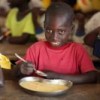
AFRICA: Agricultural Extension Work Both Important and Under-valued
At a time of international concern about the future of the world's food supply, it's a comment that gives pause for thought: "I teach university students agriculture and extension but many of them opt for other professions, especially in ICTs, because agriculture is 'for those who haven't gone to school'."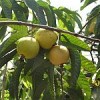
ENVIRONMENT: Alien Species Plague the Land That Time Forgot
Juicy, wild-growing blackberries, guava and passion fruit plants may be savoured by humans and animals alike, but in this particular part of the world - sometimes called the Land That Time Forgot for its largely pristine biodiversity - they are three problematic invasive species.
DEVELOPMENT: Food for Thought on Earth Day
As Earth Day celebrations kicked off around the world last weekend, the event has evolved from teach-ins on park lawns into a multi-day media extravaganza replete with corporate sponsorship.
Q&A: "Between Implementation and Planning, There Is a Disconnect"
Accounting for about a third of the gross domestic product in sub-Saharan Africa, agriculture clearly plays a significant role on the continent. But, figures only tell part of the story. A review of Africa produced under the International Assessment of Agricultural Science and Technology for Development (IAASTD) notes that agriculture is also "woven into the fabric of most societies and cultures in the region."HEALTH-AUSTRALIA: Vaccine Therapies Need Boost – Scientists
While millions of children’s lives have been saved as a result of a successful worldwide campaign to boost vaccination programmes, governments across the world are failing in following through on their commitments to health aid and the Millennium Development Goals (MDGs).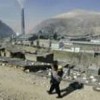
ENVIRONMENT-PERU: In Search of Less Toxic Mining
The Peruvian government is seeking to reduce the maximum allowable emissions of pollutants by the mining industry, but the proposed limits are still a long way from meeting international standards.CLIMATE CHANGE: A Game With Too Many Free Riders
The evidence is piling up that climate change threatens to bring a chaotic future unlike anything ever known. Taking collective action in time to avert the worst means rewarding climate-safe behaviour, punishing climate transgressors and publicly praising those who are trying to protect the environment, a new study suggests.CLIMATE CHANGE: New Value For Old Forests
Newly sensitised to the dangers of climate change, researchers around the world are making progress in helping to protect old growth forests that are threatened by fires, urban development and logging.ECONOMY-ARGENTINA: Poised for the Qualitative Leap?
A new ECLAC study highlights Argentina’s robust economic recovery in the past five years, and signals an opportunity to progress towards a model that adds value to raw materials, which make up most of the country’s exports.CLIMATE CHANGE: Wanted – Homes For Small Island People
A rapidly warming planet may soon create a new class of refugees - those fleeing climate change in their homelands.CLIMATE CHANGE: A Vision Worth Fighting For
Sweeping societal change is a slow and erratic business. The civil rights movement in the United States went nowhere for decades and then exploded in the 1960s. Not long ago, smokers could light up anywhere they pleased in Canada and the U.S. Now they are mostly confined to a few outdoor areas and as a consequence, far fewer people smoke.
CLIMATE CHANGE: The Fault Lies Not in Our Cars but in Ourselves
Rising levels of carbon dioxide (CO2) in Earth's atmosphere can be compared to a flooding river, swamping low areas at first but inevitably bursting its banks.CLIMATE CHANGE: The Future Is Now
Our fingers are glued to the global thermostat, pushing it ever higher, and climate catastrophe has already begun to reshape human civilisation.CLIMATE CHANGE: Kyoto Protocol Targets Stressed at UN Meet
Negotiators from the developing world took on the world’s richer nations as the first round of talks began here for a new pact to curb global warming. The fate of the Earth’s future lies in the actions of the industrialised world, they say.ENVIRONMENT-CHILE: Experts Call for Stronger Anti-Smog Measures
"It’s as if we were swimming at a beach unfit for bathing. For four or five months a year, the air is unfit to breathe in the Chilean capital, and the government throws out a lifejacket when people are in difficulties, so that they don’t drown," Patricio Pérez of the University of Santiago told IPS.DEVELOPMENT- ANGOLA: Research Initiative Nets Interesting Discoveries
More than 50 species of fish have been recorded in the initial phase of a two-year joint research project on the Kwanza River in Angola.MEXICO: New Rules Pave the Way for Transgenic Crops
After a three-year-long process, Mexico is about to clear the way for legal cultivation of transgenic crops, in spite of resistance from environmentalists and several small farmer associations.
BRAZIL: Developing "Clean" Petrochemical Products
Glycerine, a by-product of biodiesel, is currently an environmental and economic problem for companies involved in the production of plant-based fuel in Brazil and other parts of the world. It can't be dumped, because it would harm the environment, and storing it racks up additional costs.CLIMATE CHANGE: A Glacial Vanishing Act
Glaciers, the world's freshwater towers, continue their record-breaking meltdown, a new U.N. report shows.
SOUTH AMERICA: La Niña and Climate Chaos
It is still difficult to predict the local impacts of the cyclic climate phenomenon known as La Niña, which has been responsible for catastrophic floods in Bolivia, Ecuador, Peru and Argentina, and - on the other extreme - severe drought in Chile.
WOMEN’S DAY: Science No Longer a Boy’s Club
In 2001, Dr. Henrietta Edmonds made a startling discovery during a rare expedition in the frozen arctic: Smoky, particulate-rich plumes of hot water swirled 3,000 metres under the ice - a sign of hydrothermal vents on the sea floor - and lots of them.« Previous Page — Next Page »





The Week with IPS

NEXT STOP - SDGs
Tracking global progress towards a sustainable world
Tracking global progress towards a sustainable world
