Languages
Sunday, October 11, 2026



News and Views from the Global South
Science and Technology
ENVIRONMENT: Ozone Deal to Cut Down CO2 Emissions
More than 190 nations agreed this week to combat global warming and accelerate the healing of the ozone layer, although critics say more could have been accomplished.TECHNOLOGY-CUBA: Widespread Resistance to Free Software
Although Cuba proclaimed its intention to change its computer operating systems for free software in 2005, the shift seems to depend more on the efforts of a small community of enthusiasts than on the state agencies that are officially in charge.EUROPE: Microsoft Loses Case, Not Business
Microsoft will still wield enormous power in the global computer industry despite this week's ruling by a European court that the Seattle-based corporation has abused its monopoly.ENVIRONMENT: The Chemical That Must Not Be Named
Delegates from 191 nations are on the verge of an agreement under the Montreal Protocol for faster elimination of ozone-depleting chemicals, but the United States insists it must continue to use the banned pesticide methyl bromide.
HEALTH-THAILAND: Legal Hassles, Taboos Hamper Organ Donation
"I feel great! I've never felt better," said Gisele Ceppi of Switzerland. At 61, she exudes vitality and is positively glowing with health. The toned muscles, lithe steps, bright eyes and smile belie the fact that she is a kidney recipient.
ENVIRONMENT-SRI LANKA: Tsunami Alert Systems Working – Too Well
A tsunami alert, last week, sent thousands of Sri Lankans living along the coasts of this island nation fleeing inland, but authorities were exultant that the early warning systems installed after the disastrous Dec. 26, 2004 Indian Ocean tsunami were working.RIGHTS-AUSTRALIA: Aborigines Insist on Ancestors’ Repatriation
Successful negotiations with the renowned Natural History Museum (NHM) in London, for the repatriation of human remains against claims made by indigenous Australian communities, have extended the hope that more institutions will follow suit.
ENVIRONMENT-INDIA: Snow Leopards Earn Their Keep in Tourist Dollars
Tsring Angmo a student from Rumbak village in Ladakh attended a workshop conducted by the Snow Leopard Conservancy (SLC) in India out of sheer curiosity. "I came away feeling responsible for the safety of the endangered animal,’’ she said.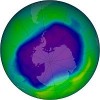
ENVIRONMENT: Ozone Treaty Could Slow Climate Change
Delegates from 191 nations are in Montreal, Canada this week to celebrate and extend the world's most successful environmental treaty, the Montreal Protocol to protect the ozone layer.
SCIENCE: Geneticists Crack the Species Code
Scientists are enthusiastic about a new DNA barcoding technology that will help keep illegal fish and timber out of global markets, slow the spread of invasive pests, and improve food safety and disease prevention and offer better environmental monitoring.
CULTURE-JAPAN: Flushing Away Toilet Taboos
The evolution of the toilet in Japan, from the humble squat latrines of a few decades ago to today’s hi-tech, cockpit-like contraptions, parallels the dramatic rise of this country from post-war ruination to global technological leadership.HEALTH: Medical Research Hits Cultural Roadblocks
Many new medical technologies to improve the lives of people in the global South fail to be adopted not because of the costs but because of ethical, social and cultural issues, a new study reveals.
ENVIRONMENT: Breakthrough on Mystery of Vanishing Bees
Over the past year, honey bees have been dying across North America in unprecedented numbers and, until this month, no one seemed to be able to prove beyond a reasonable doubt what the cause may have been.LATIN AMERICA: Scientists Second-Guessing the Path of the Whirlwind
Hurricanes Dean, Felix and Henriette caused dozens of deaths and millions of dollars worth of damage in the tropical zone of the Americas in just over two weeks. But worse may lie ahead, as five large cyclones are expected to materialise before the storm season is over.ENERGY: World Bank in Bid to Light Off-Grid Africa
The World Bank hopes to bring modern lighting to one-fourth of Africa's people by developing markets for products not hostage to fossil fuels or the continent's lamentable electricity grid.CUBA-US: Academic Exchange Continues, Despite Embargo
Relocating the 27th Latin American Studies Association (LASA) International Congress from the United States to Canada has meant that 138 Cuban academics have been able to take part in the event, which promotes dialogue and academic exchange in the region.
ENVIRONMENT-AUSTRALIA: Pulp Mill Friction Turns Election Issue
A proposed pulp mill in the scenic Tamar Valley of the island state of Tasmania has become a contentious issue between environmentalists and pro-development groups as Australia goes to federal elections this year.HEALTH: ‘Avian Flu Spread by Poultry, Not Wild Birds’
The search for answers to the spread of the deadly bird flu virus is calling into question a long-held practice in science where recognition is given to positive test results, say experts meeting in the Thai capital.
RIGHTS: Keep Watch from Space
The use of satellite images earlier this year to document human rights violations and support humanitarian assistance in Darfur has strengthened interest in wider use of satellite technology for humanitarian purposes.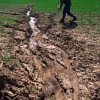
ENVIRONMENT: Dirt Isn't So Cheap After All
Soil erosion is the "silent global crisis" that is undermining food production and water availability, as well as being responsible for 30 percent of the greenhouse gases driving climate change.ENVIRONMENT-INDIA: Home Garbage Composting – Not Going to Pot
A variation of the age-old concept of composting household garbage, using cheap earthen pots, is turning into a runaway success in this fast-expanding metropolis of seven million people.« Previous Page — Next Page »





The Week with IPS

NEXT STOP - SDGs
Tracking global progress towards a sustainable world
Tracking global progress towards a sustainable world
