Languages
Wednesday, November 4, 2026



News and Views from the Global South
Southern Africa

HEALTH-MALAWI: Rains Expose Poor Sanitation
Zimbabwe - where cholera has claimed more than 2,700 lives so far according to the Red Cross - is not the only southern African country facing increased disease as rains set in across the region. Malawi is also battling a cholera outbreak which has killed 19 people since the onset of the rainy season, an unusually high death toll.ZIMBABWE: So How Does One Budget in a Collapsed Currency?
In November 2007, Zimbabwe's then Minister of Finance, Samuel Mumbengegwi struggled through the reading of the 2008 budget, his tongue tripping over figures in the trillions and quadrillions of Zimbabwean. So embarrassed was Mumbengegwi that he even shied away from announcing the total budget figure of 7.84 quadrillion Zimbabwe dollars, then a record amount.
ZIMBABWE: ‘Life Is Like A Casino – We Live Each Day As It Comes’
Long lines of stalls, run by women, have sprung up next to many of Zimbabwe’s highways, selling honey, milk, mushrooms, tomatoes, onions and chickens. As prices in towns skyrocket due to unprecedented inflation levels running in the millions, people leave their towns to purchase basic commodities.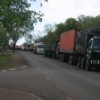
TRADE: Exporting Inside Africa as Expensive as Exporting to Asia
Despite the new free trade agreement linking southern African states, it still costs as much to move goods between African states as it costs to move goods from Asia to Africa, according to an economist.
ZIMBABWE: Now a 'Factory for Poverty'
Over 75 percent of the people in crisis-riddled Zimbabwe are living in desperate poverty, with children bearing the brunt. And with rival parties still deadlocked over implementation of a power-sharing agreement signed four months ago, things are likely to get worse before they improve.
AFRICA: Climate Change Threatens Food Security
Climate change will have a significant impact on southern Africa’s already compromised food security, environmental experts warned at the fifth Alexander von Humboldt International Conference at the University of Cape Town (UCT) in South Africa.ZAMBIA: Corruption: Two Steps Forward, Two Steps Back
Zambia's Anti-Corruption Commission (ACC) received more than 2,000 corruption complaints from the public for 2008, the ACC yearly report states.SWAZILAND: Patients Fail to Adhere to TB Treatment
Every five minutes she gives a hacking cough. Ndlaleni Ndzinisa (70) says she has continuously suffered from tuberculosis for the past five years. Because she cannot afford to pay for transport to the nearest hospital, she has repeatedly failed to adhere to her tuberculosis (TB) treatment.SOUTH AFRICA: Community Gardens Contribute to Food Security
A few years ago 66-year-old grandmother Regina Fhiceka and her family of five ate vegetables only once a week. They would survive on maize and bread the rest of the time - the cheapest food available in the poor township of Philippi, just 15 minutes from the affluent business district of Cape Town.
ZIMBABWE: Holy Water Is Serious Business
"I am making much more profit selling seawater than I used to get from selling groceries and small household goods," Carlos Marufu, a holy water dealer based in Harare told IPS.
SOUTHERN AFRICA: Climate Change Threatens Livelihoods
Climate change will affect the Zambezi River basin more severely than any other river system in the world, according to Kenneth Msibi, Water Policy and Strategy Expert for the Southern African Development Community (SADC). Increased floods, drought and increased levels of disease threaten lives and livelihoods all along the river’s length.
GENDER-SOUTH AFRICA: 'A Real Man Does Provide Care'
Sonwabo Qathula puts on his apron and starts peeling a pile of butternuts, while a pot of rice boils on the stove next to him. The 50-year-old is preparing lunch for poor and orphaned children who attend a rural school in the Eastern Cape.ZIMBABWE: Cholera Drowns Christmas Spirit
On Christmas Day, Robson Nzuza and his family usually drive to their village in Silobela, in the Midlands Province, to spend a week with members of the extended family and throw a big party.ANGOLA: Deadly Countdown for Small Parties
Angola’s vast, confusing party landscape is about to undergo a major transformation: as of January, 22 parties and coalitions will simply vanish from the political map.
SOUTHERN AFRICA: Building Regional Water Management
As southern Africa braces for the negative effects of climate change, calls for integrated water resources management become more strident.
Q&A: Failure to Translate Women’s Legal Rights into Action
Each year, for 16 days in December, the world’s focus shifts towards taking action against gender-based violence. Governments and civil society organisations raise awareness around women’s rights and lobby for gender equality. But activists lament that little action is taken throughout the rest of the year and women’s legal rights often fail to be implemented and put to action.
Q&A: South Africa Suffers Sanitation Backlog
Sanitation is a key element of health, and hygiene a basic need for survival. Yet, millions of South Africans, especially those living in rural areas, do not have access to basic services, such as clean, running water and sanitary toilet systems.HEALTH-ZIMBABWE: Shady Dealings With Antiretrovirals
The current political and economic crisis in Zimbabwe is dealing a blow to the provision of free treatment and care to people living with HIV/AIDS (PLWHAs).SWAZILAND: Fighting Gender Violence With Financial Freedom
When a Swazi women's rights organisation noticed that many women continue to stay in violent relationships because they are financially dependent on their abusive partners, they knew something had to change. They started self-help groups that assist women in breaking away from gender-based violence (GBV) by gaining financial muscle.ZAMBIA: Violence Against Women on the Rise
"There will be no peace, security and sustainable economic development in Zambia as long as women’s rights continue to be treated as a secondary issue," said Non-Governmental Organisation Coordination Committee (NGOCC) chairperson Marian Munyinda.
HEALTH-ZIMBABWE: Cholera Now a National Emergency
"Funerals of people dying of cholera are a common feature of our daily lives," said Tapiwa Hove, a resident Budiriro, a high-density suburb of Harare. "But it seems no one cares. Sewage is flowing all over. It's like living in hell."« Previous Page — Next Page »





The Week with IPS

NEXT STOP - SDGs
Tracking global progress towards a sustainable world
Tracking global progress towards a sustainable world
