Languages
Monday, October 26, 2026



News and Views from the Global South
West Africa
AFRICA: ‘‘Invest in Job Creation to Buffer Global Crisis’’
African governments should invest in creating jobs, providing social services and building food security to shield people against the effects of the global economic and financial crisis. They should also develop micro-credit facilities to make money available to small businesspeople and boost economies.
POLITICS-MAURITANIA: 'Justice and Equality for All'
As Mauritania prepares for presidential elections on June 6, women's groups have outlined a clear and compelling agenda for women. The trick will be getting the country's mostly male politicians to listen.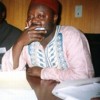
Q&A: "A Threat to One is a Threat to All"
On May 24, one of the leading advocates of Africa's unity and liberation, Tajudeen Abdul Raheem, was killed in a car accident in Nairobi, Kenya.RIGHTS-BURKINA FASO: Five Million To Get Precious Documents
Nearly 5.5 million people - mostly women and children - are to receive birth certificates in a country-wide exercise over the next 12 months. According to Burkina Faso's latest census, conducted in 2006, the rate of non-registration is particularly high amongst women and children, of whom three million (60 percent being girls) are not on the public registry.SIERRA LEONE: Knuckling Down To Heal Political Wounds
Incitement and violent clashes continue to shackle the government of Sierra Leone that took office two years ago. The elections were marred by reports of assassination attempts; violent confrontations between party militants; burning and looting; and widespread intimidation of voters.
AGRICULTURE-GHANA: Few Signs of Concern as GM Crops Advance
Ghanaians are daily consuming genetically modified (GM) products imported by various traders without much care. However, as the government prepares to allow the planting of GM crops locally in a bid to boost food production, one non-governmental organisation, Friends of the Earth (FoE) Ghana is sounding the alarm.
WATER-GHANA: Something Doesn't Add Up
It looks like someone is not telling it as it is as far as meeting the Ghana’s Millennium Development Goals (MDG) on water supply is concerned.
RIGHTS-SIERRA LEONE: Child Miners: Legacy of Conflict
Since the end of the civil war seven years ago, the Sierra Leonean authorities and child welfare agencies have been battling to remove children from the diamond-mining fields, a trend which began at the height of the conflict, when children were abducted by rebel forces and coerced to work in the mines.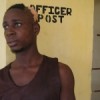
RIGHTS-LIBERIA: Justice Delayed Is…
The rain was falling hard in the early hours of April 17, when forty detainees kicked down the doors to their cells at the National Palace of Corrections, scaled the prison’s barbed wire fence and rear watchtower, and disappeared into the dark, sodden jungle.
RIGHTS-SIERRA LEONE: Special Court Wraps Up, But Has Justice Been Done?
On Apr. 8, the UN-backed Special Court for Sierra Leone passed sentences on three former commanders of the Revolutionary United Front (RUF), bringing to an end the trials of militia leaders deemed responsible for atrocities committed during the country's bloody civil war, fought from 1991 to 2002.WATER-GUINEA BISSAU: Neglecting Infrastructure at the People’s Peril
The most recent cholera outbreak in Guinea-Bissau killed 225 people before it was brought under control in February; 14,000 people were infected by the water-borne disease, most of them in the capital, Bissau.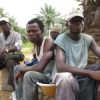
LIBERIA: Wild West – the Sinoe Rubber Plantation
"We organised security throughout the camp. If there was noise in the plantation we would call the person and carry out an investigation," the man known as ‘White Flower’ tells IPS. "Then the superintendent said they should arrest me and my crew."RIGHTS-BENIN: Support for Women Facing Violence
Judges and gynaecologists in Benin have undergone training on the interpretation of forensic evidence in cases of violence against women, as well as in investigative procedures when dealing with rape cases.MINING-AFRICA: Help Yourself, There's Plenty
The African continent is rich in natural resources; but the terms under which multinational companies exploit these resources mean that governments - and Africa’s people - enjoy only a tiny fraction of the benefits.SIERRA LEONE: Radio Stations Banned for Inciting Violence
Sierra Leone's vice president, Samuel Sam-Sumana, on Mar. 13 ordered an indefinite ban on radio stations owned by the ruling All Peoples Congress (APC) and its main rival, the Sierra Leone Peoples Party (SLPP).CULTURE: Ethiopian Film Takes Top Honours at FESPACO
Filmmaker Haile Gerima’s Ethiopian movie "Teza" has won the Golden Stallion of Yennenga at the 21st Panafrican Festival of Cinema and Television (Fespaco) in Ouagadougou, Burkina Faso.
CLIMATE CHANGE: Acid Oceans Altering Marine Life
Some of the first species impacted by increasingly acidic oceans have been identified just as scientists meet in Copenhagen this week to present new data showing that climate change is far more urgent and serious than current economic problems.
LIBERIA: Even the Devil is Subject to the Law
Tiny 14-year-old Precious sits on her orphanage bed in the southern port town of Harper, accused of witchcraft six months ago and exiled from her family and nearby community.HEALTH-NIGERIA: Govt Struggling to Guarantee Safety of Medicines
In 2008, as many as a thousand children were hospitalised with diarrhoea and vomiting after taking "My Pikin" teething syrup. At least 84 children are known to have died.MEDIA-GHANA: Unusual Bedfellows Push for Change
There has been a clamour to tighten up oversight and regulation of Ghana’s broadcasters from unusual bedfellows - the state-sponsored National Media Commission (NMC) and the Ghana Journalists" Association (GJA). The bodies have, in separate initiatives, slammed attempts to "privatise" the state-owned Ghana Broadcasting Corporation (GBC) and have railed against the practices of commercial radio stations.GUINEA-BISSAU: Live By the Sword…
Violence was a trademark of João Bernardo Vieira’s life: he survived a coup, four attempts on his life and 13 years fighting the Portuguese colonial army in Guinea-Bissau. But the legend died at the hands of the corruption and violence he himself fed.« Previous Page — Next Page »





The Week with IPS

NEXT STOP - SDGs
Tracking global progress towards a sustainable world
Tracking global progress towards a sustainable world
