
Saturday, October 17, 2026



News and Views from the Global South
Opinion
Let’s Give Trade a Chance
Mia Mikic is Director, Trade, Investment and Innovation Division in ESCAP & James Gregory Gallagher is an Intern, Trade, Investment and Innovation Division
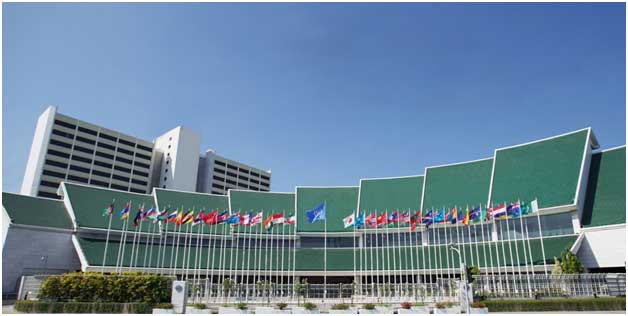
Courtesy: ESCAP
- Imagine going through the day without consuming or using some product, service, data, technology, personal contact, or payment which has not – at least in some part – crossed one or more national borders before reaching you.
We live in a globalized world where connections across borders are no longer just between governments or businesses but increasingly person to person. Many of us would have a hard time to adjust to life without these benefits from globalization.
Globalization, described as the spread of products, services, technology, information, and jobs across national borders, is often understood as the deepened interdependence of economies, cultures, and people.
The pace of globalization has been primarily driven by technological progress intertwined with the steady reduction of costs in international transactions coming from the policy side.

Mia Mikic
But there is the other side to this story. The benefits of globalization have not been shared widely or equitably. While workers producing smartphones, cars, or other GVC products in a few developing countries were gaining, their gains were relatively less than high-skilled or capital owners locally and overseas.
Offshoring production has meant a loss of mostly lower-skilled jobs in the advanced economies. These changes gave rise to a denouncement of globalization in both developed and developing countries. The high-speed growth of GVCs in the late 1990s and early 2000s, might have contributed to a degradation of the environment and overuse of resources.
The spread of resentment against globalization was recognized in several economies through populist policies focusing on short-term gains for those assumed to be hurt by globalization. Such policies go directly against the rationale for having a global governance of trade.

James Gregory Gallagher
Yet the loss is potentially much more significant. Trade tensions have spread from bilateral tit-for-tat tariffs, into the multilateral arena threatening the functioning of the global trade governance under the WTO. This system is not flawless and the calls for reform are justified. But that should not mean destruction before fixing it.
The global trade regime functions as a public good which is necessary to enable trade for delivering sustainable development. As demonstrated by ESCAP work, there are direct and indirect links between trade and the attainment of sustainable development. The channels are the following.
- 1. Trade facilitation and in particular digital trade facilitation reduces the cost of trade (by about 25%) and make its benefits accessible to many more, in particular women and SMEs.
2. Services are increasingly important for employment and value creation. They are closely linked to the process of digitalization of economies. The use of digital frontier technologies will allow for a new phase of globalization, unleashing the ability of professional services to be remotely provided across the globe. Asia’s advantage in offering varied professional services through digital technology are clear and would contribute to all three dimensions of sustainable development (prosperity, inclusivity, and environmental responsibility). Moreover, digitalization will offer more opportunities to countries and groups still excluded to participate in global markets.
3. As shown in APTIR 2019, the amount of NTMs has been increasing. The trade costs that come from NTMs are estimated to be more than double that of ordinary customs tariffs, with the economic costs of SPS and TBT measures estimated being up to 1.6% of global GDP, amounting to $1.4 trillion and the average trade costs of the Asia-Pacific region from NTMs is 15.3%. Yet NTMs often serve as a tool for the delivery of crucial public policies, such as the protection of human, animal, and plant health and protection of the environment. Can we keep NTMs but make them cheaper to use? Yes! By adopting new digital technologies and adjusting policies so that NTMs are aligned with international standards.
For these channels to remain open, there must be a functioning system of rules based on transparency, stability, predictability, and fairness. By working together, governments can improve the current WTO regime.
The opportunity comes up with the 12th Ministerial Conference in 2020 in Kazakhstan, and the ESCAP secretariat is already working with the Governments and other stakeholders towards ensuring that trade remains an effective means of implementation for sustainable development.
 Print
|
Print
|




