Tuesday, October 20, 2026



News and Views from the Global South

What 1.5°C Overshoot Means for Small Islands
The world is now expected to breach the 1.5 degrees Celsius warming limit that small island states have spent years defending as a threshold for survival.
Human-Caused Climate Change, Not El Niño, Drives Most Coral Bleaching Events – Research
Every morning, as the Indian Ocean retreats from the reef off Zanzibar's Jambiani village, Chiku Chande steps into the knee-deep lagoon carrying bundles of seaweed seedlings. Years of farming these waters have taught her about every channel and coral outcrop. But lately, the corals that once glowed in brown and gold have become chalky white.
CARICOM Leaders Gather in Saint Lucia as Caribbean Confronts Mounting Global, Regional Challenges
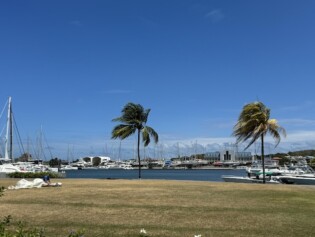
Caribbean leaders are meeting in Saint Lucia for their annual summit, confronting a convergence of global and regional challenges ranging from rising living costs and climate change to crime, food security and geopolitical tensions.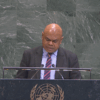
UN General Assembly Votes for Resolution on ICJ Advisory Ruling on Climate Obligations
Member states this week (May 20) deliberated over a draft resolution on states’ obligations in respect of climate change following the advisory opinion from the International Court of Justice (ICJ). The General Assembly agreed to take measures to uphold the ICJ’s advisory opinion for member states to meet their existing obligations to climate justice under international law and multilateral frameworks.
UN Weather Agency Warns of Escalating Climate Extremes Across Caribbean and Latin America
Faster-than-average sea level rise, intensifying hurricanes, extreme heat and worsening swings between drought and flooding are increasing pressure on Latin America and the Caribbean, according to a new report released Monday, May 18 by the World Meteorological Organization (WMO).
Caribbean Leaders and Civil Society Prepare for Global Push on Fossil Fuel Phase-Out
As the world edges closer to breaching key climate thresholds, Caribbean policymakers, scientists and civil society leaders gathered in Saint Lucia this month to coordinate the region’s position ahead of a landmark global meeting on transitioning away from fossil fuels.
UNOC3: World Leaders Recognize Urgent Need for Ocean Action
The world has converged along the Mediterranean Sea to affirm their commitments to the sustainable use and protection of the ocean.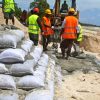
South-West Pacific Communities Threatened by Ocean Heat, Sea-Level Rise
The South-West Pacific experienced unprecedented warming in 2024, according to a World Meteorological Organization (WMO) report released today (June 5)—threatening islands in a region where half the population lives close to the coast.
UNOC3: Bringing Ocean Education and Science to the Global Agenda
A greater understanding and appreciation of the world’s oceans is needed to protect them. As the global community prepares to convene for the ocean conference, they must also prepare to invest in scientific efforts and education that will bolster their joint efforts.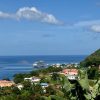
Latin America & the Caribbean in 2024: Renewable Energy and Early Warning Systems Offer Hope Amid Climate Extremes
Hope in the face of climate extremes. That is the overarching message about the State of the Climate in Latin America and the Caribbean in 2024.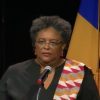
Food, Water, Crime, Climate Change: CARICOM Leaders Begin 48th Conference with Commitment to Joint Action on Critical, Common Concerns
Leaders of the Caribbean Community (CARICOM) are meeting in Bridgetown from Feb. 19-21, as the world grapples with multiple crises, including escalating geopolitical conflicts, climate change and rising food insecurity.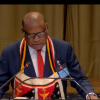
African Union, Nations Lay Bare Climate Vulnerabilities at UN’s Top Court
Kenya agrees with many UN member states testifying before the International Court of Justice (ICJ) that the law of international responsibility should hold countries legally responsible for major damage to the global climate system.
Small Island States Urge International Court to Look Beyond Climate Treaties
A few UN member states responsible for the majority of emissions have breached international law, Ralph Regenvanu, a special climate envoy from Vanuatu, told the International Court of Justice in the Hague in his opening address.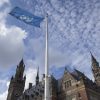
Youth-Led Landmark Climate Change Case Starts in The Hague
The intersection of law, diplomacy, and science will come under the spotlight at the International Court of Justice hearings starting today (Monday, December 2, 2024) in The Hague as the court starts its deliberations into the obligations under international law of UN member states to protect people and ecosystems from climate change.
Saint Kitts and Nevis: Leading the Charge for Climate Justice, Renewable Energy
At COP29, Saint Kitts and Nevis, the smallest independent nation in the Western Hemisphere, stands as a beacon of climate action and renewable energy ambition.
Rebuilding Trust, Dialogue, Collaboration Key to COP29’s Success, Says Barbados Minister
"This Finance COP has to deliver. I think this is a crucial moment for the COP process," said Shantal Munro-Knight, Barbados Minister in the Prime Minister’s Office. Barbados, a nation at the forefront of climate advocacy, continues to push boundaries at COP29, the so-called Finance COP. Knight shared her views on the state of negotiations, the urgency of climate finance, and the innovative solutions her country is championing.
‘Show Me the Money’—Grenada PM Calls for Climate Justice
"Though I come from a 'no worries' island, climate change is deeply worrisome for us," Grenada's Prime Minister Dickon Mitchell told IPS in an exclusive interview at COP29 currently underway in Baku, Azerbaijan. Asked how his country was recovering from Hurricane Beryl, Mitchell said the island in the last 24 hours “experienced flash flooding and landslides... So, apart from Hurricane Beryl, we are also dealing with other climate catastrophes.”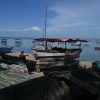
Cuba’s Coastal Dwellers Mitigate the Effects of Climate Change
Every time a hurricane clouds the skies over the city of Manzanillo, in the eastern Cuban province of Granma, the sea pounds the Litoral neighbourhood, forcing many of the 200 families who live there to evacuate inland because of flooding. When the weather is calm, the sea penetrates subtly and constantly, salinizing the water table and eroding the coast, affecting the foundations of houses and artesian wells.
Commonwealth Secretary-General Calls for Concrete Finance Commitments for Small Island Developing States
Commonwealth Secretary-General Baroness Patricia Scotland is calling for concrete commitments to climate finance that will acknowledge the multi-dimensional vulnerability faced by the world’s small island developing states (SIDS).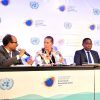
Uniting for Climate Action: UN, World Bank and UNDRR Leaders Push for Climate Finance, Justice and Nature-Based Solutions for SIDS
As leaders of Small Island Developing States (SIDS) meet for the 4th International Conference on SIDS in Antigua this week, top United Nations and World Bank officials are calling for urgent action to help SIDS tackle their unique challenges and plan for the next decade.
Small Island Nations Demand Urgent Global Action at SIDS4 Conference
“This year has been the hottest in history in practically every corner of the globe, foretelling severe impacts on our ecosystems and starkly underscoring the urgency of our predicament. We are gathered here not merely to reiterate our challenges, but to demand and enact solutions,” declared Antigua and Barbuda Prime Minister Gaston Brown at the opening of the Fourth International Conference on Small Island Developing States on May 27.Next Page »





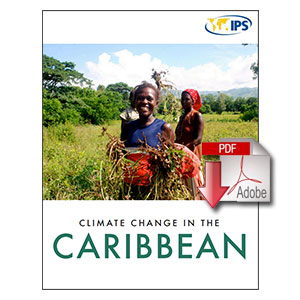
As the world moves to implement the Paris Climate Change Agreement, the Caribbean—one of the most vulnerable regions to rising sea levels—faces a host of challenges, including accessing funding for adaptation and mitigation, protecting key sectors like tourism and agriculture, building resilience to natural disasters, and moving to a low-carbon development path. Much of the world’s most interesting work in addressing climate change, adopting clean energy and coming up with plans to stem deforestation has its roots in the developing world, where climate change impacts are often felt first and strongest. IPS looks at the wide variety of local, national and regional initiatives in the Caribbean that offer creative solutions to these problems.
 |
|||
 |
 |
 |
 |

Caribbean Climate Wire