Languages
Sunday, October 18, 2026



News and Views from the Global South
Food Sustainability
If We Can Start an Epoch, We Can Start a Farming Revolution
In November 1952, the United States detonated the world's first thermonuclear device at Enewetak Atoll in the Marshall Islands. The test, code-named Ivy Mike, erased the island of Elugelab and scattered a signature of plutonium across the planet that remains in lake beds, ice sheets and ocean sediments today.
What Faith Can Teach Agriculture
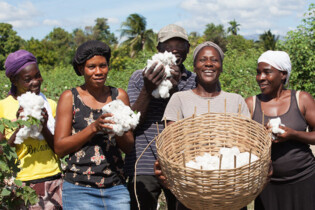
Years ago, standing in a small farmer's field in Haiti, I began to suspect that we had agriculture backward. The development world saw a man in need of rescue. I saw a farmer who might help rescue the rest of us.
Overshoot of Paris Agreement and the Looming Super El Niño Drive Urgent Calls for Global Climate Action at UNGA 81
The United Nations 2026 Climate Summit addressed critical strategies to mitigate the compounding impacts of the climate crisis and accelerate progress toward the Sustainable Development Goals (SDGs).
Norway’s Development Rethink Should See Ocean Investment as a Strategic Interest
As Norway undertakes Vendepunkt, or “Turning Point,” its reflection on the future of Norwegian development policy, it is critical that oceans remain a priority. Donors around the world are running similar audits, deciding which long-term partnerships to keep, and why. Norway has decades of expertise to offer, but also something significant at stake: healthy and well-governed oceans underpin food, livelihoods and economic activity in partner countries while supporting global seafood supply chains in which Norway itself participates.
When African Smallholders Access Finance, They’ll Show You What’s Possible
I was born in Rwanda, but my family soon became refugees in Uganda during the conflict and unrest on the cusp of independence. My father was a teacher and went to great lengths to make sure I was well educated. My parents were also smallholder farmers, and I saw firsthand the challenges my parents and other refugee families faced.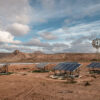
Africa Has the Technology to Achieve Food Security—Now It Needs Coordinated Deployment
Africa is emerging as the world’s fastest-growing technology market, with its innovation ecosystem attracting increasing global investment. The European Investment Bank’s recent €40 million commitment to the sector underscores this growing confidence.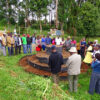
Africa Has the Answers to Its Food Security Challenges. What It Needs Is the Architecture to Act on Them
As leaders gather in Kigali for the Africa Food Systems Forum, they face an urgent question: why do so many proven agricultural innovations still fail to reach the farmers and communities that need them most?
The Drylands Dividend: The Smart Investment for Powering a Water-Scarce World
Open a can of something fizzy and the reason the sugar doesn’t separate immediately is gum arabic, tapped by hand from acacia trees across the Sahel. Spray on perfume and the reason the scent is still there at dinner is frankincense, a resin cut from Boswellia trees on the dry escarpments of the Horn of Africa. The fat that gives a chocolate bar its snap may well be shea, gathered and pressed by women in the parkland belt of West Africa. The cashmere jumper came from goats that can only be raised on cold, dry rangelands.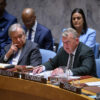
Consequences of Inaction: UN Security Council Pressed to Act Before Hunger Becomes Famine
Across the board, UN officials and humanitarian organizations urged the Security Council to act before the consequences of food insecurity and famines hit, during a high-level open debate on Tuesday, August 25. More than 80 representatives took part in Tuesday’s conversation on conflict-related food insecurity under the theme “Food under fire: the Security Council’s role in mitigating global and local food crises”.
Western-Led Green Revolution Failing Africa
As AGRA turns 20, a new report exposes its worsening failure to double productivity and incomes and halve undernourishment in participating African nations as promised.
From Rotten Tomatoes to AI: Ugandan Commonwealth Youth Award Winner Takes Aim at Hunger Across Africa
Before anyone called her an innovator, before artificial intelligence entered the conversation, before solar-powered cold rooms, before the language of sustainable development, Shifra Ainomugisha knew food loss in its painful form.
In West Africa’s Benin, Women Make Centuries-Old Salt Production Methods Sustainable
It is barely noon, and a group of women sit near the beach on the outskirts of Djégbadji village, in West Africa’s Benin, sifting through mounds of salt harvested from the Gulf of Guinea’s ocean.
New Geopolitics Threatens More Food Crises
Recent geopolitical trends threaten more food crises, especially in developing countries. A new IPES-Food report urges a strategy of ‘resilient self-reliance’, proposing available opportunities to improve equity, sustainability and solidarity.
Food Systems and Policies Undermining Food Security
Transnational agribusinesses increasingly shape food policies worldwide. Claiming to best address recent food security concerns, they seek to profit more from innovations in food production, processing, and distribution.
Famine in South Sudan Projected to Worsen Without Humanitarian Intervention
In 2026, the humanitarian situation in South Sudan has taken a considerable turn for the worse, with widespread food shortages, ongoing disruptions to food production systems, and rising rates of malnutrition affecting over half of the population. Compounded by the vast scale of needs and an overwhelming lack of access to basic services, humanitarian experts warn that nationwide levels of hunger are projected to worsen to catastrophic levels if urgent intervention is not secured.
A Global Movement for Nutrition Is Needed Now More than Ever
In my more than 30 years with the United Nations, I’ve seen enormous change, collaboration and progress towards improving human development. But I’ve also seen how history has a way of repeating itself to entrench some of the most intractable global challenges.
Farmers Can Now Measure and Benefit From Fruit Tree Carbon Trade
Farmers can now know and benefit from their contribution to climate change thanks to a formula that can be used to calculate the amount of carbon stored in fruit trees.
Beyond Buzzwords: COP30’s Opportunity to Deliver on Sustainable Food Systems
The language of agricultural sustainability changes like the seasons—from “climate-smart” to “regenerative,” “agroecological,” and “nature-positive.” Each term reflects good intentions, but the growing list risks duplication, confusion and delays.
Why Food and Agriculture Should Be at the Centre of COP30 Agenda
As the COP30 entered its second week in Brazil, the urgency to tackle climate change has never been greater, as is the appetite to feed a growing world population.
Drought-hit Tanzania’s Villages Confront Harshest Reality of Climate Change
The dust was already swirling when Asherly William Hogo lifted himself from a makeshift bed before dawn. The 62-year-old pastoralist, lean from a lifetime of walking these plains, slipped into his sandals and stepped outside. Stars glittered over Dodoma, but the air was warmer than it used to be, Hogo swears. He whistled for his cows. Years ago, this hour meant an arduous trek to distant waterholes.
Global Food Demand in Middle-Income Nations is Rising, UN Report Says
As incomes rise in middle-income countries, so does the demand for animal-sourced calories, resulting in large increases to global food production, and raising the importance for sustainable agriculture amidst growing concerns of climate change.Next Page »





In 2017, 124 million people in 51 countries faced acute food insecurity — 11 million more than in 2016, and the number of people living on the edge of starvation and hunger remains at 815 million worldwide. The 2017 increase is largely attributable to new or intensified conflicts and insecurity and prolonged drought conditions have also triggered poor harvests in countries already facing high levels of food insecurity and malnutrition. The United Nations seems determined to work towards its targeted goal of Zero Hunger by 2030. But how feasible is this?