Languages
Sunday, October 25, 2026



News and Views from the Global South
Population
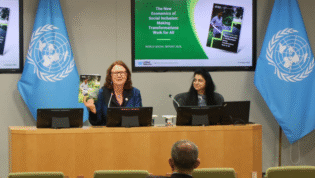
‘Prioritize Social Inclusion as Rapid Transformations Risk Leaving Millions Behind’
The United Nations Department of Economic and Social Affairs (UN DESA) new report, which addresses the rapid global transformations driven by artificial intelligence (AI), demographic shifts, climate change, and conflict, highlights the widening disparities in employment, social inclusion, and access to services.
Tanzania’s Biggest City Bets on Elevated Bridge to Dodge Chronic Flooding
Each morning on her way to Kariakoo, Clementina Nyangwine looks out of her commuter bus as it crawls through Jangwani and watches giant foundation piles rising above the muddy Msimbazi valley.
Dementia: A Rapidly Rising Global Challenge
Dementia is a rapidly growing global health challenge that affects many millions of people worldwide and places significant economic, healthcare, and social strains on societies, particularly as populations age.
Workers Help Feed the World but Starved of Dignity
A new report reveals widespread labour exploitation among food system workers, warning that keeping the world fed comes at the cost of human dignity.
For Pakistan Rising Fistula Cases Make SDG 3 Goal Elusive
“You’re living a life drained of joy,” is how Shehnaz Sher Ali describes her “perpetually wet and stinky” existence. “I wouldn’t wish it on my worst enemy,” says the 35-year-old, who travelled by bus for more than 12 hours with her husband from their village in Rahim Yar Khan, Punjab, changing diapers whenever possible to keep the smell from reaching the fellow passengers.
India Still Needs to Address Harmful Dark Skin Stereotypes
As a young girl, Sarada Murlidharan cringed at the thought of going to school. It was not the studies but the taunts of 'being black' or having dark skin, where fair skin was considered preferential, that made her unhappy.
Pension Peril Among Populations
Dozens of government-funded pension programs providing benefits to hundreds of millions of men and women face growing fiscal strain and long-term sustainability challenges. These pressures are largely driven by rapid demographic transitions, including ageing populations, declining fertility, rising life expectancy, and shrinking workforces.
Declining Marriage and Increasing Cohabitation
Marriage is declining in many countries, with fewer people marrying and many postponing marriage until later in life. At the same time, increasing numbers of men and women are choosing cohabitation instead of marriage.
Life-Changing Humanitarians Empower Women Against Violence in Papua New Guinea’s Highlands
In the remote Highlands region of Papua New Guinea (PNG), humanitarians are life-saving beacons to women and girls facing myriad forms of violence. Despite years of awareness programmes and advocacy, the incidence of domestic and sexual violence is not declining. But Janet Kilea is one survivor who has rejected the fear and stigma of her experience and now dedicates her energy to transforming other women’s lives.
Lawmakers Need to Grapple With the ‘Human Story’ of the Aged, Youth, Women and Girls when Making Policy
"As parliamentarians, we should understand that behind every demographic indicator is a human story,” Kamikawa Yoko, MP Japan and Chair of AFPPD, reminded lawmakers in her opening address to the Asian Forum of Parliamentarians on Population and Development (AFPPD) annual conference held in Kuala Lumpur, Malaysia.
Population Age Structures of Countries
The age structures of populations vary considerably across countries. Some countries have relatively young populations, with large proportions consisting of children and adolescents. Other countries have much older age structures, with a substantial proportion of people aged 65 years or older.
Family Planning and Population Dynamics Are Key to Water Security
This week is World Water Week, the annual conference of governments, business, and civil society on building a water-secure future as global population, climate disruptions, and water demand increase. In Washington, it’s also Water Resources Development Act season, when every two years the US Congress reauthorizes the legilslation that funds US drinking water, wastewater systems, and flood risk management projects.
African Rights Advocates Coordinate Response to Family Law Backlash
Women's rights advocates, judges and lawyers have launched a coordinated campaign to reform family laws that discriminate against women and girls in Africa.
Living Longer at Age 80
Upon reaching the age of 80, men and women are living longer than ever before. These gains in longevity among octogenarians represent a remarkable demographic achievement. The additional years of life provide new opportunities for older adults and their families while also presenting important social, economic, and healthcare challenges for societies.
Cockroach Protests: How India’s Youth Movement Led to Minister’s Resignation
On July 25, after 50 days of protest at Delhi's Jantar Mantar, Union Education Minister Dharmendra Pradhan resigned.
Changing Age Distributions of Populations
In many countries, older adults (aged 65 and above) now outnumber younger individuals (under the age of 18), reflecting a significant demographic transformation known as demographic ageing.
Landmark Ruling Could Redefine Divorced Women’s Property Rights in Pakistan
A landmark Islamabad High Court ruling that recognised marriage as an economic partnership and awarded a divorced woman an equal share of assets acquired during marriage has triggered a legal and religious backlash, with Pakistan's law ministry challenging the judgment before the Federal Shariat Court, a constitutional court empowered to determine whether laws and judicial rulings conform to the Qur’an and Sunnah.
Discounting Demographic Realities
Demographic realities are well documented, and governments have long been aware of the profound demographic changes now underway. Nevertheless, many policymakers continue to discount or ignore these demographic trends.
Africa Needs a Radical Plan to Tackle 15M Youth Job Crisis
Africa has no problem with ideas, but the struggle is in how to implement them, leaders said at an inaugural forum convened to promote action on development.
A Larger, Older, and More Diverse Population
In 2026, the population of the United States is significantly larger, older, and more diverse than it was 250 years ago when the country declared its independence from the Kingdom of Great Britain on July 4, 1776.
How Am I Going To Die?
With death being an inevitable outcome, a fundamental question that crosses the minds of practically everyone is: “How am I going to die?”Next Page »





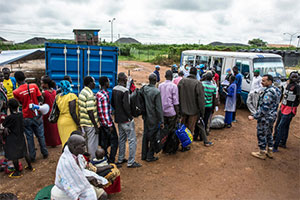 One Thousand Internally Displaced Persons (IDPs) Relocated from Tomping Camp in South Sudan. Credit: UN Photo/Isaac Billy
It took hundreds of thousands of years for the world’s human population to cross one billion in 1804. Approximately 200 years later, the population has multiplied sevenfold. In 2023, the global population crossed 8 billion, and is expected to reach 9 billion before 2050. With the planet more crowded than ever, it is essential to keep track of population trends, urbanization, migration, and reproduction across the world.
Life expectancy has seen significant strides in the past century, largely due to economic development and increased standards of living. On the contrary, trends in global fertility are shifting, with certain regions in Africa and Asia reporting higher rates, while parts of Europe and North America report stagnant or lower rates. This is in part due to differences in sexual and reproductive healthcare, as well as societal and economic conditions around the world. For example, child marriage is prevalent in certain societies, where childbearing is also considered a familial duty. Meanwhile, stagnating economies frequently experience lower marriage and childbearing rates.
The increase in migration and urban development around the world is also linked to global population trends. By 2050, it is expected that approximately 66 percent of all people will live in cities. Furthermore, global crises such as warfare and natural disasters also prompt transnational migration. Transnational migration is linked to a variety of socioeconomic issues in both host and receiving countries: migrants often leave developing countries with less access to educational and economic opportunities and arrive in developed countries where they are frequently the targets of ethnic, racial, and cultural discrimination, and economic exploitation. Recent crises in Europe and the United States demonstrate the importance of advocating for migrants worldwide. As migrants from the Global South are increasingly stripped of their legal and civic rights in unlawful deportations, or targeted in acts of identity-based violence, it is essential to keep track of population trends and protect the human rights of migrant populations. Climate-related disasters are now a major driver of displacement, with nearly half of all new internal displacements in 2025 being disaster-related.
IPS is devoted to covering issues surrounding population trends, migration, and reproduction through its compelling articles, which use both statistics and human stories to provide readers with robust and informative viewpoints.

The Week with IPS

NEXT STOP - SDGs
Tracking global progress towards a sustainable world
Tracking global progress towards a sustainable world
