Languages
Wednesday, October 28, 2026



News and Views from the Global South

Choosing the Next UN Secretary-General: The Threat of Veto or Veto Itself Must Not Silence the World
The selection of the next Secretary-General of the United Nations has reached a critical juncture. It raises fundamental questions about fairness, transparency, regional balance, and the democratic legitimacy of the world’s most universal organization.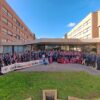
From 44 Countries, One Shared Commitment: A Child Marriage-Free World
The message from Just Rights for Children (JRC) was clear: protecting children must take precedence over customs used to justify their marriage.
Wanted: A Feminist UN Secretary-General for ‘We the Peoples’, Not the Powerful
Notwithstanding last minute shenanigans and the possibility of backroom deals by powerful states, two women from Latin America are leading contenders in the race for the UN’s next Secretary-General. After 80-plus years of men-only leadership, momentum is building to break the glass ceiling at the global institution dedicated to saving future generations from the scourge of war.
Why Trump Expects the Nobel Peace Prize
Much of the world has been bemused by US President Donald Trump's expectation of the Nobel Peace Prize. While aggressive towards most of the world, friend and foe alike, he has treated hostile nuclear powers more respectfully.
France’s New Protest Generation Rises
Classrooms with mouldy walls, riddled with cockroaches and rats, stifling in summer and freezing in winter: this is how French high school students describe the places where they’re meant to learn. These impossible-to-ignore symbols of underfunding and neglect sparked a protest movement that has shaken the country.
How Conflict Brings Biodiversity to the Brink
Less than 100 metres from military positions facing each other across the Armenia-Azerbaijan border, the forest suddenly disappears.
Upholding Human Rights & Public Safety: How Far Is Bangladesh?
Bangladesh has achieved remarkable economic progress over the past few decades. Its garment industry has become globally important, millions of people have entered the workforce, and private businesses have expanded across manufacturing, services, technology and trade. But economic growth alone does not create a healthy business environment. Businesses also need predictable laws, safe workplaces, fair competition, protection of property and contracts, and respect for the rights of workers, consumers and communities.
Peace Needs Children’s Voices
WE THE PEOPLES OF THE UNITED NATIONS DETERMINED to save succeeding generations from the scourge of war, which twice in our lifetime has brought untold sorrow to mankind. The United Nations was established with this commitment.
Were Half of Venezuela’s Oil Revenues Really Stolen? — Part II
Money chase So, if Venezuela claims to be importing from the rest of the world roughly as much as it was exporting during those years, and the rest of the world confirms Venezuela’s story, then where could those additional $11 billion that presumably ended up in the bank accounts of Maduro’s cronies be?
The Eradication of Extreme Poverty by 2030: a Key UN goal will be a Missed Target
The international day for the eradication of poverty, commemorated last week, was a grim reminder that the UN will not achieve its highly-ambitious target of helping eradicate extreme poverty—"in all its forms”-- by 2030.
International Day of Climate Action 2026

The world is getting hotter. And the consequences are already being felt. From devastating floods and prolonged droughts to intensifying heatwaves, climate change is disrupting lives and livelihoods across the globe.
Bangladesh’s Hidden Climate Bill: How Much Are We Losing Without Counting It?
Bangladesh has earned global recognition for reducing deaths from cyclones and floods. Early warning systems, cyclone shelters, embankments and community preparedness have transformed the country’s disaster response. Yet another climate crisis is receiving far less attention: the economic damage climate change is quietly inflicting on households, farmers, workers, businesses and public finances.
What a Seawater Sample Can Tell Scientists About Ocean Health
A fishing boat’s catch tells only part of the story of the waters around World Heritage sites. Species that escape the net, shelter inside reefs or pass through deeper channels can go unrecorded, leaving communities and conservation officials with an incomplete picture of the marine life supporting coastal livelihoods.
Were Half of Venezuela’s Oil Revenues Really Stolen? — Part I
If you’ve been around Venezuelans for long enough, you know that we tend to speak in superlatives. We have the best baseball players, the most beautiful beaches, the tastiest arepas, and the wickedest dictators. But even being used to the scale of our superlatives didn’t quite prepare me for what I read in the May 5 edition of The New York Times, in a story called “In Venezuela, Trump Vowed to Show Accountability. Oil Deals Linger.” The story tells us that a network of shell companies controlled by Carlos Malpica (who is widely believed to be Maduro’s bagman) embezzled $11 billion of the country’s oil wealth in 2021 and 2022. In the Times’ words: “for every two dollars that Venezuela earned selling oil earlier this decade, one dollar was stolen, internal documents and official statistics show.”
The Sámi People and Reindeer Herding – a Struggle for Sápmi’s Whole Nature
The Sámi, Europe's last recognised Indigenous community, have faced threats to their existence throughout history. Norway, in 2024, apologised for its forced assimilation policy following the findings of a Truth and Reconciliation Commission report, and in September 2026 Sweden has recently been told to do the same.
As Winter Approaches, Afghanistan Faces Record Hunger and Mounting Human Rights Abuses
In recent months, Afghanistan’s humanitarian crisis has severely deteriorated, with the UN reporting record-high levels of acute malnutrition and hunger. Compounded by rampant human rights violations, limited access to basic services, and persistent barriers to humanitarian aid, the UN warns that conditions could considerably worsen in the coming months.
From Small Islands to Antalya: COP31 Must Move Climate Promises from Paper to People
When you grow up on a small island, the ocean is not scenery. It is your neighbour, your livelihood, and the measure of time itself. For decades, as I walked the beaches of Seychelles, I watched the subtle shifts that scientists were warning the world about. The tide crept a little higher up the sand each year. After a warm season, vibrant coral gardens turned ghost-white. Storms that once belonged to rare memory began arriving with unsettling regularity.
Food Insecurity and Child Malnutrition Worsen in Afghanistan Despite Strong Agricultural Season
Nearly 40 percent of the population of Afghanistan is projected to face high levels of acute food insecurity this winter, and cases of acute malnutrition are expected to soar during 2027, the Food and Agriculture Organization of the United Nations (FAO) and the United Nations World Food Programme (WFP) warned.
Afghan Women Defy Taliban Restrictions Through Online Protests
Afghan women have resorted to online protests as their only available recourse, even though the risks of being caught are high and carry enormous consequences.
People Who Choose to End Their Lives
People who choose to end their lives through voluntary assisted dying typically face terminal, incurable, or debilitating conditions that cause severe physical or psychological suffering.
As El Niño Returns, East Africa’s Urban Poor Brace for Heavy Rains
Nearly three decades have passed, but Japhet Gimbi still remembers the rain. He was a Form 2 student in Tabora, western Tanzania, when the 1997 El Niño flooded the town. As the rain kept falling, fewer students made it to school. That was a super El Niño, one of the strongest on record. Since then there have been five other events including the 2014-2016 "super El Niño".Next Page »





Want to keep up with the latest news and views from the Global South? Sign up for IPS Daily News Report for daily emails with our top stories about international development, climate change, gender and more. (Formerly IPS TerraViva since 1993).

The Week with IPS

NEXT STOP - SDGs
Tracking global progress towards a sustainable world
Tracking global progress towards a sustainable world
