
Friday, October 16, 2026



News and Views from the Global South
CORRUPTION: Graft Trial Reaches High Into South African Government
Ken Ntuli
- International Anti-Corruption Day, held Thursday, may well have struck a particular chord with South Africans this year. The country is currently witnessing a high-profile corruption case, which is being held in the eastern port city of Durban.
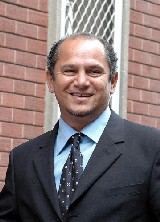
Schabir Shaikh: corrupt, or just a good friend to the vice-president? (Photo: Siyabonga Mosunkutu) Credit: PictureNET Africa
The relationship between Shaikh and Zuma, which spans about two decades, developed while both were involved in the struggle to end racial segregation in South Africa. Shaikh has also served as a financial advisor to the vice-president.
After the demise of apartheid in 1994, Zuma was appointed provincial minister for economic affairs and tourism in the south-eastern KwaZulu-Natal region. From about 1995, however, he experienced serious financial difficulties.
Shaikh claims that the payments of over 180,000 dollars which he made to Zuma (or which were funnelled to the vice-president through his businesses) were nothing more than a gesture of friendship.
However, state prosecutor Billy Downer alleges that Shaikh’s holdings, the Nkobi group of companies, could ill afford to make payments to Zuma, and that these transfers amounted to bribes in return for political patronage.
In addition, Shaikh has been implicated in a plan for almost 80,000 dollars to be paid to Zuma annually by French arms manufacturer Thomson-CSF, now named Thales.
Downer claims that this was a bribe to get Zuma’s support for Thomson-CSF in the tendering process for a multi-billion-dollar weapons acquisition in South Africa. Thomson ultimately benefited from the purchase of four vessels for the country’s navy.
Zuma, who is tipped to succeed President Thabo Mbeki when the latter retires in five years time, has denied any wrongdoing. The vice-president, a popular politician among the ruling African National Congress (ANC) grassroots supporters, has not appeared in court yet. A group of lawyers is following the proceedings on his behalf.
“We hope it will end soon,” Mokgadi Stephens of the University of Pretoria told IPS Thursday. “I think the public is sick and tired of it.” Mbeki also expressed the hope, before the trial began, that it would conclude quickly.
Despite media interests in the case, South Africa did not fare too poorly in the latest Corruption Perceptions Index, published by the Berlin-based watchdog, Transparency International.
It was rated 44th on the list, which included over a hundred countries. Nigeria was the country in Africa which received the lowest ranking on the index, while Chad, the Ivory Coast, the Democratic Republic of Congo and Angola also received low rankings.
Other research paints a more troubling picture of the exent of graft in South Africa, however.
In a March study, the Pretoria-based Institute of Strategic Studies (ISS) said that a significant proportion of people (5.6 percent) interviewed had reported being asked by a government official for a bribe in the form of money, a favour or a present “in return for a service that the official was legally required to perform”.
This corruption, added the ISS, “was most evident in encounters with traffic officials, followed by the police, and when interacting with officials for employment opportunities”.
Speaking in parliament this week, Safety and Security Minister Charles Nqakula, who has vowed to tackle white-collar crime, a euphemism for corruption, said there were positions for 22,329 detectives in South Africa. As of October, however, only 17,933 were filled.
Efforts were underway, he added, to hire staff for the vacant positions.
Stephens believes that building and strengthening institutions will help check corruption. “You also need to pay the police and civil servants a decent salary so as to stop them from taking bribes,” she added.
 Print
|
Print
|




