Languages
Monday, September 28, 2026



News and Views from the Global South

Gaza Clings to a Touch of Disneyland
On any given evening, Gaza's small downtown pedestrian area, the Jundi, is crowded with adults and children. Many are fleeing the heat of their homes during the regular power cuts. The majority are there for want of something to do, even if that means merely sitting on the park's simple concrete benches to talk and sip tea.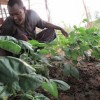
KENYA: Relief Food Sourced from Local Farmers
Mourid Abdi Dolal and Wilson Rotich are both small-scale farmers who grow staple crops. But while one sells his produce at the local village market, the other farms to feed the growing number of refugees in Kenya.
BRAZIL: Soy Boom Drives Westward Expansion of Railroads
Despite challenges like high interest rates and high household electricity tariffs, the Brazilian economy has been growing at the highest rates seen in decades. Another problem that, although it has not stood in the way of growth, must be overcome is the costly use of roads for transporting farm products – an issue that is being addressed by the expansion of railway networks.OP-ED: Protest Movements Teach Economics to Bankers
The European Central Bank (ECB) is run by people who are not very good at economics. They continue to adhere to a fundamentally wrongheaded view of the economy and the central bank's role within it.Gulf Nations Call for Syrian Reforms
Saudi Arabia, Kuwait and Bahrain have recalled their ambassadors from Damascus amid mounting pressure from the Arab world against Syria's brutal crackdown on anti-government protests.U.S.: Tribal Council Resists Homophobia
Heather Purser, a member of the Suquamish tribe, whose reservation sits in Washington State, came out to her family at the age of 16, but has never felt completely accepted by her people.
IRAN: New Oil Minister Cements Ties with Military
Last week's appointment of a ranking member of Iran's influential Revolutionary Guard Corps (IRGC) as the country's new oil minister could lead to a more unaccountable and unpredictable military with greater influence on the government in Tehran, analysts say.
Q&A: “Governments Must Listen to the People, Not the Polluters”
The historic 1992 Earth Summit in Rio de Janeiro marked one of the world's seminal international conferences on the environment, creating or reinforcing a slew of U.N. treaties and protocols on climate change, biodiversity, desertification and forests.South Summit of World Leaders in Search of a Venue
The ongoing political turmoil in Libya has derailed plans for a major summit meeting of developing nations scheduled to take place in Tripoli in October.DR CONGO: Fresh Start for DR Congo’s Coffee Producers
Long years of civil war and instability set off a crippling decline in coffee production in the Democratic Republic of Congo: the country's output in 2010 was less than a tenth the harvest twenty years earlier. Now the DRC government has a strategy to bolster recovery of the sector.Aid Agencies Complain Lack of Funding to Battle Africa Famine
As the widespread famine in the Horn of Africa takes a turn for the worse, humanitarian aid organizations are lamenting the lack of aid being delivered to those in need and have called on the United States and the rest of the world to step up relief efforts, while redoubling their own efforts.Ecobreves – HONDURAS: Geologists Warn of Landslide Risks in Capital
Four marginalized neighborhoods in Tegucigalpa are at "high risk" of facing major landslides during the rainy season, a team of geologists from Costa Rica concluded after a three-week study in Honduras.Ecobreves – BRAZIL: Logging Threatens 7,000 Square Kilometers in the Amazon
The Amazon could lose another 7,000 square kilometers of forests by July 2012, according to a report on the risk of deforestation released by the Amazon Institute of People and the Environment (Imazon).Ecobreves – MEXICO: Anti-Transgenic Food Campaign
Greenpeace Mexico has a launched a computer application called "Clean Out Your Cupboards" to help consumers avoid industrially processed and genetically modified foods.Ecobreves – ARGENTINA: Relocation of Electric Power Substation Demanded
Environmental and social organizations in the Argentine city of Berazategui are calling for the relocation of an electric power substation to a less populated area and legislation on the placement of these facilities.
After Peak Oil, Peak Globalization
The reality of a globalized economy seems to be that poverty is its only sustainable phenomenon, says entrepreneur Gunter Pauli in this column.
Petrochemical Complex Poses Major Environmental Challenge
Cuba is preparing a series of environmental measures to protect the Bay of Cienfuegos from the upcoming expansion of its oil refinery.After the Arab Spring, an Israeli Summer
"The people demand social justice!" Across the country's major cities, over 300,000 demonstrators, five percent of Israel's Jewish population, chanted the rallying call for the third consecutive Saturday.EUROPE: ‘Fat Tax’ May Hurt Poor
The introduction of some of Europe’s most far-reaching taxes on unhealthy foods has sparked renewed debate about the effect of such levies on poor people.EGYPT: State Media has New Bosses, Old Habits
Six months since the fall of Hosni Mubarak, the state media organs that once glorified the dictator's policies and glossed over his failures have new leaders. Yet the mindset of decades of authoritarian rule remains intact, say media experts.
ISRAEL: High Costs Force New Settlements of Sorts
About 10,000 people marched through the streets of downtown Jerusalem last week chanting "The people demand social justice" and calling for access to affordable housing. The demonstration was one of about a dozen taking place simultaneously throughout Israel – which drew nearly 150,000 total protesters – as part of a growing movement against the high cost of housing and living expenses.« Previous Page — Next Page »


The Week with IPS

NEXT STOP - SDGs
Tracking global progress towards a sustainable world
Tracking global progress towards a sustainable world
