Languages
Thursday, September 17, 2026



News and Views from the Global South

All-of-Government, Whole-of-Society Involvement Needed to Fight Virus
The Covid-19 pandemic is now widely considered more threatening than any other recent viral epidemic. Most believe that many more have been infected or even died than officially confirmed.
As Coronavirus Spreads, No Journalist Should be Sidelined in Prison
In 2014 my husband and I were arrested in my native country, Iran, for the crime of working as journalists. I spent 72 days in Tehran’s notorious Evin prison, all of them in solitary confinement.
Why Reproductive Rights Must Be a Critical Part of Our Arsenal to Fight Pandemics
Sexual and reproductive health and pandemics might seem to be unrelated topics, but large and dense populations are drivers of the high velocity transmission of COVID-19, and there are lessons to be learned for the future.
On World Press Freedom Day, the EU Must Rescue Media Independence in Hungary Before It’s Too Late
Censorship, smear campaigns and harassment. These are just some of the daily struggles that media professionals are facing in Hungary. And now the threat of jail time may be looming. In the context of World Press Freedom Day, there is little to celebrate in the Eastern Bloc region.
COVID-19 Stimulus Measures Must Save Lives, Protect Livelihoods, and Safeguard Nature to Reduce the Risk of Future Pandemics
There is a single species that is responsible for the COVID-19 pandemic - us. As with the climate and biodiversity crises, recent pandemics are a direct consequence of human activity – particularly our global financial and economic systems, based on a limited paradigm that prizes economic growth at any cost. We have a small window of opportunity, in overcoming the challenges of the current crisis, to avoid sowing the seeds of future ones.
Ensuring Russia’s Sex Workers’ Rights Essential for Wider Gender Equality
Despite seeing a shift in attitudes towards them in recent years, Russian sex workers say they continue to struggle with marginalisation and criminalisation which poses a danger to them and the wider public.
Thandika Mkandawire, Pan-Africanist Par Excellence
Thandika Mkandawire (1940-2020) had a wicked sense of humour. But he was so considerate that he often made himself the butt of his jokes which typically had a moral. When others struggled to pronounce his surname, he would help them out, “Me kinda weary”.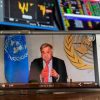
SDGs: the Challenge to Improve Lives After the COVID-19 Crisis
The SDGs, with their universal scope, interlinked nature and focus on leaving no one behind will be more essential than ever during and after this crisis.
Coronavirus Shows the Urgency of Ensuring that Research gets into the Public Domain
Following the outbreak and declaration of COVID-19 as a global pandemic, there has been a flurry of scientific research and publications to address challenges posed by the virus. Publications have risen exponentially over the past few months as scientists work tirelessly to find out more about the pandemic, and the SARS-CoV-2 virus causing it.
Post-Pandemic Mental Health Epidemic
The number of Nepalis suffering from mental health issues is increasing with the prolonged COVID-19 lockdown, and the lack of treatment and counselling means the country may be facing an epidemic of psychosocial disorders.
Why Covid-19 Choices Are Critical for Children
Children may escape the worst symptoms of Covid-19 and suffer lower mortality rates, but for millions, the pandemic will have devastating effects.
COVID-19: India’s Harvests also Locked Down
Heartbreaking images of Indian farmers standing amidst swathes of rotting vegetables, fruits and grain have been flooding newspapers and TV screens lately. Crashing prices and transport bottlenecks due to the 40-day coronavirus lockdown in India, on till May 3, have driven some to set their unsold produce ablaze.
Why the International Day of Multilateralism Must Start a New World Order
In our current COVID 19 context of suffering and fear, that may sound like a strange and spooky quote. But let’s be clear: what we have achieved so far in the present is not - and shouldn’t be - indicative of what we can achieve in the future.
Children under Lockdown get a ‘Learning Passport’
Soon schools in Timor-Leste, Ukraine, and Kosovo, where some 6.5 million children are currently at home, will hopefully start teaching their children once again -- albeit online.
Autonomous Resourcing: the Engine Room of Feminist Work Amid a Global Pandemic
Feminist responses to COVID-19 have been swift, insightful, and numerous. There have been webinars (so.many.webinars), twitter threads, illustrations, press releases and policy recommendations, and online house parties. Analysis pieces cover everything from the gendered impacts of COVID-19 to how to work remotely to the role of neoliberal capitalism.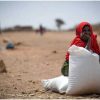
UN’s Development Goals Threatened by a World Economy Facing Recession
The UN’s 17 Sustainable Development Goals (SDGs), described as an integral part of its highly-ambitious development agenda, may be in deep trouble.Rohingya refugees stranded at sea show urgent need for regional response
The Bangladesh authorities should rescue and welcome Rohingya refugees currently stranded at sea, Amnesty International said today. Other governments must fulfil their shared responsibility to carry out search and rescue efforts, in line with their international obligations to protect life, and allow safe disembarkation of refugees and asylum seekers at sea.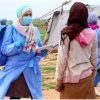
Collaboration Can Help Eradicate COVID-19
Since the founding of the United Nations in 1945, space for multilateral policy development and commitment has grown. Its growth in the global health field augurs well as we find ways to mitigate the spread of the novel coronavirus.
Citizen Action is Central to the Global Response to COVID-19
The coronavirus (COVID-19) pandemic has created an unprecedented human and economic crisis. Governments are taking strong actions, enforcing quarantines to reduce contagion, testing populations, building emergency intensive care units. Governments have also launched large fiscal stimulus plans to protect jobs and the economy, as well as temporary social protection programs such as income/food support, subsidies to utilities and care services.
What Does Covid-19 Crisis Mean for Rural Development?
The implications and consequences of the Covid-19 pandemic are playing out before us. Much of the news coverage of the to date in both the Global North and the Global South has understandably focused on the horrifying impact of the disease on urban communities, where it is clearly hitting people, and economies, hardest.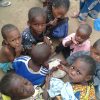
Q&A: Continued Social Distancing and Hundreds of Millions More in Poverty – A New Normal for the World?
With much of the global economy stalled amid an unprecedented lockdown of nations grappling to contain the COVID-19 pandemic, the author of a new United Nations report on the disease’s impact on poverty told IPS that hundreds of millions more could be pushed into poverty and we can expect to see social unrest.« Previous Page — Next Page »


The Week with IPS

NEXT STOP - SDGs
Tracking global progress towards a sustainable world
Tracking global progress towards a sustainable world
