Languages
Sunday, September 20, 2026



News and Views from the Global South

A Global Crisis Like No Other Needs a Global Response Like No Other
I have been saying for a while that this is a ‘crisis like no other.’ It is:-
- • More complex, with interlinked shocks to our health and our economies that have brought our way of life to an-almost complete stop;
-
- • More uncertain, as we are learning only gradually how to treat the novel virus, make containment most effective, and restart our economies; and
- • Truly global. Pandemics don’t respect borders, neither do the economic shocks they cause.

Coronavirus, New Threat for Mexican Migrant Workers in the U.S.
As the high season for agricultural labour in the United States approaches, tens of thousands of migrant workers from Mexico are getting ready to head to the fields in their northern neighbour to carry out the work that ensures that food makes it to people's tables.
Reimagining a Post COVID World: Key Principles for the Future
In her book, ‘A World Made New: Eleanor Roosevelt and the Universal Declaration of Human Rights,’ Mary Ann Glendon tells the beautiful story of how out of the ashes of the Second World War emerged the world’s pre-eminent rights framework. The Declaration recognises the inherent dignity of every human being and was born out of the shared horror felt by the international community with war crimes and genocide on an unprecedented scale. It acknowledged that fundamental change was needed to make the world fit for future generations.
Coronavirus: Six Key Factors Poor Countries Should Focus on
Since the outbreak of coronavirus pandemic late last year in Wuhan, China, the global community has witnessed unprecedented policy responses to curtail, contain and control the disease. Many have proven to be successful. But others required critical context consideration.
The Theology of Pandemics
Ingmar Bergman’s 1957 film The Seventh Seal is set in medieval Sweden, as the bubonic plague ravages the countryside. In one famous scene, a procession of zombie-like flagellants enters a village and interrupts a comic stage-show.
Covid-19: Brazil’s Bolsonaro trumps Trump
Brazil’s President Jair Bolsonaro appointed medical entrepreneur Nelson Teich his new health minister on 17 April. The businessman quickly echoed his boss’ desire to resume business as usual regardless of its potentially lethal consequences.
Dying for a Better Life – How Rohingya Refugees Risk their Lives to Cross into Malaysia
Last week more than 396 starving Rohingyas were rescued off the coast of Bangladesh after being at sea for two months. At least 32 had died on the boat after it failed to reached Malaysia. While it was unclear at the time of the breaking news whether the refugees were from Myanmar, where they are originally from, or Bangladesh — where more than a million Rohingya Muslims live as refugees after fleeing violence in Myanmar in 2017 — the attempt to reach Malaysia is not a new one.
Addressing the rise in domestic violence during lockdown
While one-fourth of the world's population is under home-quarantine to contain the spread of the novel Covid-19 pandemic, another crisis is brewing behind closed doors—domestic violence.
Haunting Forest Spirits – is Mother Nature Striking Back?
Epidemic diseases are not random events that afflict societies capriciously and without warning, on the contrary, every society produces its own specific vulnerabilities. To study them is to understand the importance of a society's structure, its standard of living, and its political priorities. […] Epidemics are a mirror, they show who we really are: Our ethics, beliefs, and socio-economic relationships. Frank Snowden 1
How Some Pacific Women are Responding to Climate Change and Natural Disasters
Sitting atop a banyan tree branch, Fiona Robyn had a cell phone tightly clasped in her fist raised high to get a signal. She was impatiently waiting for the SMS weather alert from the Women's Wetem Weta (Women’s Weather Watch (WWW)) hub in Port Vila as cyclone TC Harold raged towards the Republic of Vanuatu in the South Pacific Ocean on Apr. 5.
BCG Vaccine Fighting Coronavirus in South Asia
Numerous studies in many parts of the world have linked the BCG (Bacillus Calmette-Guerin) vaccination, widely used in the developing world with fewer Coronavirus cases. This is good news for countries that have universal BCG vaccination in tropical Asia and Africa.
Global Leaders Must Prioritise Children’s Wellbeing amid Coronavirus Pandemic – UN
United Nations Secretary General António Guterres on Thursday pleaded with global leaders and families to ensure the protection of the world's children, millions of whom he says are vulnerable to a myriad of threats as a result of the shutdown arising from the global coronavirus pandemic.
UN Faces Financial & Liquidity Crisis as Global Pandemic Rages
The current financial crisis, triggered as a result of withholding or delaying payment of assessed contributions by Member States, is nothing new to the United Nations.
Multilateralism Through Public-Private Partnerships Are Key to Flattening the COVID-19 Curve
The UN Secretary-General Antonio Guterres has said that now is “a defining moment for modern society. History will judge the efficacy of the response not by the actions of any single set of government actors taken in isolation, but by the degree to which the response is coordinated globally across all sectors for the benefit of our human family.”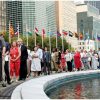
As US Unemployment Hits a Staggering 22 Million, Will UN Layoffs Be Far Behind?
The deadly coronavirus COVID-19, which has shut down the UN secretariat in New York, along with 32 of its agencies globally, has forced over 37,500 UN staffers worldwide to work from their homes.
On Watching Contagion: What Do We Learn?
Contagion is a 2011 film by US director Steven Soderbergh (Erin Brockovich, Traffic, Che) that has proved very popular viewing during the first few weeks of the Coronavirus crisis. Set in a fictional global pandemic – modelled on the outbreak of a bat-borne Nipah virus identified in 1999 that killed around 100 people in Malaysia - the film is a tightly-written topical drama with a great castthat includes Matt Damon, Gwyneth Paltrow, Jude Law, Laurence Fishburne, Kate Winslet, Marion Cotillard and Jennifer Ehle.
Concerns for the Nearly 400 Rohingya Refugees Rescued off the Coast of Bangladesh
Nearly 400 Rohingya refugees have been rescued in Bangladesh after being at sea for two months.
COVID-19: Maintaining Food Security in Asia Pacific
COVID-19 has disrupted supply chains that are essential to assure food security in the Asia Pacific region, yet countries overall seem to have managed, so far, to keep supermarkets stocked with food and feed those who can afford it. The Asia Pacific region is home to over 60% of humanity and also contains sub-regions with among the highest frequencies of severe weather events and some of the most challenging environments for agriculture. As a region it is characterized by diverse food systems and a multiplex of supply chains. Under normal circumstances, food security is already threatened by a multitude of factors.
Amid Coronavirus Pandemic, SDGs are Even More Relevant Today Than Ever Before
Our world today is dealing with a crisis of monumental proportions. The vicious, novel coronavirus is wreaking havoc across the globe, destroying lives and ruining livelihoods.
No Space for Social Distancing in Rohingya Refugee Camps
Nine-year-old Mohammad Rafique used to collect vegetables from Kutupalong Bazaar and sell them at a market inside Kutupalong camp, a camp of some 600,000 Rohingyas, in Bangladesh’s Cox’s Bazar.
In His Fight Against WHO, Trump Plays Politics with Human Lives
President Donald Trump’s threat to abruptly cut all US funding to the World Health Organization (WHO) has been described as ‘reckless and deadly”—particularly at a time when the Geneva-based UN agency was engaged in an uphill battle against the spreading coronavirus.« Previous Page — Next Page »


The Week with IPS

NEXT STOP - SDGs
Tracking global progress towards a sustainable world
Tracking global progress towards a sustainable world
