
Friday, October 9, 2026



News and Views from the Global South
Environment
At GEF’s Eighth Assembly, Uzbekistan Signals New Role as Donor
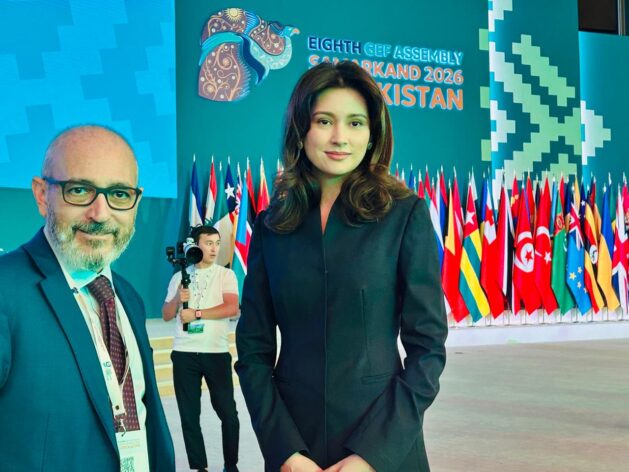
H.E. Saida Mirziyoyeva, Chief Advisor to the President of Uzbekistan, attended the Eighth GEF Assembly, which began on Thursday. Mirziyoyeva delivered a message from the president, Shavkat Mirziyoyev, which announced Uzbekistan’s decision to become a donor country. Credit: Stella Paul/IPS
- In a significant policy shift symbolising rising environmental ambition, Uzbekistan on Thursday announced that it will become a donor of international environmental funding to the Global Environment Facility (GEF), as the Eighth GEF Assembly opened in the historic city of Samarkand.
The announcement was delivered by H.E. Saida Mirziyoyeva, Head of the Presidential Administration, on behalf of President Shavkat Mirziyoyev, marking a notable milestone for the Central Asian nation and for the GEF partnership.
“I have good news for you,” the presidential message said. “Uzbekistan has decided to become a donor country to the GEF.”
The message also declared that Samarkand, host of the Assembly, would be a future “hub of green economy, sustainable development and climate finance”, underscoring the country’s broader environmental ambitions.
The Eighth GEF Assembly, the institution’s highest governing body, brings together representatives from 186 member countries along with international organisations, civil society, and the private sector to shape global environmental priorities. Held every four years, the Assembly guides financing strategies and policy responses to urgent challenges such as climate change, biodiversity loss, pollution, and land degradation.
Uzbekistan’s decision comes at a time when countries are being urged to increase both funding and leadership in addressing what leaders describe as the “triple planetary crisis” of climate change, biodiversity loss, and pollution.
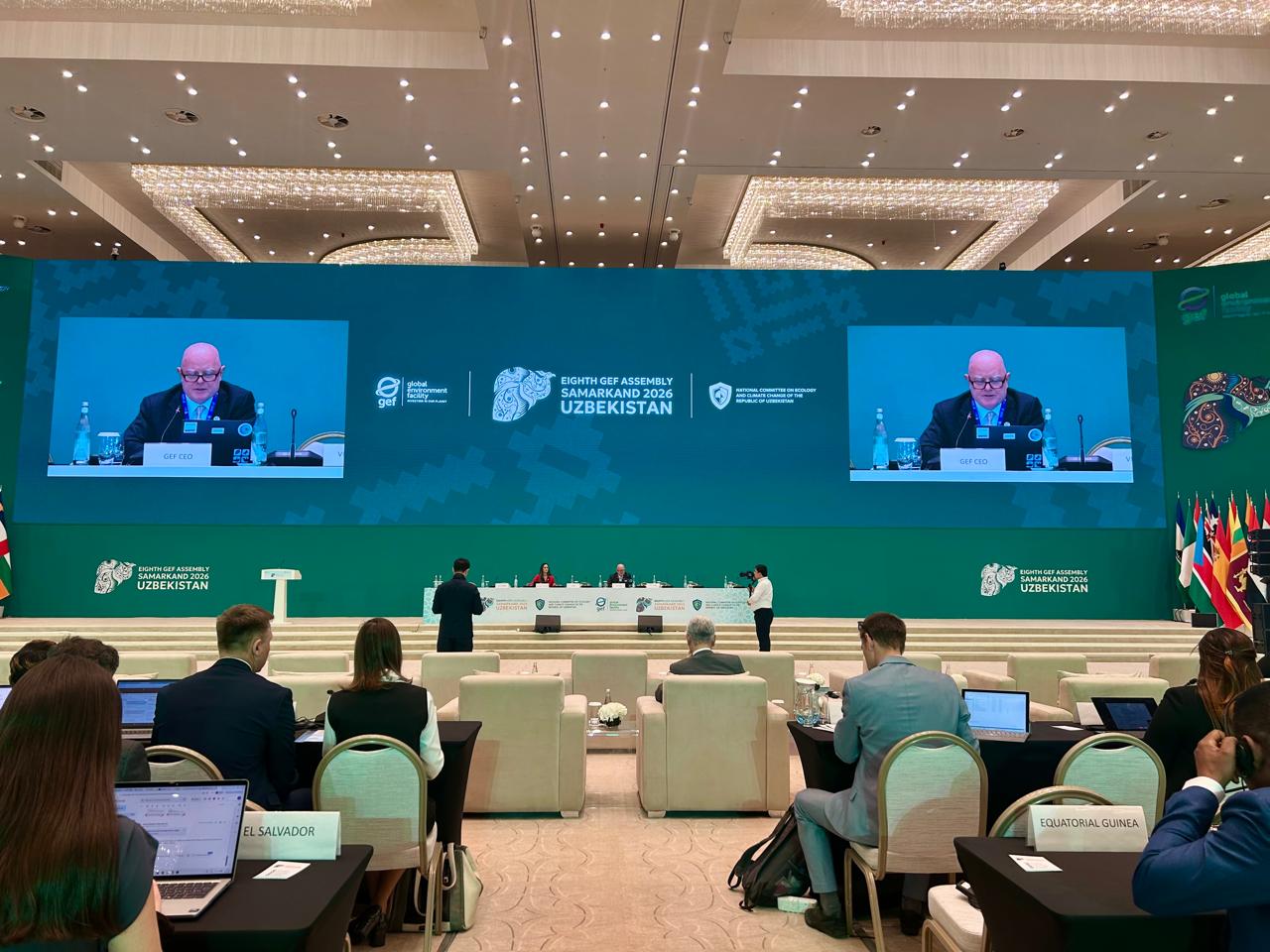
Claude Gascon, Interim Chief Executive Officer and Chairperson of the Global Environment Facility (GEF), addresses the Eighth GEF Assembly. Credit: Stella Paul/IPS
A Shift Shaped by Experience
Welcoming the move, Claude Gascon, Interim CEO of the GEF, described it as a strong vote of confidence in the institution.
“This is a remarkable demonstration of confidence in the GEF partnership and in our mission,” Gascon said.
Until now, Uzbekistan had been a recipient of GEF funding, supporting projects on land restoration, water management, and climate resilience. Gascon said this experience positions the country uniquely as it takes on a donor role.
“As a GEF recipient country, you have direct experience of the programme,” he said. “Your decision to contribute as a donor is a testimony to how these investments work on the ground.”
Gascon reminded the delegates that the “Silk Road was an ancient network of interconnected trade routes that linked the world. And Samarkand is known as the “jewel of the Silk Road” because for centuries, it stood at the crossroads of civilisations, a place where people, ideas, knowledge, and commerce converged and flowed to solve the complex challenges of the time.”
The parallels are poetic, he continued.
“Today, we face environmental challenges that call for this same spirit. This gathering of the GEF Assembly represents a unique international convergence and interconnection of people, ideas, knowledge and finance, as we persevere on the road to 2030, and indeed the road to a healthier, more secure, and more hopeful future for all.”
Gascon also pointed to Uzbekistan’s growing environmental portfolio, including large-scale tree planting, reforestation, water-saving measures, and air quality improvements. “These efforts show what is possible when leadership is paired with action,” he added.
The announcement aligns with a broader push within the GEF to mobilise diversified financing, including blended finance, to scale up global environmental action.
Executive Director of the United Nations Environment Programme, Inger Andersen, told the Assembly that the GEF had, since its founding in 1991, delivered solution after solution.
“Solutions that reach communities, protect nature, tackle pollution and underwrite resilience – and in turn, help governments deliver on their global commitments through local, regional and national action.”
Andersen also endorsed the emphasis of the GEF-9 investment cycle on blended finance.
“And we fully endorse the criticality of blended finance. At UNEP, we see blended finance as a value chain. Capital stacking cannot occur or be effective unless we set up enabling policies, incentives and taxonomies as well as standards, regulations, laws and incentives that will incubate feasible, environmentally positive project pipelines – creating a predictable investment climate that turns environmental challenges into investment and development opportunities.”
Framing the Urgency
In the opening address, delivered a day ahead of World Environment Day, Mirziyoyeva outlined the scale of the environmental crisis facing both the region and the world.
“Humanity today faces a triple planetary crisis,” the message said, referring to climate change, biodiversity loss, and pollution.
Central Asia remains particularly vulnerable. Around 37 million people in the region already face water scarcity, with projections suggesting this could rise to 75 million by 2050. Melting glaciers, desertification, and declining water availability were identified as major threats.
“Climate change demands practical and immediate solutions,” the statement emphasised.
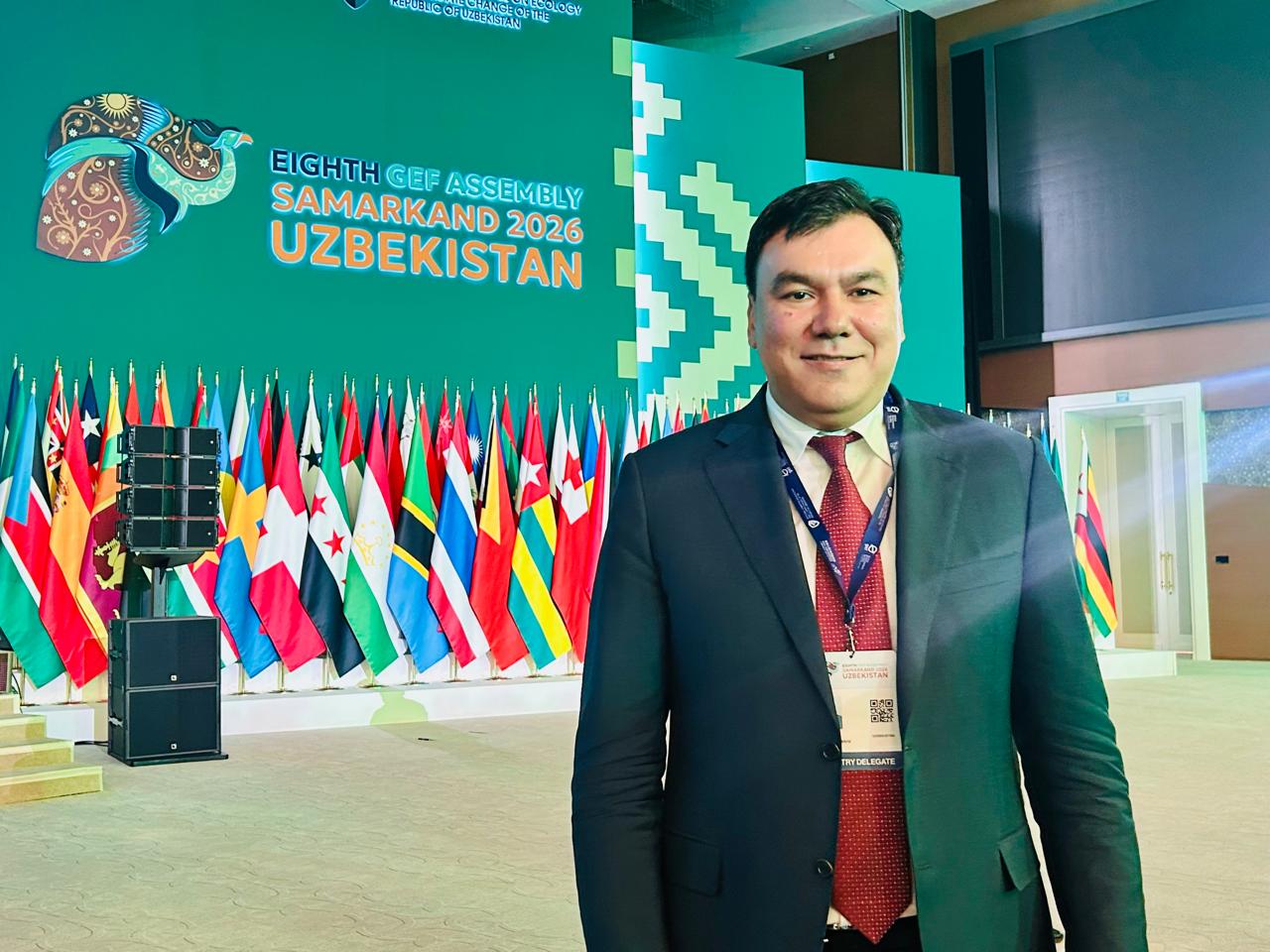
GEF Assembly chair and Advisor to the President of Uzbekistan on the Environment, Aziz Abdukhakimov, pictured ahead of the opening of the Eighth GEF Assembly. Credit: Stella Paul/IPS
Earlier, Aziz Abdukhakimov, Advisor to the President of Uzbekistan on the Environment, also stressed the need for collective action. “The world is facing accelerating climate change, biodiversity loss, land degradation, pollution, and growing pressure on natural resources. These interconnected challenges require collective protection on an unprecedented scale. Uzbekistan believes in the power of all the literal cooperation for our shared future.”
Green Ambitions for Samarkand
The government used the Assembly’s global platform to outline an ambitious set of initiatives aimed at ecological transformation. Central to these plans is positioning Samarkand as a regional hub for sustainable development and green investment, described as the “green investment capital of Central Asia.”
The strategy includes developing pilot green zones that can be replicated nationwide, as well as strengthening scientific research and climate monitoring. Plans also include expanding hydrometeorological research, increasing reforestation efforts, tackling desertification, and establishing new botanical gardens to support biodiversity.
The government highlighted targets to reduce emissions and waste while promoting environmental education and a broader “green culture.”
Regional cooperation is expected to play a key role, including a proposed clean air consortium with Kazakhstan and collaborative approaches to desertification. The president’s message also called on participating countries to join these initiatives.
Uzbekistan is also positioning itself as a centre for regional knowledge exchange. According to Abdukhakimov, the country has been “inviting young professionals, researchers, and students from around the region to study, conduct research, and collaborate; it’s continuously contributing to the next generation of environmental leaders and innovators.”
A Broader Signal
Uzbekistan’s shift to donor status carries significance beyond its financial contribution, particularly as the GEF prepares for its next funding cycle under tighter global budgets. It reflects a wider trend of emerging economies taking a more active role in global environmental governance.
Historically, the GEF has relied on contributions from a relatively small group of donor countries to finance projects in developing regions. Currently, the number stands at 40. Uzbekistan’s move signals confidence in the impact of GEF programmes and a willingness to share responsibility for sustaining them.
As discussions continue in Samarkand through Thursday and Friday, the focus is expected to remain on scaling up finance and ensuring equitable access to funding, particularly through mechanisms that can leverage both public and private investment.
Note: The Eighth Global Environment Facility Assembly is underway until June 6, 2026, in Samarkand, Uzbekistan.
This feature is published with the support of the GEF. IPS is solely responsible for the editorial content, and it does not necessarily reflect the views of the GEF.
IPS UN Bureau Report


 Print
|
Print
|



Pictures for this story
This story includes downloadable print-quality images -- Copyright IPS, to be used exclusively with this story.
- H.E. Saida Mirziyoyeva, Chief Advisor to the President of Uzbekistan, attended the Eighth GEF Assembly, which began on Thursday. Mirziyoyeva delivered a message from the president, Shavkat Mirziyoyev, which announced Uzbekistan’s decision to become a donor country. Credit: Stella Paul/IPS
- Claude Gascon, Interim Chief Executive Officer and Chairperson of the Global Environment Facility (GEF), addresses the Eighth GEF Assembly. Credit: Stella Paul/IPS
- GEF Assembly chair and Advisor to the President of Uzbekistan on the Environment, Aziz Abdukhakimov, pictured ahead of the opening of the Eighth GEF Assembly. Credit: Stella Paul/IPS


