Thursday, October 1, 2026



News and Views from the Global South

Peru's Highlands Lack Legal Protection
- Land-use regulations could put a halt to mining concessions in areas of Peru with high ecological value, like the highland plateaus of the north.
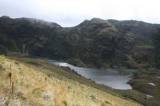
The highland plateau of Piura, Peru. - Courtesy of Fedepaz
Maps of the mines and of fragile ecosystems overlap in this South American nation with vast mineral wealth. Environmental organizations are calling on the government to establish zones of exclusion for mining through new land-use regulations.
The total area covered by mining rights in Peru nearly doubled between 2006 and 2009, from 11.6 million hectares to about 20 million.
As a result, more than 40 percent of the highland plateaus, known in Spanish as “páramos,” of the northern region of Piura have been turned over to mining projects, according to the government's mining institute INGEMMET and the non-governmental U.S.-based Mountain Institute.
The páramos, which act as sponges, and the cloud forests of the Andes, both located between 1,500 and 2,500 meters above sea level, are important sources of water for Piura's arid areas.
During the dry season, the plateau drains its water slowly, thus maintaining life in the valley, regulating the water cycle and supplying the farms. The for-export lemon and mango crops provide livelihoods for thousands in Piura.
About 14.9 million hectares are under concession, according to INGEMMET figures published in May. Currently, just 0.69 percent of that area is being mined, and 0.63 percent is being explored for minerals.
However, complaints have already been filed about water contamination and land disputes have erupted.
“If the exploitation of a small mine already causes these serious social conflicts in mining zones, what will happen with the rest of the concessions? This cannot be left in the private sector's hands, the government has to intervene to regulate land use,” Rommy Torres, of the non-government Cities for Life Forum, told Tierramérica.
In this country, more than 60 percent of the social conflicts are related to environmental problems, according to the Office of the People's Defender (ombudsman).
In Piura, the problems revolve around the Zijin Consortium, based on Chinese capital, which is exploring the Río Blanco for copper. Around the area to be mined are páramos and the Quiroz and Chinchipe rivers, which flow through Piura and Cajamarca.
At the request of the Muqui Action Network, an umbrella of some 20 institutions that support the communities in defending their rights, the Cities for Life Forum is drafting a proposal for land-use regulations.
The initiative is intended to integrate the local, regional and national policies, avoid isolated decision-making, and ensure that the government entities involved — like the ministries of Environment and Agriculture — establish basic criteria to determine which economic activities are feasible in each territory.
The Executive Branch is also drawing up a land regulation proposal, which is to incorporate opinions from civil society.
The Muqui Network wants the government to create a sub-ministry with the authority to implement the policies.
But what should be protected? In Torres's view, the answer is clear: glaciers, river sources, protected areas, zones at risk of natural disaster, fragile Amazonian ecosystems, and land with high agro-ecological value.
Most of the protected natural areas do not have an overall plan that identifies their potential economic activities.
The Constitutional Court established in 2007 the necessity of such plans to determine the compatibility of natural resource exploration and exploitation with conservation.
“The idea is not to eliminate mining, but rather break down the sectorial productive scheme in order to get a cross-section view of territorial management,” José de Echave, an economist with the non-governmental group CooperAcción, told Tierramérica.
Only in the regions of San Martín and Amazonas, in the north, and Cuzco, in the south, has economic-ecological zoning taken place — the step prior to territorial planning.
“The central government prefers disorder so that it can continue blindly giving out mining concessions. Otherwise it means beginning from zero, and there is no political will to do that,” Mayor Carlos Martínez, of the San Ignacio district in the northwestern department of Cajamarca, told Tierramérica. “Nor is there the political will in some regional governments, even though part of the authority has been transferred to them,” he added.
Meanwhile, Argentina passed a law this year to protect glaciers from mining, Costa Rica penalizes the use of cyanide in mining, and Ecuador is trying to obtain an international fund to compensate it for keeping oil drilling out of the Yasuní region of the Amazon.
Three years ago, the opposition Peruvian Nationalist Party presented a legislative bill to declare the páramos and cloud forests “public necessity,” but so far lacks the votes for it to become law.
When the land-use regulations are institutionalized, “they should guarantee communities access to information and prior consultation,” said Magdiel Carrión, a community leader from Piura and president of the National Confederation of Peruvian Communities Affected by Mining.
“What happens in the highlands will affect the lowlands of the valley. That is why we should be consulted about the kind of development we want,” said Carrión.
 Print
|
Print
|