
Monday, September 21, 2026



News and Views from the Global South
Mozambicans Living in the Shadow of a Secret State
 Print
Print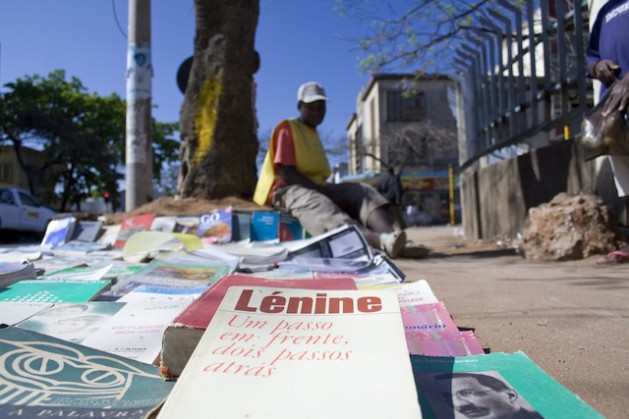
Free speech key to Mozambique’s development and there are now four private newspapers, many bookshops, numerous cafes, and exhibition venues. However, these are in centralised Maputo and the challenge of informing the rural electorate about the issues remains huge. Credit: Thembi Mutch/IPS
- In downtown Maputo, the walls are covered with the local newspaper, Verdade, and a range of people, young and old, male and female, are reading it. Verdade, which means Truth in Portuguese, is a free weekly newspaper that is pasted on the walls of buildings in Mozambique’s capital.
It is one of the most innovative, imaginative and, its publishers claim, widely-read newspapers in Mozambique. Aside from the 32-page hard copy of the newspaper, Verdade has a website, a dedicated mobile phone news site, and a presence on social network sites Twitter and Facebook.
All its news is sourced from the community, and people verify and correct the information online. There are no official figures of how many people have access to the internet in Mozambique, but it is estimated that one percent of the population is connected. Verdade also makes use of mobile phones. Citizen reporters, including taxi drivers and shopkeepers from all over this southern African nation, send text messages of their local news to Verdade’s Maputo office.
This citizen journalism is considered key to Verdade’s success. Until four years ago, the state-owned Noticias newspaper dominated Mozambican media. News was little more than propaganda. But with the Mozambican regional elections set for November, and the national elections for 2014, a spotlight has been placed on the issue of accessing information.
“Really this is the first election that we are covering what is happening in the country. Before, in 2008, we were just getting started. We just reported the final results. But now, after five years, the media is a tool for the transformation and development of the country. This election is one of the first steps,” Verdade’s editor-in-chief Adérito Caldeira told IPS.
One of the jobs for the Verdade team will be to ensure polling stations are open, that people know how to use them, and that the election data is reliably relayed. But also, for the elections to be effective, people must be aware of the issues and what they are voting for.
Mozambique is over 800,000 square kilometres, almost twice the size of neighbouring Zimbabwe, and this makes getting news out and spreading information a real challenge. Added to this is the fact that 60 percent of Mozambicans are illiterate, and only 10 percent of the country’s almost 24 million people have access to electricity, according to the United Nations Development Programme.




IPS is an international communication institution with a global news agency at its core,raising the voices of the South
and civil society on issues of development, globalisation, human rights and the environment
Copyright © 2026 IPS-Inter Press Service. All rights reserved. - Terms & Conditions
