Wednesday, October 28, 2026



News and Views from the Global South
Q&A: Global Fight to Protect the Ozone Layer Celebrates 20 Years
Interview with Montreal Protocol chief Marco González* - Tierramérica
- The main achievement of the 20-year-old Montreal Protocol was to establish the process for recovering the ozone layer that protects life on Earth, although the enormous hole that opens every year over Antarctica will continue to happen for the next decade, says the head of the Ozone Secretariat, Marco González.
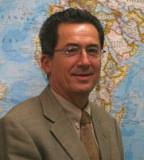
Marco González, executive secretary of the Vienna Convention and the Montreal Protocol Credit: UNEP
The Protocol has achieved the elimination of 95 percent of the volume of these substances that the world consumed before it entered into force, explained the executive secretary of the Secretariat for the Vienna Convention for the Protection of the Ozone Layer (1985) and the Montreal Protocol on Substances that Deplete the Ozone Layer.
González, 57, a Costa Rican engineer who resides in Kenya, spoke with Tierramérica’s Daniela Estrada by telephone from Panama.
Tierramérica: When will we see the full restoration of the ozone layer over Antarctica and the southern region of South America? Last year the thinning of the layer, the hole, reached a record size of 27.5 million square kilometres.
Marco González: The studies by the Protocol’s scientific groups establish that the concentrations of chlorine and bromide show a downward trend since 2000 and that the situation in the stratosphere is improving. As far as the ozone hole, it occurs seasonally and depends on the meteorological conditions in Antarctica. The colder the temperatures in the Antarctic, there occurs a freezing of the air that forms a sort of “vortex”, which produces the conditions propitious for massive destruction of the ozone. Scientists agreed that the hole is going to stay with us in a similar situation to that of 2006 for at least the next decade.
Tierramérica: The scientists say that beginning in 2050 we will see a recovery of the ozone layer to its 1980 levels, but at the same time it is stated that we need to monitor the effects of new substances. Are there appropriate resources and mechanisms to track both processes?
González: It’s true; the 2006 studies say the recovery of the ozone layer to pre-1980 levels is going to happen at mid-century. Of course it is a long-term effort, which is why the governments in power must orient their efforts in two directions: monitor industry to prevent new ozone-destroying substances from being produced and marketed, and continue monitoring the situation both by satellite and from ground stations. Now there is a research fund of the Vienna Convention that facilitates resources for maintaining such stations.
Tierramérica: Contraband of prohibited substances continues. How much of a concern is this, and how should it be confronted?
González: Illegal trade can be a serious problem. The Parties (to the Protocol) have been working since the late 1990s to close down plants that produce CFCs and other substances. In early July all plants were closed in China, two and a half years ahead of the date required by the Protocol.
This means that the supply of these products on the global market is dramatically reduced and of course the laws of supply and demand lead to higher prices. But countries still must make a greater effort to control production and illegal sales.
There is a proposal that the European Community will make at the next conference of Parties in September to reinforce controls of trans-border movements of these substances. A very important debate is expected.
Tierramérica: It’s been said that replacing ozone-depleting substances with others led to substitutes that aggravate another global problem, climate change. Is this the case?
González: That is totally false. The Protocol is an instrument that has helped to eliminate greenhouse-effect gases (responsible for global warming). The CFCs have a very high potential greenhouse effect and 95 percent of those were eliminated worldwide. A study carried out by scientists from far-flung places, published in May by the journal Proceedings of the Academy of Sciences, of the United States, clearly shows that the (Montreal) Protocol eliminated around 11 million tonnes of greenhouse gases. How did it do that? It eliminated the CFCs and halons and other controlled substances, which have been replaced by others that are much more beneficial for the protection of the ozone layer and for the climate system.
(*Originally published by Latin American newspapers that are part of the Tierramérica network. Tierramérica is a specialised news service produced by IPS with the backing of the United Nations Development Programme and the United Nations Environment Programme.)
 Print
|
Print
|