
Sunday, September 20, 2026



News and Views from the Global South
Q&A: Corrupted Politicians Expected to Fight Corruption
Interview with Monica Macovei
- Monica Macovei is at the centre of a national dispute over cleaning up the Romanian government.
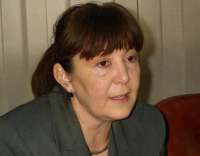
Monica Macovei Credit: Romanian Ministry for External Affairs
She went on to become an advisor on corruption issues to the Prime Minister of Macedonia. She told IPS correspondent Claudia Ciobanu that she applied for the latter position because she is fascinated by the process of making corrupted politicians adopt anti-corruption legislation.
In Macedonia, Macovei wants to continue the anti-corruption struggle begun in Romania, which she does not consider hopeless.
On the contrary, the former justice minister says, "there are moments in the history of countries when external demands combined with internal pressure from the public opinion can force strong anti-corruption measures to be taken even if corrupted politicians are in power."
She adds, "Successfully combating political corruption leads to reformation of the political class. And to contribute to the reformation of the political class, in any country, is a great fulfilment."
IPS: Is corruption the same everywhere?
MM: Corruption is the same, but the degree to which it infects the political class varies. The infection can be accidental, or systemic and institutionalised.
In many of the former communist states, currently in transition towards democracy and market economy, corruption has become inherent to political decision-making. It sits on the table of governments and parliaments, and it is manifested even through legislative acts.
In such countries, the privatisation of state-owned companies and awarding of large public acquisition contracts taking place in a period of legislative instability and poor implementation created the conditions necessary for corruption to massively infiltrate the political class. These have been and still are problems in Macedonia and Romania.
IPS: Which were the most important anti-corruption measures taken during your mandate?
MM: Creating the National Anti-Corruption Directorate to investigate political corruption and high-level fraud. In 2006, the directorate sent to trial three members of government, seven parliamentarians, and mayors, magistrates, policemen, customs officers, managers of public utilities companies, etc. The politicians under investigation belong to both government and opposition, proving it can be done.
Other measures include new procedures for checking the wealth of public office holders, legislation to make the financing of political parties more transparent, strengthening the office in charge of money laundering, introducing a system of random distribution of cases to judges, giving all judges access to information technology, and beginning a process of increasing efficiency and unification of judging practices.
IPS: Why were you dismissed from your position as justice minister?
MM: Fighting political corruption in a country where there are corrupt politicians has its price, which I assumed. After Romania entered the EU, most politicians felt threatened by the investigations opened against them or their business partners, and my presence in the government prevented them from making the changes they wanted.
In addition, as a minister, I had constantly opposed 'laws with special destination', that is, exempting specific companies from adhering to legislation, or awarding large contracts without a tender.
We should have expected politicians to react, and they did. But only after entry to the EU, because, had they acted before, the integration process would have been compromised and they could not afford that. The censorship motion against me was announced on Jan. 3, 2007, the first working day after entering the EU. Even if I wanted to fight back, there is nothing I could have done on Jan. 1 or 2.
Still, much of the work I have done cannot be altered without paying high costs. I believe those who try will at least have to pay a political price, because public opinion can no longer be easily fooled.
IPS: Does the new justice minister, Tudor Chiuariu, continue your anti-corruption efforts?
MM: Unfortunately, the government does not continue anti-corruption efforts, but actually tries to halt them. One example is the attempt made by the new justice minister to dismiss, without any plausible reason, one of the country's top anti-corruption prosecutors, Doru Tulus, who has been investigating politicians for corruption and fraud, and whose work led to the European Commission cancelling the red flag for corruption for Romania.
IPS: Do you think you can still have an impact on justice reform in Romania from where you are now?
MM: At the moment, my public interventions in Romania are rare, but I will continue to express my opinion about justice reform there. I do not believe this government cares about my voice; rather, it is relieved I am gone. However, if it still wants to have the least bit of internal and international credibility, the government will have to take into account the voice of non-governmental organisations active in the field.
IPS: What measures should be taken in Romania so that the largest part of the population can enjoy the fruits of economic growth and EU membership?
MM: This question brings me back to corruption. Immense funds will be coming from the European Union. If they go into the pockets of few rather than serve the public interest of the communities they are destined for, the benefits of EU integration will not be real or visible. Therefore, fraud and corruption must be stopped by all means. The costs of corruption are huge and they affect our everyday life.
IPS: Was Romania ready to join the EU on Jan 1, 2007?
MM: Romania was ready, its politicians were not.
 Print
|
Print
|




