
Thursday, September 10, 2026



News and Views from the Global South
JAPAN: Good Neighbours Needed on Way to UN
Ramesh Jaura
- Japan will not succeed in its bid for a permanent seat in the UN Security Council unless it achieves reconciliation with its neighbours, says former Japanese prime minister Toshiki Kaifu.
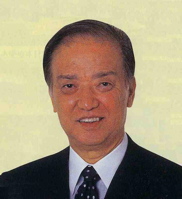
Toshiki Kaifu Credit:
Kaifu is convinced that unless Japan "understands the feelings, and respects the sensitivities" of its neighbours who suffered under Japanese aggression, there will be no genuine reconciliation and normalisation of relations, particularly with China and Korea.
The 77-year old Kaifu was a teenager when Japan unconditionally surrendered in the aftermath of the U.S. pounding Hiroshima and Nagasaki with atomic bombs.
There was devastation everywhere at the time. Kaifu involved himself in reconstruction efforts, and took to active politics.
He won the first parliamentary election in 1960 as the youngest candidate. Since then Kaifu has served 16 consecutive terms in the powerful lower house of the parliament, the Diet.
Reconciliation with China and Korea were on top of his political agenda as Japan's prime minister (1989-1991) – and continue to be.
Japan established diplomatic relations with China in 1972. Official Development Assistance (ODA) to China began in 1979. Since then Japan has provided 313.31 billion dollars in aid as yen loans, 1.457 billion dollars in grant aid, and 1.466 billion dollars in technical cooperation, officials say.
ODA projects in China included large-scale economic infrastructure projects, including the building of roads, airports and power stations, as well as infrastructure projects in the health and environmental areas.
A high-level exchange of official visits between Japan and China has been under way since the 1990s. There is also a vibrant cultural exchange.
This, Kaifu said, has resulted in what would appear to be "normalisation" of relations between the two countries. But this improvement is vulnerable to the smallest of shocks that may be caused by Japanese leaders doing something that from the Japanese perspective is 'normal'.
A case in point is the tensions resulting from former prime minister Junichiro Koizumi's visits to Tokyo's Yasukuni shrine, which honours 14 convicted war criminals among Japan's 2.5 million war dead.
China perceived Koizumi's visits as a glorification of Japan's militaristic past. Sino-Japanese relations hit the bottom during Koizumi's term in office 2001-2006.
"I perfectly understand these feelings," Kaifu said.
"Whenever neighbouring heads of state meet with me, they say that in the light of the Japanese government's attitude it is impossible for us to support Japan's bid for a permanent seat in the UN Security Council," he added.
Kaifu welcomed the fact that Prime Minister Yasuo Fukuda is keen not only to mend but also to deepen relations with China following a four-day visit to China last year-end, a trip that both countries hailed as a "success" and a "major breakthrough" in bilateral relations.
Kaifu believes that the two countries would do well to recall the excellent relations in the early 20th century, when the Chinese revolution put an end to the Qing dynasty rule in 1912. "At that time Tokyo provided the base for the revolutionaries. And there were many Japanese who supported this cause to put an end to feudalism in China. Some people donated all their wealth to support the revolutionaries."
Kaifu also recalls his visit to Korea in 1991 to reduce bilateral tensions. The two have been at odds at least since Japan ruled Korea as a colony from 1910 to 1945, when the Second World War ended.
Kaifu founded the Japan Overseas Cooperation Volunteer (JOCV), a peace corps, in 1965. He is at present honorary chairman of the Japanese Parliamentary Group on Global Poverty Eradication and Development Awareness, that he set up.
Kaifu recalled in his interview with IPS that back in 1989 during his visit to the U.S. as prime minister, he told former president George Bush (the senior) "to give more importance to the issue of biodiversity and climate change. But that time there was hardly any understanding of such issues, particularly in the U.S. government. But meanwhile climate change has become a big political issue among all the candidates for the presidency."
"I stated to the president that my ideal in politics is the realisation of a more equitable and humane society," Kiafu recalled. Asked how in view of this he would explain that Japan spends only 0.17 percent of its gross national income (GNI) on official development assistance, Kaifu said this was a "very relevant but complicated" question.
"What I would say is that in principle this issue is also confronted by other countries. The difficulty is that the ODA money is spent outside the country. But it is very difficult for the voter to see how this money is spent and what impact it has," he said.
He added: "A politician needs to communicate with the voter and face questions such as why does Japan spend so much of money elsewhere whereas we have a lot of problems ourselves. The issue is how we can raise the awareness of the Japanese people to support the importance of international cooperation."
Kaifu said the voter has to be told that perhaps the developing countries will not be in a position to return the money given to them, but as a result of supporting them there will be economic growth, so that in the end the world economy will prosper, and that will also benefit the Japanese economy.
"This is by no means an easy task the Japanese politician is facing. The point is that we have not yet found an answer that would convince the voter, who is a taxpayer and whose money we are using for ODA," Kaifu said.
"But things look different when it comes to natural disasters such as the recent ones in China and Myanmar. People do not argue. These are humanitarian issues."
 Print
|
Print
|




