Languages
Thursday, September 17, 2026



News and Views from the Global South
Analysis
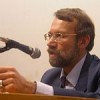
IRAN: Ahmadinejad Faces Heavyweight Foe in Larijani
This week, Iran's new speaker of Parliament, Ali Larijani, proposed forming two joint committees of the legislative and judiciary branches in an effort to reconcile new legislation with the Islamic penal code.POLITICS: Al-Maliki’s Balancing Act Leaves Iran Cool
As Iraq's Prime Minister Nouri al-Maliki sought to alleviate neighbouring Iran's increasing concerns about a security deal between his country and the United States, he strove to keep a delicate balance with the two countries which are vying for hegemony over Iraq.MIDEAST: Israeli Attack Looking More Likely
The likelihood of a large-scale Israeli military operation in the Gaza Strip has crept closer as more rockets continue to land in southern Israel and another Israeli was killed by a mortar shell, further hardening attitudes amongst senior ministers against a proposed truce with Hamas.POLITICS-US: McCain’s Judicial Plans in Lockstep with Bush
While it isn't as eye-catching as the latest reports from Iraq and Afghanistan, or as headline-grabbing as rapidly escalating gas prices and the growing number of housing foreclosures, and few voters cast their ballot based on it, the judicial appointments of whomever wins the U.S. presidency in November will have long-lasting ramifications for the country.US/IRAN: Fearing Escalation, Pentagon Fought Cheney Plan
Pentagon officials firmly opposed a proposal by Vice President Dick Cheney last summer for airstrikes against Iranian Revolutionary Guard Corps (IRGC) bases by insisting that the administration would have to make clear decisions about how far the United States would go in escalating the conflict with Iran, according to a former George W. Bush administration official.EUROPE: No Tearful Farewell for Bush
It is a safe bet that there will be no mass shedding of tears when U.S. President George W. Bush visits Slovenia to attend the final summit of his presidency between the European Union and the United States Jun. 10.US/IRAN: Larijani’s Election Can Boost Congressional Diplomacy
Iranian Nobel prize laureate Shirin Ebadi has long argued that the United States and Iran need to have a dialogue with each other at three different levels: between their executive branches, between their civil societies and between their legislatures.UNITED NATIONS: Africa Keeps Japan Guessing on Security Council Seat
If the Japanese government was expecting assurances from African nations that they would support its bid for a permanent seat at the UN Security Council, they have reason to be disappointed with the outcome of the fourth Tokyo International Conference on African Development (TICAD IV) last week.BIODIVERSITY: How a Golden Opportunity Became a Zero-Sum Game
Self-interest and petty politicking largely paralysed efforts to solve the urgent problem of the widespread extinction of species, with few concrete achievements after nearly two weeks of 14-hour meetings at the Convention on Biodiversity (CBD) in Bonn that concluded last Friday.POLITICS-AFRICA: Critics Target U.S. Military Command
In just a few months, the United States Africa Command (AFRICOM) - Washington's latest military oversight structure for the continent - is expected to be fully operational.POLITICS-US: How Cheney Outfoxed His Foes on Iran and EFPs
For many months, the propaganda line that explosively formed projectiles (EFPs) that could penetrate U.S. armoured vehicles were coming straight from Iran has been embraced publicly by the entire George W. Bush administration. But when that argument was proposed internally by military officials in January 2007, it was attacked by key administration officials as unsupported by the facts.MIDEAST: Cash Gifts Come Back to Haunt Olmert
Even a seasoned, street-smart political brawler like Prime Minister Ehud Olmert would require a salvage act of Houdini-like magnitude to survive his current predicament. Engulfed by a corruption scandal, his government is unravelling, his own party is beginning to turn against him and, most critically, his public support has evaporated.US/IRAN: Necessity Is the Mother of Negotiation
Republican presidential aspirant John McCain's recent criticism of Democratic frontrunner Barack Obama's foreign policy platform exposes contradictions with the George W. Bush administration's own actions.PAKISTAN: Musharraf’s Exit Imminent?
While Pakistan President Pervez Musharraf has dismissed widespread speculation in the media of his imminent resignation, the odds are against the former military ruler continuing in office for long.FINANCE: U.S. Preaches What It Practices Not
The United States has for years promoted its own business interests abroad through public funds and lobbying to open up the economies of developing countries, but as foreign government-controlled sovereign wealth funds (SWFs) increasingly acquire or invest in U.S. assets, Washington is scrambling to change the rules of the game.LATIN AMERICA: The Legacy of May ’68
Nearly 190 years after the storming of the Bastille, Zhou En-lai, premier of China from 1949 to his death in 1976, said it was "too soon to tell," when asked about the significance of the French Revolution. Perhaps the same can be said of May 1968.
BURMA: UN Gambles With Junta – Forgets History
United Nations Secretary-General Ban Ki-moon is optimistic that his four-day mission to military-ruled Burma has produced a breakthrough. But the troubled history of relations between the world body and the South-east Asian nation offers a warning against high expectations.MIDEAST: Israel Targets Iran Through Syrian Friendship
"Spin" was the chorus that predictably emanated from Israel's parliament when the office of Prime Minister Ehud Olmert announced last week that Israel and Syria had initiated talks ultimately aimed at reaching a peace agreement. But to reduce the renewal of peace talks between Jerusalem and Damascus, after an eight-year hiatus, to mere "spin" is to underestimate how it currently serves the strategic interests of both countries.MIDEAST: Lebanon Deal Confirms Qatar’s Honest Broker Role
While Lebanon rejoices over the power-sharing deal among its rival factions that ended 18 months of political conflict and saved it from the brink of civil war, deal-broker Qatar revels in the glory of yet another diplomatic coup.
MIDEAST: Egypt Takes a Step Back from Bush Embrace
On his trip to the region this week, U.S. President George W. Bush dismayed even his staunchest Arab allies by expressing unprecedented levels of U.S. support for Israel. In a rare sign of Egyptian displeasure with Washington, President Hosni Mubarak left a major economic summit before Bush had a chance to deliver a scheduled address.POLITICS: Where Are Those Iranian Weapons in Iraq?
The U.S. military command in Iraq continues to talk about an alleged pipeline of Iranian weapons to Iraqi Shiites opposing the U.S. occupation, implying that they have become dependent on Iran for indirect-fire weapons and rocket-propelled grenades (RPGs).« Previous Page — Next Page »


The Week with IPS

NEXT STOP - SDGs
Tracking global progress towards a sustainable world
Tracking global progress towards a sustainable world
