Languages
Thursday, October 29, 2026



News and Views from the Global South
Opinion

Inclusive Education to Break the Cycles of Poverty
In September 2021, children in the northern hemisphere returned to school after the summer break. For some, the end of the holidays signaled a return to normalcy and to the joys of learning after facing months of school closures due to the Covid-19 pandemic. For the majority of children in the Global South, however, the return to reality looked grimmer.
QE, or No QE, That is the Question?
The guardians of the global economy convened in Washington this week to discuss their latest global growth forecasts. The World Bank-IMF Board of Governors meetings have been squarely focused on the global response to COVID-19, with economists warning of slowing momentum in wealthy nations and grossly uneven recoveries across the developing world.
Winning the Human Race, Together
“Now is the time for a stronger, more networked and inclusive multilateral system anchored in the United Nations,” said UN Secretary-General António Guterres in his latest report “Our Common Agenda.” Indeed, there is a fork in the road: we can either choose to breakdown or to breakthrough.
Will the World Bank Walk Away with $100 Billion IDA20 Replenishment Without “Walking the Talk” on Disability?
Will the World Bank walk away with $100 Billion IDA20 replenishment without “Walking the Talk” on disability? The World Bank Group’s (WBG) International Development Association (IDA), the Bank’s low-income lending arm, aspires to raise $100 billion for its early 20th replenishment (IDA20). IDA20’s focus includes “reducing barriers preventing …persons with disabilities…from achieving their full potential”.
World Food Day: Climate Change is Exacerbating Hunger & Conflict—it’s Time to Break the Cycle
Hunger, violent conflict and the visible impacts of climate change are all on the rise. World Food Day, October 16, is a reminder that we need to talk about the intricate ways that these challenges are connected—and how to tackle them together.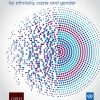
Disparities in Poverty Between Ethnic Groups & Across Genders Show Why We Need to Dig Deeper into Poverty Data
During the pandemic, we learnt a new word – at least I did: comorbidity. It means that one or more additional conditions co-occur (all happen at the same time for a person) alongside a primary condition – in this case the virus.
Better Late than Never, but Act Now
The world should now be more aware of likely COVID-19 devastation unless urgently checked. Last week, the World Health Organization (WHO) announced an US$8 billion plan to quickly vaccinate many more people to expedite ending the pandemic.
Mental Health at a Cost, Inequality
World Mental Health Day was on October 10, 2021. The theme for this year was "Mental Health in an unequal World". This is an appropriate focus given the extreme inequities to access to mental health services that exist in our society.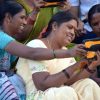
India: Gaps in the Government’s Plan to Help Unorganised Workers
The Government of India launched the e-Shram portal with the mandate of registering 380,000,000 unorganised workers in the country. The portal aims to bridge the gap in unorganised workers’ ability to access social welfare and employment benefits by issuing an e-Shram card (or Shramik card) upon registration.
Day of the Girl Child: A Digital Generation Where Every Girl Counts
The theme of this year’s annual International Day of the Girl Child, on October 11, “Digital generation. Our generation.”, recognizes the digital transformation brought about by the COVID-19 pandemic. But while the pandemic accelerated the transition to online learning, working and networking, it also accelerated women and girl's risk of being left behind.
China and the UN at 50- What We Can Achieve Together
China was one of the architects of the United Nations and was the first signatory of the UN Charter in San Francisco in 1945. But it was only in October 1971, with the Chinese delegation led by Mr. Qiao Guanhua, that China’s representation at the UN resumed. Since that time, the UN has had the great privilege of witnessing and supporting China in achieving one of the greatest periods of socio-economic progress in world history.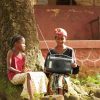
When Girls Have Access to Technologies, A True Digital Revolution Will Be In Sight
This year’s International Day of the Girl theme, Digital Generation, Our Generation, celebrates the potential of digital technologies while calling for the inclusion of all girls in accessing technology. The digital revolution will not be realized if girls without access to digital solutions are left behind. For years, advocates of technology for development have been repeating the mantra that technology is not a panacea. Yet in racing to connect, catch up, and create greater access, we ignore at our own peril the inconsistent or non-existent household- and community-level access girls have to technologies. While digital solutions are available and evolving all the time, they should be accompanied by hybrid methods which include new ways to use analog technologies, so that existing local resources are reimagined and redistributed in ways that support more girls learning.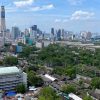
Build Forward Fairer in the Wake of the COVID-19 Pandemic
Cities have been epicentres of the COVID-19 pandemic since 2020. City authorities have been the frontlines responders—from running testing stations, to managing food distribution, to disposing of corpses. Yet they are often under-resourced, and their critical role in policy implementation is often overlooked.
The CDC Turns Its Back on Migrants and Science
Last month, asylum-seeking families at the U.S.-Mexico border appeared to have won a victory, however temporary, in their last-ditch bid for safety in the United States. It was also a victory for evidence-based public health policy.
Where on Earth is a Water-Secure World?
It is not uncommon for a water-centric research, policy or development organization or network to declare its long-term vision of the “water-secure world”. It reads nicely and feels great.
Stop Calling the Military Budget a ‘Defense’ Budget
It’s bad enough that mainstream news outlets routinely call the Pentagon budget a “defense” budget. But the fact that progressives in Congress and even many antiwar activists also do the same is an indication of how deeply the mindsets of the nation’s warfare state are embedded in the political culture of the United States.
Less Overseas Coal Is Good, But Developing Countries Still Need More Electricity
President Xi announced last month that China is stopping its financing for new coal-fired power plants overseas. With this announcement from Beijing, the governments of the world’s largest economies have now achieved a consensus to halt their overseas funding of coal plants in developing countries, thereby advancing global efforts to reduce future carbon dioxide (CO2) emissions.
Afghan Women – The Emerging Narrative and Why it is Wrong
The USA and its allies have repeatedly stated that promoting women’s rights was one of the key reasons they were in Afghanistan. The US military top brass, in a letter to marines stated that they were in Afghanistan “for the liberty of young Afghan girls, women, boys, and men who want the same individual freedoms we enjoy as Americans”.
Multilateral Financial Institutions Can Catalyze Public Development Banks (PDB) to Deliver SDGs
There is broad consensus that realizing the Sustainable Development Goals (SDGs) and the Paris Agreement on climate change require a transformative agenda for agriculture and food systems. In this context, the importance of mobilizing more investments and aligning them to sustainable development and inclusive rural transformation objectives, is widely acknowledged.
UN Warned of Two Dangers Ahead: Health of the Human Race & Survival of the Planet
Addressing the UN General Assembly last month President Gotabaya Rajapaksa of Sri Lanka raised several concerns, two that had to do with health. One concerned the health of the human race; the other the health of Planet Earth on which man struggles increasingly to survive.
Stop New Washington Putsch
As finance ministers and central bank governors gather next week for the IMF-World Bank annual meetings in the US capital, the first shots of a new putsch against multilateralism have been fired. The target: Kristalina Georgieva, Fund Managing Director (MD) since 2019.« Previous Page — Next Page »





The views expressed in these articles are those of the authors and do not necessarily represent the views of, and should not be attributed to, IPS-Inter Press Service

The Week with IPS

NEXT STOP - SDGs
Tracking global progress towards a sustainable world
Tracking global progress towards a sustainable world
