Languages
Tuesday, September 22, 2026



News and Views from the Global South
Opinion
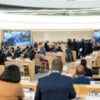
The “Extremely Dangerous and Unpredictable” situation in Middle East and Beyond
More than three weeks after the United States and Israel launched strikes on Iran, the conflict is spreading and intensifying in the region and beyond, with civilians bearing the brunt. Families across the region marked Eid and Nowruz under fire, in fear and uncertainty, and facing further hardship.
Iran War: Winners and Losers
Who benefits from a war of choice against Iran? The immediate political winners may include President Donald Trump and Prime Minister Benjamin Netanyahu. But if the war continues for a longer period, the political consequences for both Trump and Netanyahu could be uncertain. However, the most consistent beneficiaries are defense contractors, defense manufacturers and military lobbyists, who profit regardless of the outcome.
Nepal’s Gen Z Electoral Revolution
Less than six months after Nepal’s Generation Z rose up in protest, the country has a new prime minister. A 35-year-old former rapper who soundtracked the protests swept to power in a landslide in the 5 March election.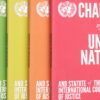
A World Order in Crisis: War, Power, and Resistance
Article 2(4) of the United Nations Charter prohibits member states from using threats or force against the territorial integrity or political independence of any state. Violating international law, the United States and Israel attacked Iran on February 28, 2026. The ostensible reason for this unprovoked aggression was to prevent Iran from developing a nuclear weapon.
What the US Really Wants from MC14 in Yaoundé
As trade ministers gather in Yaoundé, Cameroon, for the WTO’s 14th Ministerial Conference (MC14) on 26–29 March 2026, the preparatory process has produced a dense fog of competing reform proposals, draft ministerial statements, and work plans.
Central Bank Hedging Triggered Gold Fever
In mid-1971, US President Nixon ended the dollar’s gold peg at $35 per ounce, triggering de-dollarisation. The 2025 gold and silver rush followed private speculators trying to profit from central banks hedging against perceived new risks.
“At Africa’s First Our Ocean Conference, a Test of Global Will on High Seas Protection and Deep-Sea Mining”
When the 11th Our Ocean Conference opens in Mombasa and Kilifi, Kenya, from June 16-18, 2026, it will mark the first time this influential meeting has been held on African soil. For coastal and island nations across the continent and the wider Indian Ocean – and for the Global South more broadly – the stakes could not be higher: the promises and commitments made there will help decide whether the ocean becomes a source of justice and resilience, or deepens existing inequalities.
Planet Earth’s Increasing Population of 8 Billion
On planet Earth, world population in 2026 is 8.3 billion people, which is four times larger than it was a hundred years ago. Despite this record number of humans living on the planet, world population is expected to continue increasing throughout the 21st century, significantly impacting planetary sustainability.
Gender Equality: A Global Priority or a Global Consensus?
The 70th session of the Commission on the Status of Women (CSW70) (March 9-19), held at the United Nations headquarters, brought together governments, decision makers, civil society, and international organizations to address a central issue: access to justice for women and girls.
Europe and Multilateralism
“Europe can no longer be a custodian for the old-world order, for a world that has gone and will not return (…) we need a more realistic and interest-driven foreign policy.” These were some of the words pronounced one week ago by the President of the European Commission, Ursula von der Leyen, at the EU Ambassadors’ Conference in Brussels. A speech that sparked considerable controversy: an almost immediate rebuttal from the President of the Council, Antonio Costa; rumours of a motion of censure against Von der Leyen in the European Parliament; more or less public reproaches from several European leaders; and a swift and complete retraction by the President herself.
TB Risk Should not Depend on Where We Are Born
In many high-income countries, even a small number of tuberculosis (TB) diagnoses can generate headlines and prompt a rapid public health response. Recent situations in U.S. cities such as Seattle and San Francisco illustrate this, where media coverage has focused on the number of children being tested after TB disease was identified in a school.
International Tensions Spark New Nuclear Threat
When German Chancellor Friedrich Merz opened the 62nd Munich Security Conference by declaring that the post-war rules-based order ‘no longer exists’, there was plenty of evidence to back his claim. Israel is committing genocide in Gaza in defiance of international law, Russia is four years into its illegal invasion of Ukraine, the last nuclear arms control treaty between Russia and the USA has just expired and the USA has withdrawn from 66 international bodies and commitments. Since the conference, Israel and the USA have launched another war on Iran, threatening to spark a broader regional conflict. Meanwhile the UN is undergoing a funding crisis, cutting staff and programmes, and civil society organisations that relied on US Agency for International Development funding are facing closure.
Geospatial Innovations Addressing Critical Water Data Gaps in Asia
Across Asia, new initiatives are showing how satellite Earth observation data and AI-powered technologies can turn fragmented water-related data into actionable insights for managers and policymakers in line ministries and local governments.
Where Water Doesn’t Flow, Equality Doesn’t Grow – Challenging Global Patriarchy this World Water Day
The 2026 campaign on World Water Day’s focuses on Water and Gender – ‘where water flows, equality grows’ . While substantial progress has been achieved across a range of gender indicators spanning education, health and public participation, the situation around WASH (water, sanitation and hygiene) is still marked by deep inequalities with women and girls disproportionately affected – and this reflects the persistence of global patriarchy.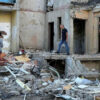
Is WWIII here?
It is becoming increasingly difficult to ignore the tension, violence and uncertainty in the world in recent years. The number of wars is growing, more and more money is being spent on weapons, and the rhetoric of major powers is becoming increasingly decisive.
Beyond Stereotypes: Reclaiming Muslim Histories during Ramadan
In public discourse today, Muslims often appear as subjects of debate rather than authors of their own histories. Discussions about Muslim societies tend to revolve around geopolitics, security or conflict, leaving little space for the cultural, artistic and intellectual traditions that have shaped Muslim communities across centuries.
Ranking U.S. Presidents: Best and Worst
Throughout its 250-year history, following the Declaration of Independence on July 4, 1776, the United States has elected 47 presidents. From George Washington in 1789 to Donald Trump in 2024, each U.S. president has left their mark on the nation and the world in various ways.
Rapid Rise of Smart City Surveillance Tech Across Africa to Spy on Citizens
A massive expansion of AI-enabled surveillance of public spaces across Africa is violating citizens’ freedoms and the fundamental human right to privacy, warns a new report by the Institute of Development Studies.
Oil Shocks, Political Upheaval and the One Solution Governments Keep Ignoring
Once again, global oil prices are spiking, driven by the Israeli-US war against Iran. With Iran retaliating by attacking infrastructure and transport hubs and blocking the Strait of Hormuz, through which one-fifth of the world’s oil passes, oil supplies from the region are being choked, pushing up prices. The cost of a barrel of Brent crude – the international benchmark for oil prices – stood at US$73 before the conflict but has surged beyond US$100 since. It could go higher still as war continues.
Housing as Climate Resilience in Asia-Pacific Cities
Access to adequate housing is a foundation of resilient cities. Safe and affordable homes provide stability, allow residents to access essential services, and enhance the capacity for communities to withstand and recover from shocks. Yet housing is often treated as a downstream outcome of urban development or disaster recovery rather than as a strategic investment in resilience.
Nigeria: Lessons from the Aba Women’s Riots for Today’s Women’s Movements
The Aba Women’s Riots of 1929 remain one of the most powerful demonstrations of Nigerian women’s collective resistance. Thousands of market women, farmers, traders, and mothers mobilized across districts in the then Eastern Nigeria to challenge colonial taxation and the extension of warrant chiefs’ authority over their lives. They organized without formal structures and without institutional support.« Previous Page — Next Page »


The views expressed in these articles are those of the authors and do not necessarily represent the views of, and should not be attributed to, IPS-Inter Press Service

The Week with IPS

NEXT STOP - SDGs
Tracking global progress towards a sustainable world
Tracking global progress towards a sustainable world
