Languages
Wednesday, September 23, 2026



News and Views from the Global South
Opinion
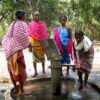
The Global Struggle for Equality for Women and Girls
The global struggle for equality for women and girls has been ongoing for centuries, with no single country having achieved full equality. In many countries, women and girls continue to face discrimination, harassment, unequal treatment, injustice, domestic violence, and a lack of security and safety.
We Must Reject a World Governed by Raw Power
2026 has begun on a deeply troubling note. International law, long regarded as the backbone of global peace and security, is being challenged in ever more brazen ways. Core principles of sovereignty and restraint are being flagrantly breached.
Regional Trade in Transition: Digitalization, Servicing and De-risking
Trade in the Asia-Pacific region has moved into a new strategic reality. The latest Asia-Pacific Trade and Investment Trends (APTIT) highlights that rapid technological change and a strategic reconfiguration of supply chains are reshaping how economies in the region trade and compete.
Multilateralism Reaching Breaking Point
The latest World Economic Forum made clear the current crisis of multilateralism. Over 60 heads of state and 800 corporate executives assembled in Davos under a ‘Spirit of Dialogue’ theme aimed at strengthening global cooperation, but it was preceded by a series of events pointing to a further unravelling of the international system.
Next UN Secretary-General Should Champion Human Rights
United Nations member countries will select a new UN secretary-general this year to succeed António Guterres in January 2027. The change in leadership comes at a time when human rights and democracy, as well as the international organizations created to uphold those principles and provide lifesaving assistance, are under unprecedented attack.
As Glaciers Melt, the World’s Hidden Water Banks Are at Risk
Glaciers – the world’s hidden water banks - are a source of life for billions. The seasonal melt from mountains and glaciers sustains some of the world’s most important rivers, such as the Indus, the Nile, the Ganges and the Colorado. Those and other mountain-fed rivers irrigate crops, provide drinking water for nearly two billion people, and power electricity generation.
After New START, Accelerated Nuclear Arms Racing?
The most recent agreement limiting U.S. and Russian strategic nuclear arsenals, New START, expired on February 5, and prospects for any kind of follow-on agreement are very uncertain.
Africa’s Food Systems Will Not Transform Without Parliamentary Accountability
Africa has never lacked agricultural strategies. Since the launch of the Comprehensive Africa Agriculture Development Programme (CAADP) in 2003, governments have pledged repeatedly to spend at least 10 per cent of public budgets on agriculture and to raise productivity through better investment and coordination. The African Union reaffirmed this target in subsequent declarations, such as Malabo in 2014 and the Kampala CAADP Strategy (2026-2035).
A Pathway to Gender Equality in ASEAN
The COVID-19 pandemic reminded everyone how important care work is to daily life. When schools closed and hospitals filled up, often it was women and girls who stepped up at home. Their contributions made a big difference, yet these responsibilities often go unseen and unrewarded.
Leveraging Artificial Intelligence and Enhancing Countries’ Preparedness
It is a pleasure for me to join His Excellency, Minister Al Hussaini in welcoming you to this important dialogue here in the United Arab Emirates—a fast-growing global AI hub. A recent Microsoft study reports that 64 percent of the UAE’s working age population uses AI, which is the highest rate globally.
Trade Liberalisation Undermines Development
Despite lacking both evidence and theory, many economists claim trade liberalisation accelerates development. But only a few economies have gained many jobs from external market access.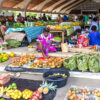
Local Resilience Can Mitigate Climate Conflicts in the Pacific
The Pacific Island countries are at the frontline of climate change. Their territories mostly consist of small, low-lying islands, with long coastlines and vast ocean spaces between them. Many livelihoods are based on agriculture or fishing, and importing water or food is often infeasible or expensive. This makes those large ocean nations highly vulnerable to the impacts of climate change, such as storms, droughts, and rising sea levels. Analysts have expressed concerns that this can result in various forms of socio-political conflict.
Goal 1: End Poverty in all its Forms –Everywhere
Eradicating extreme poverty for all people everywhere by 2030 is a pivotal aim of the Sustainable Development Goals. Extreme poverty, defined as surviving on less than US$3.00 per person per day at 2021 purchasing power parity, has witnessed remarkable declines over recent decades.
Floods and Food Security: The Hidden Cost to Crops and Soil
South Africa, Mozambique, and Zimbabwe are currently experiencing severe flooding. According to the World Health Organization, 1.3 million people have been affected. In addition, hundreds of people have died , infrastructure has been destroyed, access to health services has been disrupted, and the risks of water- and mosquito-borne diseases are rising.
UN Human Rights Office Launches USD 400 million Appeal to Address Global Human Rights Needs
The UN High Commissioner for Human Rights Volker Türk has launched a USD 400 million funding appeal for 2026 to address global human rights needs, warning that with mounting crises, the world cannot afford a human rights system in crisis.
UN Security Council: Reform or Irrelevance
In early January, an emergency UN Security Council meeting on Venezuela followed a familiar path of paralysis. Members clashed over the US government’s abduction of Nicolás Maduro, with many warning it set a dangerous precedent, but no resolution came.
To Fix the Rupture, Trade is not Enough
Will trade be enough to navigate the current waves of chaos and disorder that are underpinning the ongoing rifts among competing powerful and hegemon nations and the rest?
Protecting Africa’s Ocean Future and Why a Precautionary Pause on Deep-sea Mining Matters
The world is entering a decisive period for the future of the ocean. With the High Seas Treaty coming into force and meaningful progress being made on the World Trade Organization Agreement on Fisheries Subsidies, global momentum for stronger marine governance is building. Yet, new pressures linked to the push for deep-sea mining — the extraction of minerals from seabed thousands of meters below the ocean surface — threaten to undermine these gains. To safeguard progress, global decision-making will have to keep pace with such emerging risks. In this context, Africa will host several global discussions in 2026, including those that will shape the ocean's future, with a series of opportunities for leadership starting with the African Union Summit in February to the Our Ocean Conference in Mombasa, Kenya in June.
The Delicate Balance of International Migration
The delicate balance of international migration relies on the high demand for labor and the enforcement of stricter immigration controls. This equilibrium is especially crucial when considering the international migration of students and skilled workers.
Is it the Budgetary Crisis – Or Leadership Crisis – Facing the United Nations – Or Both?
In the month of February 2025, one year ago, United Nations Secretary-General Antonio Guterres commenced his briefing of the media by announcing that “I want to start by expressing my deep concern about information received in the last 48 hours by UN agencies — as well as many humanitarian and development NGOs — regarding severe cuts in funding by the United States.” He went on to warn that ““The consequences will be especially devastating for vulnerable people around the world.”
High Seas Treaty Will Transform Our Fragile Ocean for the Better
“The ocean’s health is humanity’s health”, said UN Secretary-General Antonio Guterres, in September 2025. He was commenting after the High Seas Treaty (BBNJ) [1] finally achieved ratification, going on to call for “a swift, full implementation” from all partners. As of January 17, 2026, the treaty has come into force, meaning the time for implementation is now. What is the High Seas Treaty?« Previous Page — Next Page »


The views expressed in these articles are those of the authors and do not necessarily represent the views of, and should not be attributed to, IPS-Inter Press Service

The Week with IPS

NEXT STOP - SDGs
Tracking global progress towards a sustainable world
Tracking global progress towards a sustainable world
