Languages
Sunday, November 8, 2026



News and Views from the Global South
Opinion

UN Chief Remains Focused on Re-election While Geneva Staff Feel Abandoned
Two years have passed since the introduction of the illegal pay cuts imposed on staff in the Professional category-- and above-- working for the UN in Geneva, following a cost of living survey conducted by the International Civil Service Commission (ICSC) in 2016.
Cheap or Adequate and Accessible to Everyone?
The COVID-19 pandemic has revealed some lesser-known realities, or some we had not wanted to think about, and exposed its consequences for the right of people to feed themselves in dignity.
Re-Conversion of Hagia Sophia into a Mosque a Very Trumpian Move
President Erdogan’s “reconversion” of the Hagia Sophia, into a mosque is a very Trumpian move, making a populist gesture to his base evoking shared misconceptions of history, reckless of its actual diplomatic and economic cost.
Can Private Finance Really Serve Humanity?
The recent explosion of private finance has nursed the hope, dream or illusion that it can be mobilized for the public good, e.g., to achieve the Sustainable Development Goals, associated with Agenda 2030. However, such hopes ignore how changes in financial investing have deeply transformed corporations, national economies and prospects for the world economy and social progress.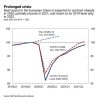
Toward a More Resilient Europe
Europe, like the rest of the world, faces an extended crisis. An element of social distancing—mandatory or voluntary—will be with us for as long as this pandemic persists. This, coupled with continued supply chain disruptions and other problems, is prolonging an already difficult situation. Based on updated IMF projections released last month, we now expect real GDP in the EU to contract by 9.3 percent in 2020 and then grow by 5.7 percent in 2021, returning to its 2019 level only in 2022. If an effective treatment or vaccine for COVID 19 is found, the recovery could be faster—but the opposite would hold true if there are large new waves of infection.
India’s Fisheries: Past, Present, and Future
Fisheries and aquaculture are an important source of food production, nutritional security, employment, and income in India. The fisheries sector is a direct source of livelihoods for more than 20 million fishers and fish farmers; contributes INR 1.75 trillion annually to the gross value added to India’s economy; and is a major export earner, with fish being one of the most important agricultural commodities to be exported from India.
On World Youth Skills Day, Don’t Forget the Importance of Soft Skills
It’s no secret that under pandemic lockdown for so many months, young people around the world have coped in tremendous ways. They have found new outlets for learning and creative channels for developing and using their skills.
Women and Girls with Disabilities: Planning for Periods During a Pandemic
The Coronavirus pandemic and the resulting lockdown has intensified most inequities in society- specifically those that affect vulnerable communities, including persons with disabilities, particularly young girls. As an aftermath of recent media attention, many government organizations, nonprofits and philanthropies have come together to ensure girls and women in remote communities have access to menstrual care products.
World Population Day 2020 – ‘The Time is Now to Accelerate the Promise for Women and Girls’
Fulfilling women’s and girls’ rights through promoting sexual and reproductive health and rights (SRHR) is an essential prerequisite for reaching national development goals as well as the Sustainable Development Goals (SDGs).
COVID-19 & Why We Care
Among the many compelling points made by Dr. Anthony Fauci in our “Rethinking Health” webinar this week was the absolute essentiality of global collaboration and transparency to contain the pandemic with which we are faced.
The Return
"As we were saying yesterday." When, after an abnormal interruption of the school calendar, as happened recently with the extension of spring break (which does not coincide with "Easter"), I return to teach a class surprising my students with this phrase: "as we were saying yesterday. "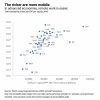
Teleworking Is Not Working for the Poor, the Young and the Women
The COVID-19 pandemic is devastating labor markets across the world. Tens of millions of workers lost their jobs, millions more out of the labor force altogether, and many occupations face an uncertain future. Social distancing measures threaten jobs requiring physical presence at the workplace or face-to-face interactions. Those unable to work remotely, unless deemed essential, face a significantly higher risk of reductions in hours or pay, temporary furloughs, or permanent layoffs. What types of jobs and workers are most at risk? Not surprisingly, the costs have fallen most heavily on those who are least able to bear them: the poor and the young in the lowest-paid jobs.
Financialization: Tackling the Other Virus
The 1971 Bretton Woods (BW) system collapse opened the way for financial globalization and transnational financialization. Before the 1980s, most economies had similar shares of trade and financial openness, but cross-border financial transactions have been increasingly unrelated to trade since then.
In India, Climate Change is Increasing Refugees & Human Trafficking
In India the impacts of climate change induced extreme weather events on the lives and livelihood of people, particularly belonging to the poor and vulnerable sections of the society, are increasing alarmingly with each passing year.
How We Can Ensure the Safety of Our Health Workers
Recently, Barcelona's Liceu opera opened its 2020-2021 season by serenading a full house of plants with classical music. The plants will then be given to over 2,200 health workers who serve at the frontlines to battle the pandemic. The performance was both an appreciation for the workers and it also celebrated the return to normalcy following the devastations caused by COVID-19.
Building Back Greener in Africa
COVID-19 continues to race across the African continent. People are dying, and even more are being pushed into hunger and poverty, in many cases risking to overturn years of development gains.
Innovative Financial Approaches Key to Unleash SIDS Economic Potential
Our world is transfixed by the great human toll and economic impact of the worst global pandemic in a century. For the 65 million inhabitants of small island developing states (SIDS), the impact of the novel coronavirus (COVID-19) is reminiscent of the worst forms of extreme weather events that SIDS contend with annually. Such events cost lives, undermine our hard-earned development gains, and hamper the aspirations and quality of life of our people. Our governments are routinely compelled to shift already scarce resources from social and economic investments to recovery and sustenance in the aftermath of disasters. For decades islands have been treading a development tightrope, which is increasingly precarious with the intensification of adverse climate impacts.
Donald Trump, Working Class Hero?
In his early February annual State of the Union address, US President Donald Trump typically hailed his own policies for increasing wages and jobs to achieve record low US unemployment. Directly appealing to labour for a second term, Trump claimed exclusive credit for the US “blue-collar boom”.
Security Council’s Overdue COVID-19 Ceasefire Resolution Must Put Women & Youth at Center
More than three months after UN Secretary General Antonio Guterres made an urgent appeal for a global ceasefire in response to the COVID-19 pandemic, the UN Security Council has finally passed a resolution supporting his call.
Impact of COVID-19 on Women and Children in South Asia
The onset of the coronavirus pandemic in early 2020 set off a series of health and economic crises that feed upon each other. The health crisis exacerbates the economic crisis by disrupting supply chains, throwing large number of people (particularly those working in the informal sector) out of work and closing down large numbers of enterprises – particularly micro, small and medium enterprises (MSME).
The Missing SDG: Ensure the Digital Age Supports People, Planet, Prosperity & Peace
As the nations of the world prepare to gather virtually to assess progress towards the Sustainable Development Goals (SDGs), society is just beginning to imagine what a post-COVID world might be like.« Previous Page — Next Page »





The views expressed in these articles are those of the authors and do not necessarily represent the views of, and should not be attributed to, IPS-Inter Press Service

The Week with IPS

NEXT STOP - SDGs
Tracking global progress towards a sustainable world
Tracking global progress towards a sustainable world
