Languages
Sunday, November 8, 2026



News and Views from the Global South
Opinion

The Global Economic Reset—Promoting a More Inclusive Recovery
The COVID-19 crisis is inflicting the most pain on those who are already most vulnerable. This calamity could lead to a significant rise in income inequality. And it could jeopardize development gains, from educational attainment to poverty reduction. New estimates suggest that up to 100 million people worldwide could be pushed into extreme poverty, erasing all gains made in poverty reduction in the past three years.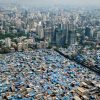
How Cities Can Turn COVID-19 Crisis into an Opportunity to Build Better
From shocking death tolls to widespread job losses, there is no understating the severity of the COVID-19 pandemic’s impact on the world’s cities. Health care systems, economies, and social lives have been upended by a virus for which the world was totally unprepared.
Strengthening Economic Institutions for a Resilient Recovery
Exceptional times call for exceptional action. In response to COVID-19, the IMF has moved with unprecedented speed and magnitude of financial assistance to help countries protect lives and livelihoods. Economic stabilization and a sustainable recovery, however, will require more than financial assistance. For recovery to be sustainable, policymakers will need to strengthen economic institutions that enable resilient, inclusive policies.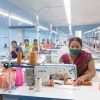
COVID-19 & its Impact on Textile & Garment Supply Chains in Developing Nations
In the first quarter of 2020, the coronavirus pandemic led to a 3% drop in global trade values. COVID-19 could trigger the biggest economic contraction since World War II, affecting all industries from finance to hospitality.
Unsung Heroines: Who Cares for the Carers?
Even before Covid-19, the world was facing a care crisis. The plight of often neglected, under-appreciated, under-protected and poorly equipped ‘frontline’ health personnel working to contain the pandemic has drawn attention to the tip of the care crisis iceberg.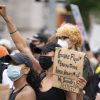
World Protests Show Rising Outrage and Mounting Discontent
After a period of forced silence because of the Covid-19 quarantines, citizens around the world are defying coronavirus restrictions and claiming the streets to fight for real democracy, jobs, living wages, public services, human rights and against corruption, inequality and injustice. We predict an increasing wave of protests all over the world led by different types of people defying the status quo. Unless policies change, clashes in the street are likely to become the new normal.
Eliminating Age Discrimination from Lockdown Curfews
During the Covid-19 pandemic governments around the world have introduced curfews as an exceptional, yet necessary, means of containing the spread of the virus. Yet while most countries have applied their curfews uniformly to all citizens, authorities across several regions have introduced them only for certain groups exclusively because of their age, including for under-18s.
The Need, Within the UN, for an Honest Conversation on Racism
I want to once again express to all colleagues my enormous appreciation, my enormous gratitude, for your fantastic professionalism, your flexibility and the way you have been able to fully deliver for the people we care for during this period.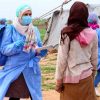
Global Solidarity & Effective Cooperation in the Face of COVID-19
The COVID-19 pandemic upended almost every aspects of life as we know it. Even those countries that are supposed to have the means to manage the spread and mitigate the effects are struggling.
Economic Ghosts Block Post-Lockdown Recovery
As governments the world over struggle to revive their economies after the debilitating lockdowns they imposed following their failure to undertake adequate precautionary containment measures to curb Covid-19 contagion, neoliberal naysayers are already warning against needed deficit financing for relief and recovery.
We Need to Slow down and Reconnect with Our Ocean for the Future of the Planet
 COVID19 has brought the world to a halt. The devastating impact of the global pandemic on people’s lives and the world’s economy is a jarring and historic turning point for all of us but it is also an opportunity to re-think many of our practices.

2nd World Food Safety Day
Few things are as natural and as necessary as eating food. However, if food producers, food processors, food handlers and consumers do not follow good food safety practices, food can become contaminated and rather than nourishing us and bringing us pleasure it can make us sick or even kill us.
COVID 19 – Conspiracy or Apocalypse? – Part II
As the COVID-19 virus spread rapidly around the globe, so did various theories about what caused the pandemic. According to the standard scientific theory, the virus originated in bats; crossed over to humans, probably via another intermediate host; and then spread rapidly across the globe.
Water, Climate, Conflict & Migration: Coping with 1 Billion People on the Move by 2050
Do migrants willingly choose to flee their homes, or is migration the only option available? There is no clear, one-size-fits-all explanation for a decision to migrate — a choice that will be made today by many people worldwide, and by an ever-rising number in years to come because of a lack of access to water, climate disasters, a health crisis and other problems.
High Volatility
Six months after the outbreak, the new global scenario resulting from the impact of COVID-19 is gradually becoming much more defined. From the very beginning, we sensed that little good could result from a situation so surprising and unexpected. Now it is becoming increasingly clear that we are entering times of extreme volatility in the international sphere. Times of uncertainty and incandescence as we have not seen for years.
Safeguarding Africa’s Food Security in the Age of COVID-19
Food security in sub-Saharan Africa is under threat. The ability of many Africans to access sufficient, safe and nutritious food to meet their dietary needs has been disrupted by successive natural disasters and epidemics. Cyclones Idai and Kenneth, locust outbreaks in eastern Africa, and droughts in southern and eastern Africa are some examples. The COVID-19 pandemic is just the latest catastrophe to have swollen the ranks of 240 million people going hungry in the region. In some countries, over 70 percent of the population has problems accessing food.
The Bible, Donald Trump and Plastic
Another episode of the spectacular show that could be called The Greatest Story Ever Told: The Saga of the Trump Presidency, scripted and acted by Trump himself, took place on 1st of June.
Covid-19: Caring for Care Workers
COVID-19 has brought the world to a halt. Nations, businesses, and schools have closed, and billions are confined to their homes. Yet millions of care workers step out daily to keep the lights on and support those in need.
Shedding Some Light at the End of the Covid-19 Tunnel: Plotting a Way Forward
Lockdowns have been the main measures to ‘flatten the curve’ of COVID-19 infections. But lockdowns typically incur huge economic costs, distributed unevenly in economies and societies. In fact, some governments acknowledged that they were choosing ‘life over economy’. ‘Life vs. Economy’: A false dichotomy As lockdowns have been repeatedly extended arguing that economy can be revived but not the dead, it has become increasingly clear that ‘lives and livelihoods’ are intrinsically intertwined. The longer the lockdowns, higher is the risk of hunger and hence death.
The Struggle for Land and Food in the Locked-down Philippines
Landless farmers who produce rice for the landlords of big “haciendas” can’t get more than a little pocket money from their harsh work—not enough to provide diverse and healthy food for their families. Seasonal workers on sugar-cane plantations know that they can count on only six months of earnings. When summer arrives, those whose irrigation facilities have been destroyed by typhoons, or those who never had any, struggle while waiting for the rain.
We Arabs Ask No Favors…..
In these difficult times for the Palestinian people and for justice, the Government of Israel is proposing to add further to the turmoil by unilaterally absorbing large swathes of the Palestinian West Bank of the Jordan River. It might therefore be fitting to remind the world of the chronology of the events leading up to the creation of the State of Israel in May 1948.« Previous Page — Next Page »





The views expressed in these articles are those of the authors and do not necessarily represent the views of, and should not be attributed to, IPS-Inter Press Service

The Week with IPS

NEXT STOP - SDGs
Tracking global progress towards a sustainable world
Tracking global progress towards a sustainable world
