Languages
Sunday, November 8, 2026



News and Views from the Global South
Opinion
Beyond the COVID-19 Pandemic: What Now?
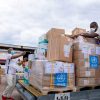
In the midst of the COVID 19 pandemic, the much-anticipated 73rd World Health Assembly (WHA) of the WHO concluded without any major controversies or disagreements.
Covid-19 Recessions: This Time It’s Really Different
The world economic contraction so far this year is largely due to measures, especially at the national or local level, to contain or prevent Covid-19 contagion, particularly those restricting business operations, thus reducing economic activity, output, incomes and spending.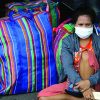
Lifelines in Danger
The COVID-19 pandemic is crippling the economies of rich and poor countries alike. Yet for many low-income and fragile states, the economic shock will be magnified by the loss of remittances—money sent home by migrant and guest workers employed in foreign countries.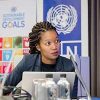
The Curious Case of Covid-19 in Africa
With very weak health systems and overall capacity constraints to effectively respond to the deadly coronavirus disease, Africa’s fate against the invisible enemy, was going to be nothing short of catastrophic according to early predictions. Although Africa is yet to reach its peak, many countries are not seeing the exponential growth in case numbers, or in mortality rates as seen in other regions of the world. So far, the continent has the lowest mortality rates with higher recovery rates globally.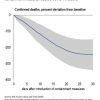
How the Great Lockdown Saved Lives
Since the COVID-19 outbreak was first reported in Wuhan, China in late December 2019, the disease has spread to more than 200 countries and territories. In the absence of a vaccine or effective treatment, governments worldwide have responded by implementing unprecedented containment and mitigation measures—the Great Lockdown. This in turn has resulted in large short-term economic losses, and a decline in global economic activity not seen since the Great Depression. Did it work?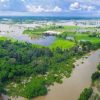
How to Transform UN’s Environmental Goals into a People’s Agenda for Africa
The COVID-19 insurgence has highlighted the need for multilateral cooperation among sustainability stakeholders. As the journey towards achieving Agenda 2030 and the Sustainable Development Goals (SDGs) is fraught with imminent global challenges, global environmental leaders agree that now is the time to act collectively for nature, leaving no one behind.
The Pandemic Underlines America’s Ingrained Racism
The murder of George Floyd by a police officer in broad daylight came amid a high point in the continuing rampage of the coronavirus throughout the country, killing over 100,000 and infecting nearly 2 million while more than 45 million have lost their jobs.
This Year of Living Dangerously
Indonesia’s founding President Sukarno delivered his annual Independence or National Day address on 17 August 1964 anticipating the forthcoming year as Tahun vivere pericoloso, the ‘year of living dangerously’. 2020 may well be the world’s turn, and not only due to the obvious Covid-19 threat to the world.
Beyond the Crisis
Looking back to the start of 2020, the world has changed almost beyond recognition. To protect public health, the global economy was put into stasis. Shops closed, factories were mothballed, and people’s freedom of movement was severely curtailed. No country has escaped the health, economic, and social impacts of the COVID-19 crisis. Tragically, more than 260,000 people have died and millions have been infected. The IMF is projecting global economic activity to decline on a scale not seen since the Great Depression. It is truly a crisis like no other.
COVID 19 – Conspiracy or Apocalypse? – Part I
As the COVID-19 virus spread rapidly around the globe, so did various theories about what caused the pandemic. According to the standard scientific theory, the virus probably originated in bats and then crossed over to humans, probably via another intermediate host. It then spread rapidly across the globe, piggybacking on the international travel network.
The Consequential Effects of Covid-19 on the Climate Crisis
The tragedy of the coronavirus pandemic and its associated challenges have thrown our world into chaos, with the virus destroying lives and livelihoods in its path.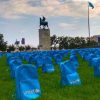
An Appeal to UN’s Budget Committee: It’s no Time to Cut Back on Child Protection
On February 26 this year, 15 South Sudanese children were released from armed groups and handed over to civilian child protection actors, including UNICEF and UNMISS, UN’s peacekeeping operation in South Sudan, who were able to facilitate the children’s safe return to their families.
COVID19 and Its Impact on Pacific Island States
 By now, the impact of COVID19 on our daily lives has been well documented, especially in advanced economies. Anxiety about the future continues to grow everywhere. Much of the corporate news coverage we consume has focused on the toll this pandemic will take on mainland countries. Often neglected, however, is the unique position Pacific Island States find themselves in.
Reproductive Rights of Women and Girls Under Lockdown
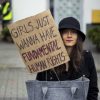
Health systems around the world are prioritising health care services and equipment to treat people diagnosed with Covid-19, which means that many procedures deemed to be elective and non-essential are being suspended or simply not provided. Abortion, for instance, has been categorised as a non-essential health service by some States, while others have removed certain restrictions to accessing abortion.
Memo from a Multi-Millionaire: Covid-19 Proves Business Case for Taxing the Rich
For the past few decades, many big corporations and very wealthy individuals have operated according to the myth that they are “self-made”, that their success owed nothing to anyone else.
UN@75 & the Future We Want
Crises make us think smaller. When everything is uncertain, we turn inward: to our families, our communities, the immediate needs around us. We focus on the essential and the immediate; we survive.
No Woman Should Ever Die Giving Life
Consider this. 24 women, children and babies were murdered at a hospital in Kabul, the Afghan capital. Even by standards of a country as accustomed to bloodshed as Afghanistan, the May 12 attack on a Kabul maternity clinic was an event of unmitigated horror.
Innovation Is an Imperative – for Sustainable Food Systems
Hunger and food insecurity continue to rise. The official 2019 statistics refer to 821 million people suffering from hunger all over the world. According the recently launched Global Report on Food Crises, there are further 135 million people facing crisis levels of hunger or worse. WFP estimates that due to the impacts of COVID19, additional 130 million people could be pushed to the brink of starvation by the end of 2020. This means a total increase of 265 million people. If there will be no appropriate and urgent actions, “we could be facing multiple famines of biblical proportions within a short few months”, said David Beasley, WFP Executive Director, addressing the UN Security Council on 21st April.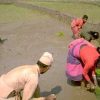
Women are Often an After-Thought in a Humanitarian Crisis
In an interview*, Bina Pradhan, an independent researcher, focuses on gender, macroeconomics and emerging issues of inequality. She is affiliated with the Federation of Business and Professional Women, Nepal (FBPWN), and has been working on the promotion and advancement of women in enterprise development and trade, post-earthquake community reconstruction, and rebuilding people’s lives and livelihoods with a focus on sustainability.
Politics, Profits Undermine Public Interest in Covid-19 Vaccine Race
With well over five million Covid-19 infections worldwide, and deaths exceeding 340,000, the race for an effective vaccine has accelerated since the SARS-Cov-2 virus was first identified as the culprit.
Are the SDGs in Reverse Gear?
When I was a little girl, my mother told us the story of a woman who escaped from a monster by cooking stones: when the monster fell asleep waiting for his dinner, the woman ran for her life.« Previous Page — Next Page »





The views expressed in these articles are those of the authors and do not necessarily represent the views of, and should not be attributed to, IPS-Inter Press Service

The Week with IPS

NEXT STOP - SDGs
Tracking global progress towards a sustainable world
Tracking global progress towards a sustainable world
